
Utility poles look simple from the roadside. Their production is not. A modern pole may require accurate drilling, slotting, trimming, and repeatable machining across long, heavy workpieces. The right Pole Manufacturing CNC Router can help coordinate these operations, reduce manual repositioning, and keep hole patterns consistent. But specifications alone do not tell the whole story. Bed length, spindle power, clamping design, dust handling, software, and after-sales support all matter on a real production floor.
Automation is gaining ground across manufacturing. The International Federation of Robotics reported 541,302 industrial robots installed worldwide in 2023, in its World Robotics 2024 report. That figure describes industrial robots, not CNC routers, so it should not be treated as a direct measure of pole-machining demand. It does, however, show the scale of manufacturers’ investment in automation. Details matter here. A router that performs well on short samples may struggle with a full-length pole, changing material density, or a busy shift. This guide compares ten manufacturers through practical criteria: machine configuration, stated capabilities, application experience, service coverage, and available technical documentation. Readers should verify claims directly and request a demonstration using representative workpieces. A ranking can narrow the field. It cannot replace a careful factory assessment. Even the best brochure leaves questions.
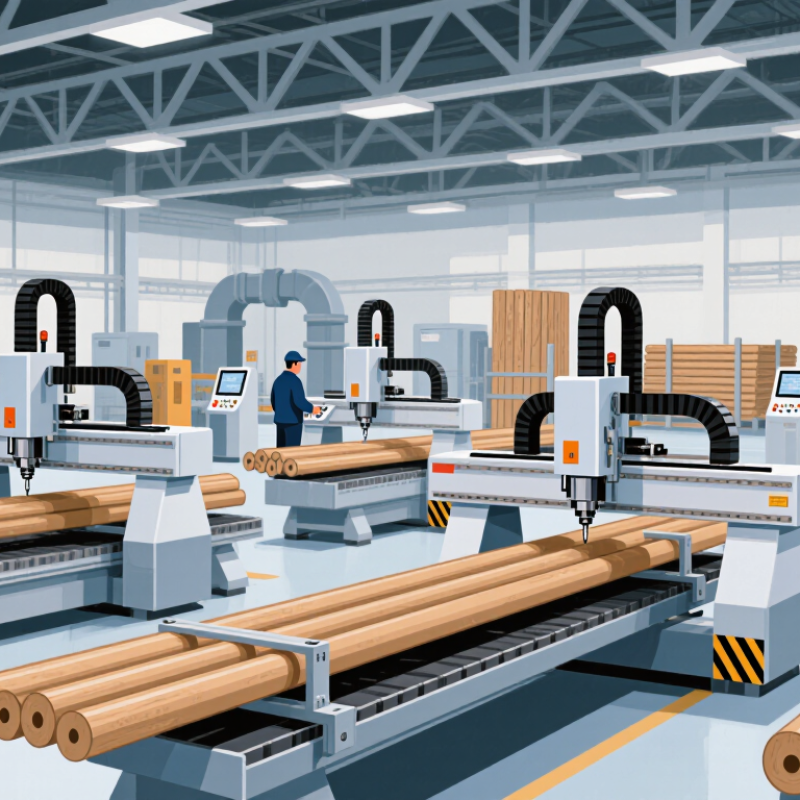
Understanding CNC Routers Used in Pole Manufacturing
A CNC router for pole manufacturing must handle long stock, stable support, and repeatable positioning—not just cutting speed. Shops may use an extended bed with support rollers or a rotary axis to machine round blanks. The best setup depends on the material. Wood, foam, and machinable composites each need suitable cutters and feed rates; metal poles may require a different machine. A rotary axis can cut grooves, tapers, or decorative profiles as the pole turns. Small errors travel.
Tips: Measure the blank at several points before loading. Align the supports, secure the stock without crushing it, and test the toolpath on a short sample. Match the cutter and dust extraction to the material.
Reliable results also depend on the machine’s usable working length and the operator’s setup checks. Confirm that the pole clears the enclosure and supports throughout the full toolpath. Check for vibration, tool wear, and movement after the first pass. In practice, setup is rarely perfect on the first try. Even a clean simulation may not reveal a slightly bowed blank or a loose support. Reviewing the cut and adjusting the setup can prevent the same flaw from repeating across a production run.
When comparing pole router manufacturers, start with the workpiece, not the brochure. Measure the longest pole, its largest diameter, and the heaviest blank you expect to machine. A rotary axis must support that full span without sagging or awkward repositioning. Ask for a cutting demonstration using similar material, tooling, and finish requirements. Look closely at surface ridges, chatter, and how easily the operator can reach the clamps. Small details matter.
Check frame stiffness, spindle power, collet options, and dust collection as a connected system. More power alone does not guarantee better cutting; feed rate, tooling, and material all affect results. Request repeatability data, maintenance intervals, training details, and realistic delivery estimates in writing. Ask who handles troubleshooting and whether common wear parts are readily available. A polished test cut can hide setup time. That is worth checking. Compare operating needs, including floor space, extraction, software compatibility, and operator skill. One trade-off may remain: the best fit is not always the fastest machine. If possible, bring a sample pole and inspect the finished part under ordinary workshop lighting.
Suggested evaluation weights for comparing manufacturers of CNC routers used in pole production.
These percentages are a suggested buyer scorecard, not measured market data or ratings of any manufacturer. Adjust the weights to reflect your pole dimensions, materials, production volume, and service requirements.
For pole production, the right CNC router must handle long stock, changing diameters, and repeatable cuts. A useful Top 10 comparison should examine manufacturers’ experience with rotary axes, long-bed machines, and dust control—not just spindle power. Ask whether the machine can hold a pole securely while carving grooves, tapers, or decorative profiles. Small test cuts reveal a lot.
Reliable manufacturers explain their machine limits clearly. Check working length, rotary capacity, tool-change options, and the support available for setup and maintenance. A smooth demo is helpful, but request a sample using material and dimensions close to your own. That matters. Thin poles can vibrate, while dense timber may need slower feed rates and sharper tooling. A machine specification alone cannot promise a clean finish.
Compare service response times, operator training, and access to replacement parts alongside purchase cost. Review how each manufacturer manages alignment over a long workpiece, since slight movement can spoil a detailed cut. Not always. A polished showroom sample may hide setup time or finishing work, so ask how it was made. The best fit depends on your pole designs, production volume, and the skills of your operators. A shortlist looks convincing on paper; the workshop test may change it.
Pole-manufacturing routers differ mainly in how they support long, tapered workpieces. Three-axis gantry machines suit face milling, slots, and drilled patterns on flat or indexed stock. Add a rotary fourth axis, and the cutter can reach around a pole for spiral grooves or repeated features. Five-axis systems handle angled surfaces and compound cuts, but their extra motion only helps when the design needs it. A caveat: more axes do not automatically mean better output.
Machine capability also depends on practical details: usable bed length, rotary diameter, spindle power, workholding, and dust extraction. A pole that shifts during cutting can spoil alignment, even on a sophisticated machine.
The International Federation of Robotics’ World Robotics 2024 report recorded 541,302 industrial robot installations worldwide in 2023, up 2% from 2022. That figure covers industrial robots, not CNC routers; it shows the wider move toward automated production, rather than proving router demand.
For buyers comparing manufacturers, ask for a sample cut on the intended material and profile. Look closely at end-to-end accuracy, setup time, and how easily operators can load long stock. Real stock varies. And specifications alone can be misleading.
Choosing a CNC router for pole manufacturing starts with the finished pole, not the machine’s headline specifications. Measure the longest blank, maximum diameter, and any taper or curved features. The working area must allow the part and fixtures to rotate without hitting the gantry. For round poles, check whether a rotary axis is included and confirm its usable diameter and load capacity. A long, rigid frame can help maintain consistent cuts along the full length. It is easy to overlook setup time; complicated fixturing can slow production even when the router cuts quickly.
Tips: Ask for a test cut using your own material. Inspect the surface near both ends, where vibration or tool deflection may show. Check dust collection, tool-change access, and software support before ordering. Small details matter.
Match spindle power and cutting tools to the pole material and desired finish. Dense stock may need conservative feed rates, while slender workpieces need secure support to reduce vibration. Request sample programs and clear training details, then verify what maintenance the machine requires. Talk with operators who make similar parts, if possible. A specification sheet cannot reveal every setup frustration. Even a careful choice may need adjustment after real production begins, so leave room for practical testing.
Start with the finished pole’s length, diameter, and shape. The machine must support the full blank and leave room for rotation.
A rotary axis turns round stock during cutting. It can help create grooves, tapers, and decorative profiles.
Compare the usable working length and rotary capacity with your largest blank. Check that the pole clears the supports and gantry along the full toolpath.
Measure it at several points, then align the supports. Secure the stock without crushing it. Small errors travel.
Support slender poles firmly and check for movement after the first pass. A slightly loose support can affect the surface.
Yes. Cut a short sample and inspect both ends for vibration or tool deflection. A simulation may miss a bowed blank.
No. Wood, foam, and machinable composites need suitable cutters and feed rates. Dense stock may need slower cutting.
Check dust collection, tool-change access, software support, and maintenance needs. Complicated fixturing can slow production. I would leave time for adjustments.
This guide explores how a Pole Manufacturing CNC Router supports accurate, repeatable machining of long and often curved workpieces. It explains key factors for comparing manufacturers, including structural rigidity, working length, spindle performance, motion control, safety features, service support, and options for dust management. It also outlines how these considerations affect production consistency, setup time, and the range of pole designs a shop can produce.
The overview compares common router configurations and capabilities, from machines suited to straightforward profiling and drilling to systems designed for more complex shaping and multi-sided operations. Rather than relying on brand names, it offers a practical framework for evaluating manufacturers and matching machine features to material, production volume, workspace, and budget. Readers can use these criteria to identify a router that fits their pole manufacturing needs while leaving room for future growth.