Choosing among the Top 10 Gunstock CNC Milling Machines requires more than comparing spindle speed or purchase price. Global buyers need repeatable accuracy, stable workholding, accessible service, and software that operators can learn quickly. A capable Gunstock CNC Milling Machine should produce consistent inletting, clean contours, and reliable surface quality across approved wood, polymer, or composite materials. Small errors can become visible at the comb, grip, or butt during final inspection.
John Saunders, founder of NYC CNC and a respected machining educator, often stresses a practical principle: “The machine is only as good as the process behind it.” That observation matters here. A rigid frame cannot correct poor fixturing. Fast cutting cannot replace careful tool selection. The best machine still needs trained operators, calibrated tools, dust control, and documented quality checks.
Details matter.
This guide compares ten machines for international purchasing teams, manufacturers, and qualified workshops. It considers axis travel, spindle performance, controller usability, automation potential, maintenance access, shipping support, and total operating cost. It also examines how each system handles curved surfaces and repeatable production requirements without encouraging unsafe or unlawful applications.
Some rankings remain subjective. A compact machine may suit a small studio better than a faster industrial model. That is easy to overlook. Regional voltage, import procedures, technical support, and local safety standards can also change the final decision. Buyers should verify every specification with the manufacturer before ordering. A brochure may look precise, yet real performance depends on setup, material, tooling, and operator experience.
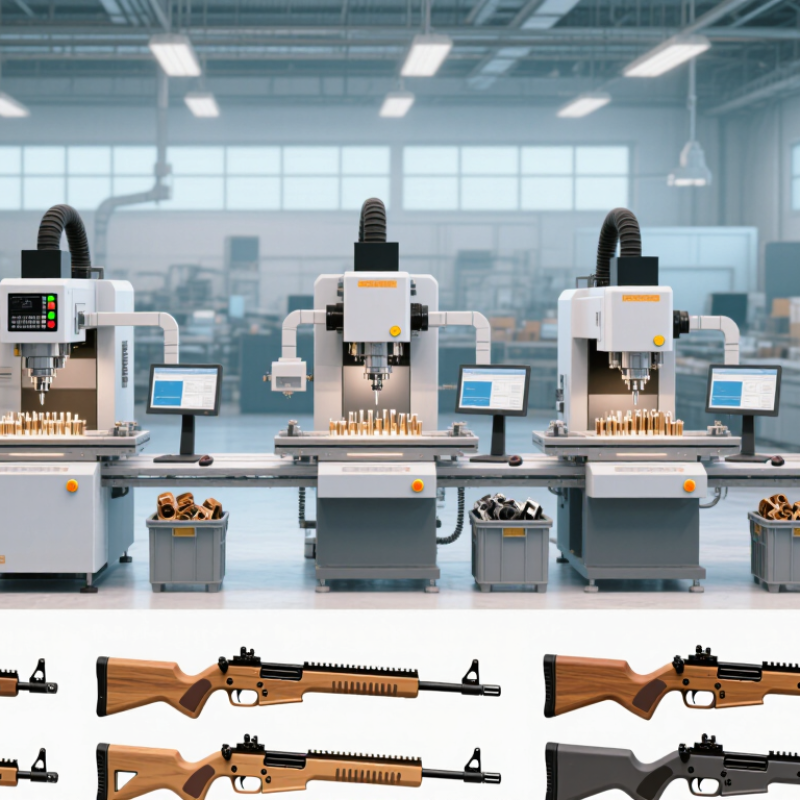
What Gunstock CNC Milling Machines Are and How They Work
Top 10 Gunstock CNC Milling Machines for Global Buyers
What Gunstock CNC Milling Machines Are and How They Work
Gunstock CNC milling machines shape wooden or composite stock blanks through computer-controlled cutting. They follow digital CAD models prepared by a trained operator. The machine moves cutting tools across several axes. Each pass removes a controlled layer of material. Modern systems may use three, four, or five axes. More axes can improve access to curved surfaces. However, greater complexity also demands stronger programming skills.
A typical workflow begins with measuring the blank and checking its moisture or density. The operator then secures it in a custom fixture. The spindle rotates the cutter while the control system follows programmed paths. Sensors and visual checks help detect movement, tear-out, or excess vibration. Fine finishing usually requires sanding and manual inspection. Even experienced machinists can miss small surface marks. A first pass may look accurate, yet reveal uneven grain later.
Tips: Choose a rigid frame, reliable dust extraction, and accessible emergency controls. Confirm local safety rules before purchasing or operating equipment. Test programs on inexpensive material first. Keep cutters sharp and inspect fixtures before every cycle. Remember that automation reduces repetition, not responsibility. Mistakes still happen. That is worth remembering.
Top 10 Gunstock CNC Milling Machines for Global Buyers
What Gunstock CNC Milling Machines Are and How They Work
Gunstock CNC milling machines use computer-controlled rotary cutters to shape wooden, laminated, and composite blanks into consistent stock profiles. Material density affects cutter selection, spindle load, feed strategy, dust extraction, and finishing requirements. The chart shows approximate typical densities for ten commonly encountered gunstock materials; actual values vary with moisture content, formulation, and manufacturing process.
Key Features to Compare When Choosing a Gunstock CNC Machine
Top 10 Gunstock CNC Milling Machines for Global Buyers
Choosing a gunstock CNC machine requires more than counting axes.
Start with rigidity, repeatability, and the usable work envelope. A stable three-axis machine suits many contoured wooden or composite stock projects. Five-axis movement can reduce repositioning and improve access around complex ergonomic surfaces. However, extra axes also increase software, calibration, and maintenance demands.
Spindle speed should match the material and cutter diameter.
A practical range of 12,000 to 24,000 rpm supports controlled routing, but torque remains important during deeper passes. Check positioning accuracy under real cutting loads, not only laboratory specifications. ISO 230-2 provides a useful framework for testing axis positioning performance.
Rigidity matters.
Also inspect the table, vacuum workholding, probing system, and dust extraction. Fine wood dust can damage guides and create serious workplace risks without proper control.
Connectivity is increasingly valuable.
The 2024 Rockwell Automation State of Smart Manufacturing Report found that 98% of manufacturers are investing in smart technology within the next one to two years. That supports choosing machines with diagnostics, production records, and secure data access. Fortune Business Insights’ 2024 CNC machine market report projects roughly 5% annual growth through 2032, reflecting continuing automation demand.
Still, automation is not always the best answer.
A simpler machine may deliver better value for small batches. Service response, spare-part access, training, and software compatibility often matter more than headline speed. I would test a sample stock before purchase. Brochures rarely show vibration, dust behavior, or difficult tool changes.
Top 10 Gunstock CNC Milling Machines for Global Buyers
Top 10 Gunstock CNC Milling Machines for Global Buyers
Choosing among the top 10 gunstock CNC milling machines requires more than comparing prices. Global buyers should examine frame rigidity, spindle stability, dust control, and software compatibility. A reliable machine should hold steady during long woodworking cycles. Clean cuts matter more than impressive speed. Check whether the control system supports your local voltage and language needs. Confirm that replacement parts are available in your region.
The best options usually include three-axis, four-axis, and five-axis configurations. Three-axis machines suit simpler stock shapes and smaller workshops. Four-axis models improve access around curved surfaces. Five-axis systems offer smoother movement, but they demand stronger programming skills. Buyers should also inspect bed size, emergency controls, guarding, and noise levels. These details affect daily safety and operator comfort. They are not exciting features.
Material support deserves careful attention. A machine should handle approved hardwoods, laminates, or other lawful sporting-equipment materials without excessive vibration. Test samples can reveal chatter, uneven edges, or weak dust extraction. Ask for documented accuracy tests and maintenance records. Do not trust polished videos alone. A recurring workshop lesson is uncomfortable: the fastest machine is not always the most productive. Training gaps, poor tooling, and neglected calibration can erase its advantages. Allow time for setup, inspection, and local compliance checks before production.
Top 10 Gunstock CNC Milling Machines for Global Buyers
| Rank |
Machine Configuration |
CNC Axes |
X / Y / Z Travel |
Spindle Power |
Spindle Speed |
Maximum Stock Length |
Positioning Accuracy |
Recommended Production Use |
| 1 |
5-Axis Gunstock Machining Center |
5 |
800 × 500 × 500 mm |
7.5 kW |
8,000–18,000 rpm |
1,200 mm |
±0.01 mm |
Complex left- and right-hand stocks, high-volume repeat production |
| 2 |
4-Axis Rotary Gunstock Router |
4 |
1,000 × 600 × 400 mm |
5.5 kW |
6,000–18,000 rpm |
1,300 mm |
±0.02 mm |
General stock shaping with continuous rotary indexing |
| 3 |
3-Axis Wood Gunstock CNC Router |
3 |
1,300 × 700 × 250 mm |
4.5 kW |
6,000–24,000 rpm |
1,400 mm |
±0.03 mm |
Entry-level woodworking, prototypes, and small workshops |
| 4 |
Twin-Spindle Gunstock CNC Cell |
3 + rotary option |
1,200 × 650 × 300 mm |
2 × 4.5 kW |
6,000–18,000 rpm |
1,300 mm |
±0.03 mm |
Two-piece simultaneous machining and increased throughput |
| 5 |
Compact 4-Axis Benchtop Mill |
4 |
600 × 400 × 250 mm |
2.2 kW |
4,000–12,000 rpm |
900 mm |
±0.05 mm |
Training, custom work, and low-volume production |
| 6 |
High-Speed 5-Axis Woodworking Mill |
5 |
1,000 × 700 × 450 mm |
12 kW |
10,000–24,000 rpm |
1,500 mm |
±0.01 mm |
Detailed contours, checkering preparation, and premium finishing |
| 7 |
Heavy-Duty 3-Axis Gantry Mill |
3 |
1,500 × 800 × 350 mm |
9 kW |
6,000–18,000 rpm |
1,600 mm |
±0.03 mm |
Large stocks, hard wood, and extended-duty cutting |
| 8 |
CNC Mill with Automatic Tool Changer |
3 or 4 |
1,200 × 600 × 300 mm |
6 kW |
8,000–18,000 rpm |
1,350 mm |
±0.02 mm |
Multi-operation machining with reduced manual tool changes |
| 9 |
Vacuum-Table Gunstock Router |
3 |
1,300 × 800 × 300 mm |
5.5 kW |
6,000–24,000 rpm |
1,500 mm |
±0.03 mm |
Fast workholding for flat fixtures and batch processing |
| 10 |
Modular CNC Gunstock Production Line |
4 or 5 |
1,500 × 800 × 500 mm |
11 kW |
8,000–20,000 rpm |
1,800 mm |
±0.02 mm |
Scalable export production with automated loading and inspection options |
Specification note: Values are representative market-reference ranges for comparable CNC configurations. Actual travel, accuracy, spindle performance, workholding capacity, and safety features should be confirmed with the equipment supplier before purchase.
How to Evaluate Accuracy, Materials, Software, and Production Capacity
For global buyers, evaluating a gunstock CNC milling machine requires more than reading its advertised accuracy. Ask for repeatability data from a real production sample. A useful test includes a shaped stock, tight curves, and several mounting points. Measure the result with calibrated gauges, not visual inspection alone. Even a small thermal change can affect dimensions during a long cutting cycle. That detail is easy to overlook.
Material compatibility matters.
Solid walnut, laminated wood, and reinforced polymers create different cutting loads and surface finishes. The machine should support suitable tooling, adjustable spindle speeds, and effective dust extraction. Request sample cuts using your actual material. A polished demonstration piece may hide tear-out, vibration, or excessive sanding. It is better to see an imperfect test than trust an attractive photograph.
Software affects both quality and productivity.
Check CAD/CAM compatibility, toolpath simulation, collision warnings, and post-processor stability. Operators should be able to modify contours without rebuilding every file. Production capacity also depends on fixture design, tool changes, cycle time, and service response. Review hourly output under normal conditions, not only maximum spindle speed. Power requirements and operator training vary across regions. I would also ask for inspection records, maintenance schedules, and documented acceptance tests. No machine is flawless, and supplier figures may need independent verification.
Safety, Maintenance, Compliance, and International Purchasing Considerations
Selecting among the Top 10 Gunstock CNC Milling Machines requires more than comparing spindle speed. Global buyers should examine guarding, emergency stops, interlocks, and dust extraction systems. These features protect operators during routine woodworking operations. Ask for risk assessments, electrical certificates, and operator manuals in your working language. A machine may look impressive online, yet unclear instructions create expensive uncertainty. Confirm its lawful industrial purpose and check destination-country rules before shipment.
Maintenance evidence matters as much as cutting accuracy. Request service intervals, lubrication points, spare-parts lead times, and remote diagnostic limits. Inspect photos of cable routing, enclosure seals, and chip collection areas. Fine wood dust can settle like flour. Weak extraction increases fire and breathing risks. Keep a written inspection log, train operators, and test emergency systems regularly. I would not trust a polished demonstration alone. That judgment feels inconvenient, but it can prevent costly surprises. Confirm voltage, phase requirements, plug standards, customs documents, warranty coverage, and delivery insurance.
Tips:
Use a pre-shipment checklist. Request a video acceptance test. Verify safety labels before installation. Keep translated procedures near the control panel. Ask an independent technician to inspect the machine after arrival. Small details often reveal larger compliance problems.
Conclusion
This guide introduces the Gunstock CNC Milling Machine, explaining how computer-controlled cutting systems shape gunstock components from approved materials with consistent accuracy and repeatability. It outlines the main features buyers should compare, including machine structure, spindle performance, working area, multi-axis capability, automation, control systems, dust management, and ease of operation. The article also presents ten machine categories suitable for global buyers, without promoting any specific brand, helping readers understand different configurations for prototyping, custom work, and larger-scale production.
It further explains how to evaluate dimensional accuracy, compatible materials, CAD/CAM software, operator training, production capacity, and long-term operating costs. Safety procedures, routine maintenance, quality control, responsible use, import documentation, technical support, voltage requirements, and compliance with local regulations are also discussed. By considering these factors together, purchasers can select a reliable and appropriately equipped CNC solution for lawful manufacturing applications while reducing downtime, waste, and purchasing risks.