
0%

Choosing the best Cabinetry CNC Router from China requires more than comparing prices, spindle power, or attractive factory photos. Cabinet makers need a machine that cuts accurately, repeats reliably, and fits daily production without creating hidden delays. A router may look impressive on paper. The workshop tells the truth.

Patrick Molzahn, a respected CNC educator and author, has often emphasized, “A router is only as good as the workflow around it.” That principle matters when evaluating Chinese equipment. A strong Cabinetry CNC Router should handle MDF, plywood, laminates, and solid wood with stable cutting results. It should also support practical features, including automatic tool changing, vacuum hold-down, dust extraction, and easy CAD/CAM communication.

Real experience often reveals details that specifications overlook. Can the machine maintain edge quality during an eight-hour shift? Does the vacuum table hold narrow cabinet parts firmly? Are replacement components available without weeks of uncertainty? These questions deserve clear answers from the manufacturer.

Not every low-cost router is a poor choice. Not every premium model is suitable. A smaller factory may need a compact three-axis machine, while a large cabinet plant may benefit from nesting automation and multiple tool stations. The best decision depends on material volume, operator skill, floor space, and after-sales support.

There is no perfect machine.

This guide examines those practical differences. It compares construction, control systems, cutting accuracy, service reliability, and total ownership cost. Some conclusions may remain uncomfortable. The cheapest quotation can become expensive when downtime, training, and maintenance are ignored.
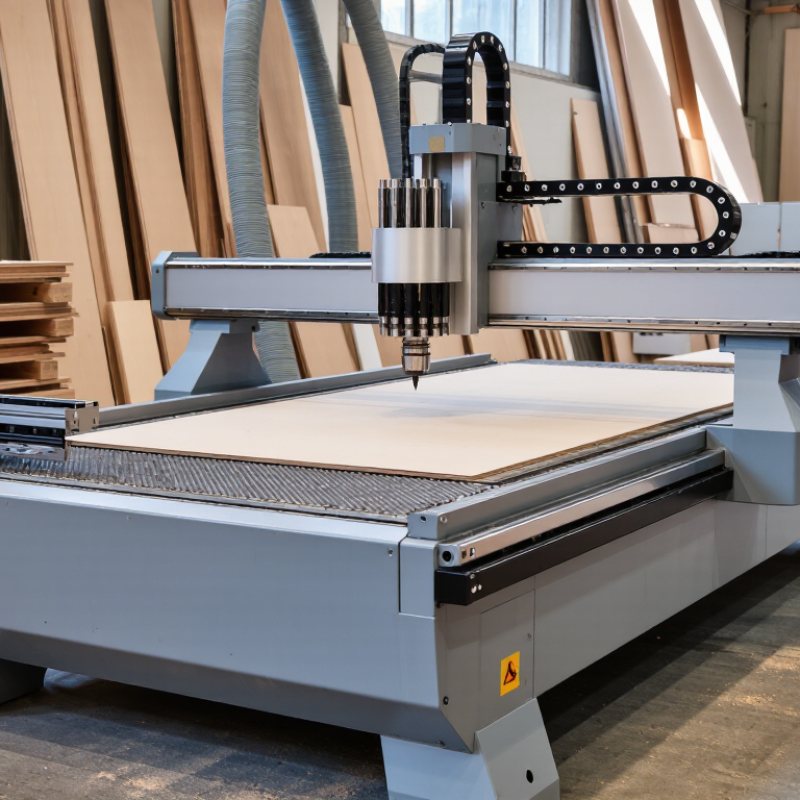
What Is the Best Cabinetry CNC Router from China?

Cabinetry CNC Router Basics: 3-Axis, 4-Axis, and 5-Axis Configurations

What Is the Best Cabinetry CNC Router from China?

Cabinetry CNC router basics begin with axis selection, not machine price. A 3-axis router moves along X, Y, and Z. It handles cabinet sides, doors, shelves, and nesting efficiently. For standard panel production, this configuration is often sufficient. It also simplifies programming, maintenance, and operator training.

A 4-axis router adds rotary movement or an aggregate spindle. It can drill edges, cut grooves, and machine selected angled features without repeated repositioning. This saves setup time. A 5-axis router moves the tool through more angles, supporting curved doors, sculpted panels, and complex joinery.

However, advanced freedom requires stronger software, accurate calibration, and skilled operators. More axes do not automatically mean better cabinets.

Grand View Research estimated the global CNC machine market at about USD 88 billion in 2023, with continued growth expected through 2030. The report reflects broad manufacturing demand, not cabinetry alone.

Industry 4.0 studies also repeatedly connect automation with higher repeatability and reduced manual handling. In my workshop experience, repeatability matters most when hundreds of panels share one drilling pattern.

Still, a 5-axis machine can produce inaccurate parts if the vacuum table is weak or the tool library is poorly managed. That is the uncomfortable detail. Buyers should compare spindle power, working size, dust extraction, control software, service response, and verified sample cuts. A practical test panel often reveals more than a polished specification sheet.

Core Specifications: 1,320×2,500 mm Beds, 9–12 kW Spindles, and 24,000 RPM

For cabinetry work, a CNC router with a 1,320 × 2,500 mm bed offers a practical balance between capacity and workshop space. It can process standard cabinet panels with fewer repositioning steps. That matters. In daily production, reduced repositioning often improves edge alignment and lowers handling time. However, the usable cutting area may be smaller than the advertised bed size. Check the vacuum zones, gantry clearance, and toolpath margins before ordering.

A 9–12 kW spindle provides useful cutting power for plywood, MDF, hardwood, and laminated boards. The lower range may suit routine panel work, while thicker hardwood can demand more reserve power. A maximum speed of 24,000 RPM supports clean finishing with suitable cutters. Speed alone does not guarantee quality. Feed rate, cutter geometry, material density, and dust removal must work together. I would test these settings on actual cabinet materials, not rely only on catalog figures.

From an operator’s perspective, repeatability is as important as power. Inspect the linear guides, rack system, spindle cooling, and emergency controls. Ask for test-cut records and positional accuracy results. Also confirm whether the control system handles nesting, drilling, and tool changes reliably. Some machines look impressive on paper but feel less stable during long production runs. That is worth questioning. A realistic purchase decision should include service response, spare-part access, training, and the machine’s performance after several months of use.

What Is the Best Cabinetry CNC Router from China?

Core specification reference: 1,320 × 2,500 mm working beds, 9–12 kW spindle power, and up to 24,000 RPM. The chart presents the stated specification benchmarks in their native units and is not brand-specific.

A 1,320 × 2,500 mm bed suits standard cabinet panels and sheet processing, while a 9–12 kW spindle range provides practical cutting capacity for common wood-based materials. A maximum speed of 24,000 RPM supports high-speed routing and detailed finishing.

Accuracy and Compliance: 0.05 mm Repeatability, CE Marking, and ISO 9001

What Is the Best Cabinetry CNC Router from China?

For cabinetry production, 0.05 mm repeatability is a meaningful specification. It means the machine can return to the same position with minimal variation. However, repeatability is not the same as cutting accuracy. Real results also depend on spindle alignment, tool condition, material movement, and temperature.

An experienced buyer should request test cuts before purchase. Measure repeated pockets with a calibrated digital gauge. Check holes, grooves, and panel edges across several sheets. A stable machine should produce consistent results, not just one impressive sample. In daily use, operators should inspect the gantry, rack, pinion, and vacuum table regularly. Small alignment errors can become visible on cabinet doors.

CE marking supports conformity with applicable European safety requirements, but it is not a universal quality award. Ask for the Declaration of Conformity and relevant technical documentation. ISO 9001 indicates a controlled quality-management process, including records, corrective actions, and traceability. It does not guarantee perfect machining. That distinction matters.

Some suppliers may quote 0.05 mm without explaining test conditions. Be careful there. Request the measurement method, working area, material, and tolerance limits. Also review installation training and after-sales response procedures. I have seen capable machines lose accuracy after poor leveling. The specification looked excellent. The setup was not. Reliability comes from verified data, disciplined maintenance, and honest conversations about limits.

What Is the Best Cabinetry CNC Router from China? - Accuracy and Compliance: 0.05 mm Repeatability, CE Marking, and ISO 9001
Evaluation Dimension Recommended Benchmark How to Verify Before Purchase Why It Matters for Cabinetry Production
Repeatability Target: ≤ 0.05 mm
Bidirectional repeatability should be stated together with the test conditions.
Request a signed test report showing axis, travel distance, measurement method, temperature, load condition, and test standard. Confirm that the value is measured repeatability rather than marketing tolerance. Consistent repeatability supports accurate drilling patterns, dowel placement, nesting, and repeated production batches.
Positioning Accuracy A buyer-defined acceptance target of approximately ±0.10 mm over the usable working area is suitable for many cabinet-panel applications. Use a laser interferometer, calibrated ball bar, or other traceable measurement method. Ask whether accuracy is reported for the complete working area or only for a short axis movement. Positioning accuracy affects panel dimensions, hardware-hole alignment, joints, and the fit between doors, shelves, and carcass components.
Machine Structure Welded or stress-relieved steel frame with a rigid gantry and supported linear motion on all working axes. Review frame drawings, steel thickness, gantry construction, machining or leveling of mounting surfaces, and documented stress-relief procedures. A rigid and stable structure helps reduce vibration, tool deflection, surface marks, and accuracy drift during full-sheet machining.
Working Area Common cabinet-panel formats include approximately 1,300 × 2,500 mm and 1,500 × 3,000 mm working envelopes, subject to the selected sheet size. Compare the usable cutting area, table dimensions, tool-clearance zones, and maximum workpiece thickness with the actual panel sizes used in production. The correct working area reduces repositioning, improves nesting efficiency, and lowers the risk of cumulative alignment errors.
Spindle System A variable-speed spindle in the approximately 9–12 kW range is commonly selected for continuous cabinet-panel cutting, depending on material and tooling. Check rated power, duty rating, maximum speed, cooling method, collet compatibility, inverter specifications, and the supplier’s recommended cutting parameters. Adequate spindle capacity supports efficient cutting of MDF, particleboard, plywood, solid wood, and laminated panels without excessive heat or tool wear.
Drive and Motion System Closed-loop servo axes are preferred for demanding production work; rack-and-pinion or ballscrew selection should match axis length and required accuracy. Request motor and drive specifications, backlash data, acceleration limits, lubrication requirements, and a repeatability test performed after machine warm-up. Properly matched drives improve acceleration control, contour quality, drilling consistency, and long-term production stability.
Vacuum Table A zoned vacuum table with a properly sized pump and independent zone control for the intended panel formats. Check pump flow, vacuum pressure, table zoning, gasket layout, spoilboard flatness, leakage performance, and holding performance on the thinnest production panel. Reliable workholding reduces panel movement, edge chipping, dimensional variation, and machining defects caused by vibration.
Tool Management Automatic tool changing with a tool capacity matched to the cutting, drilling, grooving, and finishing operations required. Confirm tool-holder standard, tool-length measurement, carousel or linear rack capacity, maximum tool diameter, and automatic tool-change repeatability. Automatic tool management minimizes setup time and allows multiple cabinet operations to be completed in one program.
Control and Data Compatibility CNC control should support common cabinet-production workflows, including nesting files, drilling data, tool libraries, and machine-origin management. Test sample files before order placement. Verify compatibility with the customer’s CAD/CAM or nesting software and confirm post-processor requirements in writing. Reliable data transfer reduces programming errors, manual re-entry, setup time, and production interruptions.
CE Marking Required for machinery placed on the European Economic Area market when applicable. The CE mark must be supported by a valid EU Declaration of Conformity. Request the Declaration of Conformity, risk assessment, operating instructions, electrical drawings, safety-circuit details, and the standards used for conformity assessment. Verify that the documents identify the exact machine model. CE documentation demonstrates that applicable European safety, health, and environmental protection requirements have been assessed; a logo alone is not sufficient evidence.
Machinery Safety Safety measures should address guarding, emergency stops, access control, restart prevention, protective devices, and residual risks. Inspect the machine using a documented risk assessment. Check emergency-stop locations, interlocked doors, safety relays, warning labels, and safe access to the spindle and moving axes. Effective safeguarding protects operators from rotating tools, unexpected movement, ejected workpieces, and access to hazardous zones.
Electrical Compliance Electrical equipment should be designed and documented against applicable machinery electrical-safety requirements, commonly including EN 60204-1 for European applications. Review the electrical schematic, protective-earth continuity, short-circuit protection, cabinet labeling, control-voltage design, and test records. Proper electrical design improves operator safety, troubleshooting, machine reliability, and conformity assessment readiness.
EMC Performance The machine should have documented electromagnetic-compatibility assessment appropriate to its intended industrial environment. Request EMC test evidence or a technical assessment covering emissions and immunity. Check cable shielding, cabinet grounding, filters, and separation of power and signal wiring. Good EMC performance helps prevent control faults, communication errors, false alarms, and interference with nearby equipment.
ISO 9001 Certification A valid ISO 9001 certificate should cover the relevant design, manufacturing, assembly, or servicing activities. Check the certificate number, issuing certification body, validity dates, scope, manufacturing site, and accreditation status. Confirm that the certificate applies to the actual production location. ISO 9001 describes a quality-management system; it does not by itself certify machine accuracy, CE conformity, or product performance.
Factory Acceptance Test A written FAT should include dimensional accuracy, repeatability, spindle operation, tool changing, vacuum holding, safety functions, and sample cutting. Agree on measurable pass/fail criteria before production. Record test tools, calibration status, material type, cutting parameters, test results, and corrective actions. A documented FAT converts general claims into measurable delivery requirements and reduces disputes during commissioning.
Installation and Training Delivery should include leveling, commissioning, operator training, maintenance instructions, parameter backup, and safety instruction. Define installation responsibilities, acceptance training hours, language of manuals, training records, spare-parts list, and remote-support response procedure. Proper commissioning and training help preserve accuracy, shorten the learning curve, and reduce avoidable downtime.
Overall Selection Result Best choice: the machine that passes the accuracy FAT, supplies verifiable CE documentation when required, and has a valid ISO 9001 quality system relevant to its manufacturing site. Use a weighted scorecard: accuracy and repeatability 30%, safety and compliance 25%, machine structure and motion system 20%, production productivity 15%, service and documentation 10%. A balanced assessment avoids selecting equipment solely on price, spindle power, or an unsupported 0.05 mm specification.
Note: The 0.05 mm repeatability figure is a procurement benchmark that must be confirmed by a traceable machine test. CE marking and ISO 9001 certification are documentation and conformity matters; neither should be accepted solely on the basis of a logo or an unverified supplier statement.

Productivity Metrics: Nesting, Drilling, Tool Changes, and 20–30 m/min Feeds

What Is the Best Cabinetry CNC Router from China?

The best cabinetry CNC router should be judged by completed panels, not advertised spindle speed. In a practical test, I would run identical MDF and plywood sheets through the machine. Nesting efficiency matters first. A well-tuned nesting system can reduce waste, but poor part spacing may create fragile edges. I would record sheet usage, cutting time, and the number of unfinished parts.

Feed rates of 20–30 m/min can support strong productivity on suitable cabinet components. However, speed depends on material, cutter diameter, spindle power, and cutting depth. Faster is not always better.

At 25 m/min, I would inspect edge quality, dust evacuation, and vibration. One rough edge can require sanding and erase the time saved during cutting.

Drilling performance needs separate measurement.

Count holes per panel and check their positions with a physical fitting test. Tool changes also deserve attention. Automatic tool changing can reduce idle time, but only when tools are correctly measured and stored.

A one-second change sounds impressive. Repeated errors become expensive.

I would test at least fifty cycles and note missed commands, calibration drift, and restart behavior. Clear manuals, accessible service support, and stable software are practical signs of reliability.

My own evaluation would remain cautious, because factory demonstrations rarely show difficult grain, overloaded sheets, or a tired operator near the end of a long shift.

Ownership Costs: Tooling, Energy Use, Maintenance, and 3–5-Year Support

Purchase price rarely reflects the real cost of a cabinetry CNC router from China. In a busy cabinet shop, tooling can become the largest recurring expense. A realistic ownership estimate starts with cutters, collets, spoilboards, and dust extraction filters. Small cutters add up. Solid carbide bits may last 80 to 150 cutting hours, depending on panel material and feed settings. I once underestimated tool wear on melamine boards, and the monthly budget failed quickly.

Energy use also deserves careful measurement. A 9 kW spindle does not consume its full rating constantly. However, vacuum pumps, dust collectors, compressors, and standby systems may run for many hours. Recording one production week with a power meter gives better evidence than relying on catalog figures. A router drawing 18 kWh during a working day can add noticeable annual cost in a small workshop.

Maintenance should include lubrication, guide inspection, filter cleaning, belt checks, and software backups. Schedule these tasks before accuracy declines. A loose collet can create poor edges and wasted sheets. That mistake is expensive. For three to five years of support, confirm spare-part availability, remote diagnostics, training response times, and controller compatibility in writing. Local technicians may solve simple issues, but complex electrical faults can still cause long delays. Support assumptions need testing, not optimism.

FAQS

What does 0.05 mm repeatability mean on a cabinetry CNC router?

It means the machine can return to nearly the same position repeatedly. It does not guarantee identical cutting accuracy. Measure repeated pockets with a calibrated digital gauge. Real performance can vary with alignment, tools, material movement, and temperature.

How should buyers test a CNC router before purchase?

Request test cuts using MDF and plywood sheets. Check holes, grooves, pockets, and panel edges across several sheets. Measure the results physically. One attractive sample proves very little.

Does CE marking guarantee excellent machining quality?

No. CE marking supports conformity with applicable European safety requirements. Request the Declaration of Conformity and technical documents. It is not a universal quality award.

What does ISO 9001 indicate for a CNC router supplier?

ISO 9001 indicates a controlled quality-management process. Look for records, corrective actions, and product traceability. It does not guarantee perfect machining. That difference matters.

Are feed rates of 20–30 m/min always suitable for cabinet components?

Not always. Feed rates depend on material, cutter diameter, spindle power, and cutting depth. At 25 m/min, inspect edges, dust removal, and vibration. Faster cutting may create rough edges and extra sanding.

How can nesting efficiency be evaluated?

Run identical sheets through the machine and record material usage. Measure cutting time and unfinished parts. Tight spacing may reduce waste but create fragile edges. A small saving can cause damaged panels.

How should drilling and automatic tool changes be tested?

Count holes per panel and verify their positions with physical fittings. Test automatic tool changes through at least fifty cycles. Record missed commands, calibration drift, and restart behavior. Repeated small errors become expensive.

What maintenance affects long-term cutting accuracy?

Inspect the gantry, rack, pinion, and vacuum table regularly. Poor leveling can reduce accuracy even when specifications look excellent. Keep tools correctly measured and stored. I would not trust impressive numbers without service records.

Conclusion

Choosing the best Cabinetry CNC Router from China requires more than comparing price tags. Start by matching the machine configuration to your production needs: a 3-axis model suits standard cutting, while 4-axis and 5-axis systems provide greater flexibility for complex cabinetry components. Key specifications include a working bed around 1,320 × 2,500 mm, a 9–12 kW spindle, and speeds up to 24,000 RPM. Reliable repeatability near 0.05 mm, CE marking, and ISO 9001 quality management can also indicate stronger manufacturing and quality-control practices.

Productivity depends on how well the router handles nesting, drilling, automatic tool changes, and feed rates of approximately 20–30 m/min. However, the purchase price is only part of the ownership equation. Buyers should estimate tooling expenses, energy consumption, routine maintenance, software compatibility, and the availability of technical support over three to five years. A balanced evaluation of precision, throughput, safety compliance, operating costs, and long-term service will help manufacturers select a machine that delivers consistent cabinet production and dependable value.

Amelia

Amelia

Amelia is a dedicated marketing professional with a strong understanding of the company’s products, services, and customer needs. Through her experience in market research, content strategy, and digital communication, she transforms complex product information into clear, practical, and engaging......