
Explore our industrial-grade cutting machinery engineered for extreme accuracy, zero thermal deformation, and heavy-duty fabrication in New Zealand conditions.
An authoritative analysis of ultra-high pressure abrasive cold cutting versus thermal profiling for Kiwi industrial fabricators, marine engineers, and food equipment makers.
Abrasive waterjet machining relies on accelerating pure water up to three times the speed of sound through a ruby or sapphire orifice at pressures ranging from 45,000 to 90,000 PSI (3,100 to 6,200 bar). Mixing engineered garnet abrasive into the supersonic stream creates a micro-erosion cutting mechanism capable of slicing through 250mm thick titanium, bisalloy, granite, or composite laminates without thermal strain or structural micro-cracking.
Conventional 3-axis waterjets naturally produce a V-shaped edge taper due to stream energy dissipation. Our advanced 5-axis dynamic waterjet heads utilize real-time mathematical algorithms to tilt the nozzle up to 10 degrees, completely eliminating edge taper and producing true 90-degree square edges. This allows New Zealand precision machine shops to eliminate secondary edge grinding and milling ops, drastically cutting part manufacturing lead times.
How local engineering firms in Auckland, Canterbury, Waikato, and Nelson leverage cold waterjet profiling for competitive advantage.
New Zealand’s world-renowned marine sector demands flawless cutting of 5083 and 6061-T6 marine-grade aluminum alloy plate, titanium structural fittings, and toughened glass portlights. Waterjet cutting produces zero Heat-Affected Zone (HAZ), preserving the full temper, tensile strength, and anti-corrosive metallic properties of marine alloys without heat warping.
Fabricators producing sanitary milk processing equipment, heat exchangers, and 316L stainless steel tanks require burr-free cuts without surface oxidation. Waterjet technology eliminates slag, discoloration, and metallurgical alteration, allowing immediate TIG welding and compliance with stringent NZ food safety hygiene standards.
From seismic dampening structural steel components in Canterbury to abrasion-resistant Hardox/Bisalloy wear plates for South Island quarry equipment, waterjets slice thick steel up to 200mm with precision tolerances, avoiding the severe thermal hardening caused by oxy-fuel or plasma burners.
Market dynamics pushing Kiwi fabricators toward high-efficiency, environmentally compliant cutting solutions.
With New Zealand’s Energy Efficiency and Conservation Authority (EECA) promoting decarbonization, advanced direct-drive servo pumps are replacing traditional hydraulic intensifier pumps. Modern direct-drive systems deliver up to 85% electrical power efficiency compared to 60% in old hydraulic pumps, significantly lowering power costs under NZ grid electricity tariffs while reducing cooling water requirements.
Under the NZ Resource Management Act (RMA) and regional council water discharge rules (e.g., Auckland Council, Environment Canterbury), manufacturing plants face strict regulations regarding wastewater disposal. Modern waterjet installations incorporate closed-loop water filtration and automated garnet recycling units, capturing 90%+ of used abrasive for re-use and enabling zero-liquid-discharge workshop operations.
Global supply chain disruptions have encouraged New Zealand OEMs to bring component production back onshore. By deploying 5-axis CNC waterjet cells integrated with automatic CAD/CAM nesting software, local job shops can rapidly pivot between cutting aluminum, carbon fiber, rubber gaskets, stone, and brass without retooling overheads.
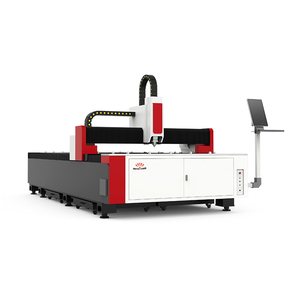
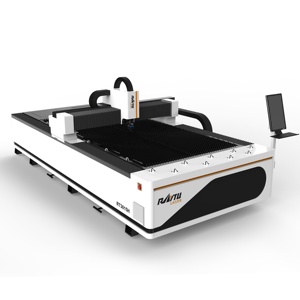
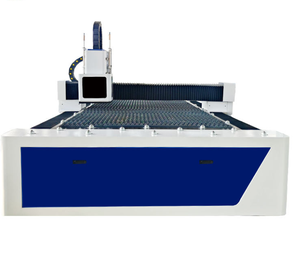
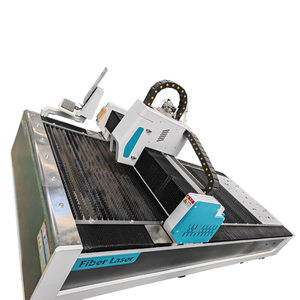
Modern Kiwi fabricators are increasingly pairing high-power Fiber Laser Cutters (for thin sheet metal speed) with Waterjet Cutters (for thick plate, non-ferrous metals, and composite insulation panels), creating versatile, high-margin job shop capabilities capable of tackling any incoming CAD design file.
A comprehensive engineering comparison to guide capital equipment purchasing decisions for New Zealand workshops.
| Performance Characteristic | Abrasive Waterjet Cutter | Fiber Laser Cutter (6kW - 12kW) | High-Definition CNC Plasma |
|---|---|---|---|
| Heat-Affected Zone (HAZ) | None (100% Cold Process) | Micro-HAZ (Minimal thermal gradient) | High HAZ (Requires edge grinding) |
| Max Material Thickness (Steel) | Up to 250mm+ | Up to 30mm - 50mm | Up to 50mm - 80mm |
| Material Versatility | All Materials (Metal, Glass, Rubber, Stone) | Metals only (Reflective metals restricted) | Conductive metals only |
| Edge Finish Quality | Smooth Ra 1.6μm - 6.3μm (No Dross) | Extremely smooth on thin sheets | Rough edge with bevel angle |
| Secondary Machining Needed | No (Finished Edge) | Rarely on sheet metal | Yes (Dross removal required) |
| Power Consumption | Medium (Servo Direct Drive: 22-37kW) | Low to Medium (15-30kW) | High (Transformer & Exhaust Draw) |
Combining world-class machinery engineering with complete localized lifecycle support for New Zealand manufacturers.
All machine electrical enclosures, servo drives, safety interlocks, and emergency stops are custom-built to comply with Australian/New Zealand Wiring Rules (AS/NZS 3000) and WorkSafe NZ safety guidelines, operating natively on 400V 3-Phase 50Hz Kiwi mains power.
Machine beds undergo vibratory stress relief and high-temperature furnace annealing to eliminate internal welding stress. This ensures lifetime structural rigidity, zero beam sagging, and unyielding axis orthogonality even under heavy 500kg/m² stone or plate loads.
We maintain comprehensive spare parts inventory including high-pressure seals, sapphire orifices, focusing tubes, mixing chambers, and dynamic swivel joints. Parts are dispatched via express courier to Auckland, Wellington, Christchurch, and regional hubs to ensure minimal downtime.
Expert answers addressing electrical standards, freight logistics, maintenance, and environmental compliance in NZ.