
Engineered specifically for heavy-duty manufacturing, non-porous nested sheet hold-down, and high-speed fiber laser cutting operations throughout the Greater Houston Area.
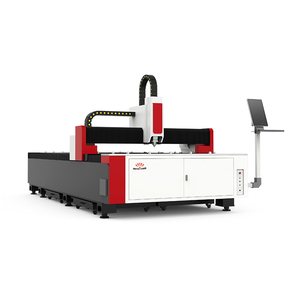
Integrated with high-pressure vacuum downdraft tables for instant smoke evacuation and thin sheet anti-warping hold-down.
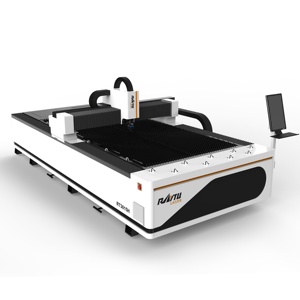
Heavy-duty structural bed coupled with dual dry-claw vacuum extraction units for dense alloy and carbon steel processing.
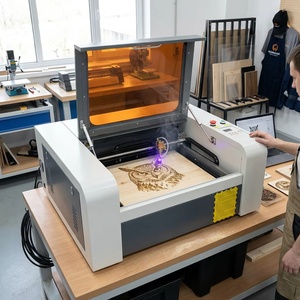
Water-cooled precision engraver featuring honeycomb vacuum table beds for delicate acrylic, leather, and wood crafting.
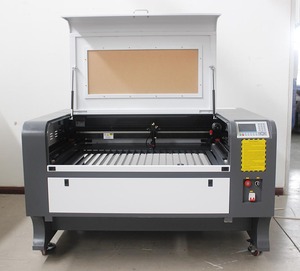
Designed for heavy architectural acrylics and wood trim, utilizing localized high-flow air extraction vacuum manifold.
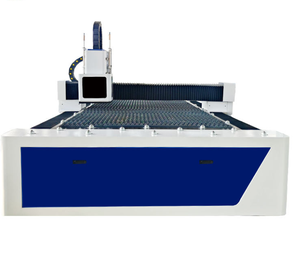
Flagship heavy plate metal fiber cutter backed by industrial liquid-ring and dry vacuum hold-down pump networks.

Hybrid optical system for metallic tag identification and precision wood craft machining with mini-vacuum suction pods.
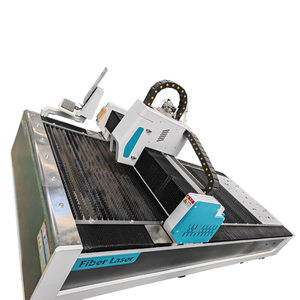
Industry standard CypCut bus-control platform matched with zoned matrix vacuum beds for high-yield nested sheet metal.
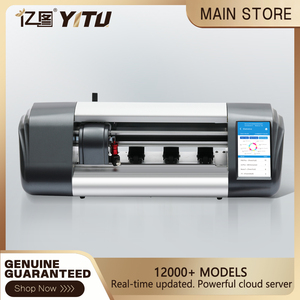
Desktop automatic film and substrate cutter equipped with integrated micro-vacuum pumps for instant sheet stabilization.
In modern computer numerical control (CNC) machining—encompassing 3-axis routers, heavy nesting work centers, and high-power fiber laser tables—the mechanical stability of the workpiece during high-velocity directional tool loading ($F_x, F_y, F_z$) is directly proportional to part dimensional tolerance, cut finish quality, and spindle lifespan. For manufacturing facilities operating in the Greater Houston industrial zone, selecting the optimal vacuum pump for CNC table systems represents a crucial operational decisions impacting material yield and cycle times.
Vacuum hold-down systems rely on establishing a atmospheric pressure differential ($\Delta P$) between the top surface of the raw material (exposed to standard sea-level ambient atmospheric pressure of approximately $14.7\text{ PSI}$ or $29.92\text{ inHg}$) and the sealed underside connected to the vacuum table plenum chambers. The resulting clamping force ($F_c$) is quantified by the governing equation:
Clamping Force Equation: $$F_c = A_{effective} \times (P_{ambient} - P_{vacuum}) \times \mu_{friction}$$
Where $A_{effective}$ represents net surface area exposed to active vacuum grid zones, and $\mu_{friction}$ accounts for the coefficient of friction between the spoilboard (MDF/LDF) or rubber gasket and the workpiece substrate.
A frequent error in industrial CNC procurement is confusing Ultimate Vacuum Level (measured in inches of Mercury, $\text{inHg}$, or millibar, $\text{mbar}$) with Volumetric Displacement Rate (measured in Cubic Feet per Minute, $\text{CFM}$, or $\text{m}^3/\text{h}$). Depending on the porosity of the material being machined across Houston job shops, the pump selection matrix changes radically:
Used primarily for nested sheet cabinetry using breathable MDF/LDF spoilboards. Requires high volumetric displacement (typically $150 - 350+\text{ CFM}$ per 4x8 or 5x10 table) to compensate for continuous air leakage through porous wood fibers.
Essential for non-porous substrates such as 6061 aluminum plate, acrylic, HDPE, carbon fiber, and thick solid surface. Demands high vacuum depth ($24 - 28.5\text{ inHg}$) using dedicated vacuum pods or rubber matrix sealing, where total leakage CFM is minimal.
Understanding the internal operating topology of industrial vacuum generators allows factory managers in Texas to balance capital expenditure (CapEx) against electrical operating cost (OpEx) and thermal dissipation requirements.
| Vacuum Pump Technology | Ultimate Pressure (inHg) | Flow Rate Range (CFM) | Maintenance Profile | Ideal CNC Substrate Application |
|---|---|---|---|---|
| Oil-Free Rotary Vane (e.g., Becker VTLF) | 24.0 - 27.0 inHg | 100 - 260 CFM | Low (Carbon vane replacement every 3k-5k hrs) | Nested Plywood, MDF Cabinetry, Plastics, HDU |
| Dry Claw Vacuum Pumps (e.g., Busch Mink) | 25.5 - 28.5 inHg | 120 - 350 CFM | Ultra-Low (Contactless internal claws, oil-free) | Continuous 24/7 Production, Non-Ferrous Alloys, ACM |
| Regenerative Side-Channel Blowers | 12.0 - 16.0 inHg | 200 - 600+ CFM | Virtually Zero (Bearings only, high heat output) | Large-format lightweight sheet foam, corrugated plastic |
| Liquid Ring Vacuum Pumps | 28.0 - 29.0 inHg | 150 - 500 CFM | Medium (Requires water recirculation loop & fluid management) | Heavy stone, dense composites, wet-cutting metal CNC |
Houston, Texas represents the energy capital of the world and one of North America's most concentrated industrial fabrication hubs. The operational environment in Southeast Texas presents specific physical and commercial demands that influence CNC table hold-down and vacuum pump specification.
Machine shops along the Houston Ship Channel and Energy Corridor frequently cut heavy elastomeric gaskets, Teflon (PTFE), expanded graphite, and synthetic rubber flanges. High vacuum pressure ($26+\text{ inHg}$) dry claw pumps prevent lateral part shift during high-shear aggressive profiling on 3-axis CNC tables.
Fabricators producing synthetic teak boat decking, marine-grade aluminum bulkheads, and EVA foam sheet insulation require multi-zone matrix vacuum tables. High-CFM rotary vane pumps ensure continuous grip on flexible marine polymers under humid coastal conditions.
Houston's massive commercial real estate expansion drives rapid nested-base manufacturing of pre-finished maple, melamine, and MDF paneling. Utilizing dual $10\text{ HP}$ or single $25\text{ HP}$ dry-running rotary vane pumps allows full 5x10 sheet nesting without mechanical tabs.
Cutting carbon fiber reinforced polymers (CFRP) and aircraft aluminum alloys requires precision Z-axis depth retention. Micro-grid vacuum tables equipped with absolute pressure regulators ensure zero workpiece vibration or spoilboard compression artifacts.
As Houston leading energy enterprises pivot toward hydrogen infrastructure, carbon capture equipment, and solar component manufacturing, CNC workshops are transitioning from traditional manual clamping fixtures toward automated multi-zone vacuum nesting centers. This reduces setup times by up to 70% per work cycle.
The Gulf Coast regional climate exhibits sustained summer relative humidity levels exceeding 85% paired with high ambient temperatures ($95^{\circ}\text{F}+$). Standard oil-sealed vacuum pumps can experience accelerated moisture emulsification inside the oil sump, leading to premature bearing failure. As a result, Houston factories are increasingly mandating Dry Claw and 100% Oil-Free Carbon Vane pump architectures equipped with thermal air-over-oil heat exchangers.
With Texas industrial electricity rates subject to seasonal peak demand surges, high-efficiency Variable Frequency Drive (VFD) vacuum pumps are becoming standard. VFD-equipped vacuum systems automatically throttle motor RPM down when optimal vacuum pressure ($inHg$) is achieved, lowering facility power consumption by up to 35% annually.
Rooted in over 35 years of US manufacturing excellence, engineering innovation, and direct technical responsiveness.
We maintain a comprehensive inventory of vacuum pump carbon vanes, exhaust filters, check valves, spoilboards, and high-performance CNC router bits ready for immediate shipping to Houston facilities to minimize production downtime.
No automated phone queues or AI bots. You gain direct telephone and video access to factory-trained CNC application engineers (Monday to Friday) for the entire operational life of your equipment.
Our CNC tables are built using heavy-duty, stress-relieved welded tubular steel bases with precision-ground linear guide ways, guaranteeing zero bed flex under maximum vacuum pull-down forces.
From initial vacuum CFM calculation based on your target material mix to on-site operator training and CAM post-processor tuning, our technical team ensures seamless commissioning.
Expert answers to the most common pre-purchase technical questions submitted by Texas shop managers and sourcing engineers.
For standard nested sheet wood processing (MDF, cabinet plywood) using a porous spoilboard, a minimum of 10 to 15 CFM per square foot of active table area is recommended. Therefore, a 4'x8' table (32 sq.ft) requires approximately 300 - 400 CFM (typically achieved via a 10HP-15HP dry vane or claw pump). For non-porous sheet metal or plastic using dedicated gasketed vacuum zones, vacuum pressure ($\text{inHg}$) is prioritized over CFM, requiring only 30 - 60 CFM at 26+ $\text{inHg}$.
Dry Claw pumps offer higher energy efficiency, higher vacuum levels ($28.5\text{ inHg}$), and extremely low maintenance due to non-contact internal claw rotors. They are ideal for high-ambient-temperature environments like Houston because they require no carbon vane replacement or oil changes. Oil-Free Rotary Vane pumps provide excellent initial value and exceptionally smooth air displacement, making them a reliable standard for traditional cabinet and sign shops.
High relative humidity can introduce water moisture into oil-lubricated vacuum pumps, causing oil degradation and internal oxidation. We strongly advise Houston operators to utilize oil-free dry technology or install inline inlet water separator filters and thermal bypass valves to maintain internal operating temperatures above the condensation dew point.
To eliminate vacuum pressure bypass around the periphery, coat all four exterior edges of the MDF board with polyurethane sealer, PVA glue, or heavy duct tape. Additionally, surfaced LDF (Low-Density Fiberboard) or specialized non-porous MDF grade cores milled on both sides by $0.020"$ provide optimal vertical permeability while eliminating edge bleed.
We provide full factory direct engineering support. Replacement vacuum filters, carbon vanes, check valves, and spindle components ship standard same-day to Houston, Dallas, San Antonio, and surrounding Gulf Coast manufacturing corridors.