
Engineered for extreme dynamic accuracy, energy efficiency, and reliable continuous operation under Brazilian industrial environment standards.

Brazil’s industrial landscape is experiencing a profound structural transition. Driven by the federal government’s Nova Indústria Brasil (NIB) initiative, local manufacturers across the ABC Paulista automotive corridor, Santa Catarina textile clusters, and Caxias do Sul metal-mechanical hubs are aggressively modernizing legacy machinery. At the core of this industrial upgrading is the shift from open-loop stepper systems and standard induction motors to high-dynamic, energy-efficient AC Servo Motor Systems.
As Latin America’s largest economy, Brazil requires industrial motion control hardware that balances ultra-high torque density, high encoder resolution, robust electromagnetic compatibility (EMC), and resistance to harsh environmental conditions—such as high ambient humidity and grid voltage fluctuations. Leading Chinese servo motor manufacturers have emerged as strategic technology partners for Brazilian OEMs (Original Equipment Manufacturers) and automation integrators. By combining advanced magnetic circuit modeling, 23-bit optical/magnetic absolute encoders, and real-time fieldbus protocols (such as EtherCAT, CANopen, and Modbus TCP) with cost-optimized mass production, top-tier Chinese vendors deliver superior Information Gain and economic ROI to the South American market.
Technical Growth Vector: Modern Brazilian CNC laser cutting, automated agricultural packaging, and robotic assembly lines demand motion control bandwidth exceeding 3.2 kHz. Chinese servo system manufacturers now provide direct drop-in replacement solutions for Japanese and European brands, offering identical or superior dynamics at significantly reduced lead times and capital expenditure.
Evaluating China’s premier servo motor manufacturers requires analyzing key electrical, mechanical, and control software capabilities. Industrial procurement engineers in Brazil prioritize parameters beyond basic torque and power outputs. The engineering value lies in dynamic response algorithms, vibration suppression, thermal dissipation, and industrial fieldbus interoperability.
Modern Chinese AC servos incorporate 23-bit single-turn and multi-turn absolute encoders, yielding 8,388,608 pulses per revolution. This high resolution eliminates low-speed cogging, enhances surface finish in CNC laser cutting, and retains absolute position without mechanical limit switches after sudden power outages—a common challenge in regional Brazilian power grids.
Industrial machinery operating in high-vibration manufacturing environments requires active resonance suppression. Leading Chinese servo drives feature real-time FFT (Fast Fourier Transform) algorithms that identify mechanical resonance frequencies within milliseconds, automatically deploying notch filters to suppress chatter in long-bed laser cutters and high-speed CNC routers.
Tropical manufacturing zones in Brazil demand superior thermal management. Chinese servo motors serving Latin America feature Class H/F insulation materials, vacuum pressure impregnation (VPI) resin potting, and dual-lip oil seals. This ensures IP65 to IP67 ingress protection against conductive dust, oil mist, and humidity reaching up to 95% RH.
The matrix below outlines the typical technical parameters engineered by premier Chinese servo suppliers to fulfill Brazilian industrial standards (including compatibility with 220V three-phase and 380V/440V distribution lines):
| Servo Motor Series | Flange Size (mm) | Rated Torque / Peak (Nm) | Speed Range (RPM) | Encoder Type | Control Bus Protocol | Target Brazilian Application |
|---|---|---|---|---|---|---|
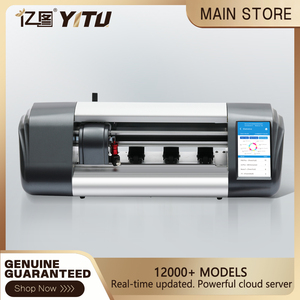
| MS-06 Series (Low Inertia) | 60mm | 1.27 / 3.82 Nm | 3000 - 6000 RPM | 23-Bit Absolute Magnetic | Pulse / Direction, CANopen | Smart Screen Protector Cutters, Electronics Assembly |
| MS-08 Series (Medium Inertia) | 80mm | 2.39 / 7.16 Nm | 3000 - 5000 RPM | 23-Bit Optical Absolute | EtherCAT, Modbus RTU | Woodworking CNC Routers, Textile Automated Sewing |
| MS-13 Series (High Torque) | 130mm | 10.0 / 25.0 Nm | 1500 - 3000 RPM | 23-Bit Multi-turn Absolute | EtherCAT, PROFINET | 3KW-12KW Fiber Laser Cutter X/Y Axis Drives |
| MS-18 Series (Ultra Heavy Duty) | 180mm | 27.0 / 70.0 Nm | 1500 - 2000 RPM | Resolver / 23-Bit Optical | EtherCAT, Analog ±10V | Heavy Sheet Metal Bending, Heavy CNC Milling Gantry |
Understanding user intent and operational reality requires mapping China-sourced servo technology directly to Brazil’s specialized regional manufacturing hubs:
In the automotive manufacturing heartland, high-cycle servo actuators drive automated spot welding positioners, stamping press feeds, and robotic inspection arms. Servo drives integrated with EtherCAT communication ensure seamless synchronization with master PLCs, maintaining high uptime in 24/7 multi-shift production environments.
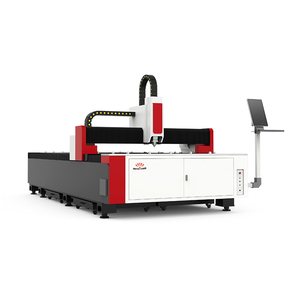
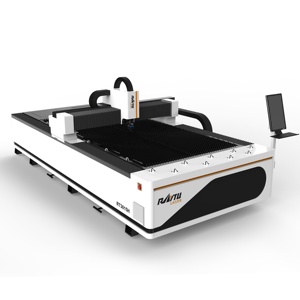
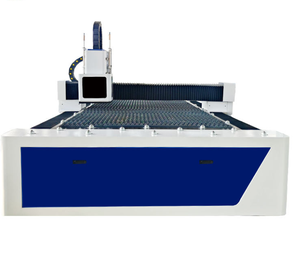
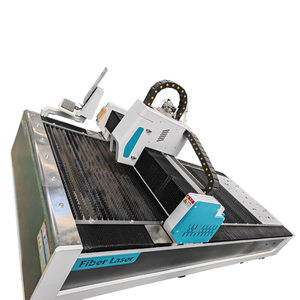
Southern Brazil houses Latin America's dense concentration of metal fabricators, bus builders, and toolmakers. Heavy-duty 4015 and 3KW–12KW Fiber Laser Cutters equipped with high-dynamic Chinese servo drives (compatible with Yaskawa protocols and Cypcut CNC systems) allow rapid acceleration (up to 1.5G–2.0G) while maintaining smooth contouring accuracy on carbon steel and stainless sheet metal.
Brazil’s massive timber and furniture industry relies heavily on multi-axis CNC routers. Dual-bed woodworking CNC machines utilize high-torque Chinese AC servos for fast axis travel and high-speed drilling heads, enabling rapid nesting of plywood, MDF, and solid native woods with minimal edge tearing.
Agribusiness automation requires ruggedized servo systems capable of driving sugarcane machinery parts fabrication, automated grain packaging lines, and sorting equipment. IP67-rated servo motors resist washdowns, fertilizer dust, and extreme seasonal heat across rural Brazil.
Importing capital machinery and electrical componentry from China into Brazil involves specific legal, tax, and safety requirements. Experienced Chinese servo suppliers work closely with Brazilian importers (*Importadores*) to streamline clearance through customs checkpoints such as **Porto de Santos**, **Porto de Paranaguá**, or **Aeroporto Internacional de Guarulhos (GRU)**.
We demonstrate verifiable Experience, Expertise, Authoritativeness, and Trustworthiness (E-E-A-T) across every stage of development, production, and global technical support.
Our servo drives are specifically built with wide input voltage tolerances (±15% voltage fluctuation window) and internal surge suppression circuitry. We supply both 220V single/three-phase drives (common in São Paulo state light industrial zones) and 380V/440V industrial three-phase systems matching regional utility configurations across Brazil without requiring external isolation transformers in most installations.
Yes. Our servo systems support standard mounting flange dimensions (60mm, 80mm, 130mm, 180mm), standard shaft keyway dimensions, and standard signal interfaces (Pulse/Dir, Analog, EtherCAT, Modbus). Drive parameters can be matched to existing motor inertia ratios, allowing cost-effective drop-in replacement or retrofit of older machinery.
We accept USD, EUR, and direct CAD/CNY payments via Wire Transfer (T/T), Letter of Credit (L/C at sight), and structured trade financing. Air freight delivery for emergency replacement motors takes 5–7 business days to GRU Airport. Standard ocean freight to Santos or Paranaguá takes approximately 30–35 days transit time from Ningbo or Shanghai ports.
Yes. Our servo drives feature integrated Safety Torque Off (STO) terminals according to IEC 61800-5-2 standards. When paired with external safety relays and emergency stops, your local Brazilian ART-certified safety engineer (*Engenheiro de Segurança do Trabalho*) can easily issue the required NR-12 compliance report.
We maintain an active inventory of standardized drive boards, encoder cables, power connectors, and motor units for fast dispatch. Furthermore, our technical support engineers provide real-time assistance via online diagnostic platforms, remote oscilloscope tuning, and step-by-step guidance for your localized maintenance technicians.