The German Desktop CNC Market: Strategic Procurement & Technological Whitepaper
Germany’s industrial ecosystem—anchored by the legendary Mittelstand, world-leading automotive OEMs, and advanced medical technology clusters in Baden-Württemberg and Bavaria—demands unparalleled precision, operational longevity, and absolute compliance with European safety frameworks. As production shifts toward decentralized micro-manufacturing, localized prototyping, and rapid iterative R&D, the strategic deployment of Desktop CNC Machining Centers and Mini VMCs has emerged as a cornerstone for maintaining competitive advantage.
Unlike standard entry-level hobby routers, industrial-grade Desktop CNC machines engineered for the German market must balance a minimal spatial footprint with structural rigidity comparable to large-scale vertical machining centers. This whitepaper analyzes the core evaluation metrics, regulatory demands, and supply chain paradigms governing desktop CNC procurement across the Federal Republic of Germany.
Key Engineering Takeaway for German Buyers: Operating within DIN EN ISO 12100 safety parameters and CE Machinery Directive 2006/42/EC is mandatory for commercial installation in Germany. Ensure selected desktop CNC machinery incorporates dual-channel safety stops, fully interlocked enclosures, and EMC-compliant motor drives to pass BG BAU or local industrial safety audits effortlessly.
Technical Selection Benchmarks for German Industry
When evaluating desktop CNC factories and suppliers, procurement directors and engineering leads must audit manufacturers against four key technical criteria:
1. Frame Rigidity & Mass Damping
High-speed milling of non-ferrous metals like AlMgSi0.5 (EN AW-6060) or CuZn39Pb3 requires high static frame mass or cast iron beds to dampen harmonic resonance generated at 12,000–24,000 RPM spindle speeds.
2. Spindle Runout & Bearing Quality
Precision micro-milling requires total indicator reading (TIR) runout under 0.005mm at the spindle taper. Premium ceramic bearings ensure thermal stability during extended multi-hour production cycles.
3. Linear Motion & Backlash Control
Preloaded C3 or C5 precision ground ballscrews combined with hardened linear profile rails eliminate axis backlash, preserving sub-hundredth millimeter positioning tolerance (DIN VDI 3441).
4. CE Directive & Noise Abatement
German workplace ergonomics mandate operational noise levels below 70 dB(A). Integrated sound-dampening full safety enclosures with safety door switches protect technicians while containing chip debris.
Localized Application Scenarios in Germany’s Key Technology Hubs
Desktop CNC machinery plays a vital operational role across diverse industrial clusters throughout Germany. By decentralizing machining tasks from primary production lines, organizations drastically reduce prototyping lead times from weeks to hours.
| German Industrial Region |
Primary Application Focus |
Recommended Machine Type |
Material Focus |
| Stuttgart & Munich Hubs (Automotive & Aerospace) |
Rapid jig & fixture prototyping, sensor housing machining, carbon fiber trim cutting |
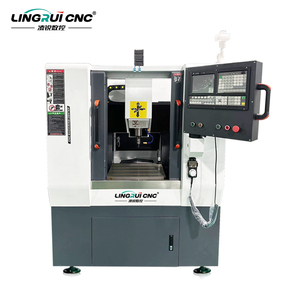
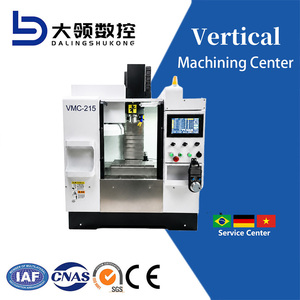
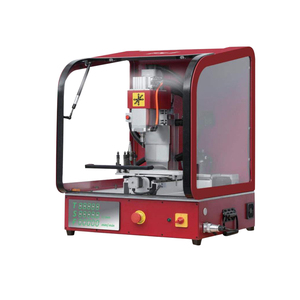
Full Enclosed Metal CNC Center / VMC 215 |
Aluminium 6061-T6, POM-C, Carbon Composites |
| Tuttlingen Cluster (Medical Engineering) |
Micro-tooling, surgical instrument prototypes, titanium dental component trials |
High-Precision 12,000+ RPM Mini VMC |
Medical Titanium, 316L Stainless Steel, PEEK |
| Dresden (Silicon Saxony) (Electronics & Semiconductor) |
Custom PCB isolation milling, IC test socket machining, shielding enclosures |
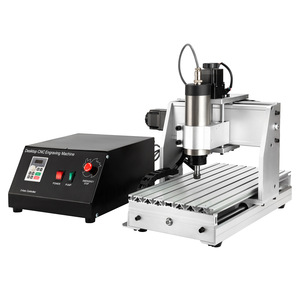
Mini Desktop 3-Axis / Hobby 3020 |
FR4 Copper Clad, Brass, PTFE, Acrylic |
| Aachen & Darmstadt (Technical Universities & R&D) |
G-code vocational training, mechanical engineering student labs, material research |
Senmo Fa2-Ultra / 3020 Hybrid Router |
Engineering Plastics, Brass, Wood Composites |
| Black Forest & Glashütte (Precision Instruments & Horology) |
Watch case milling, micro-gear machining, optical mount engraving |
Ultra-Low Runout Mini Desktop Mill |
CuZn37 Brass, German Silver, Stainless Steel |
Desktop CNC Supply Chain Trends & Supplier Evaluation for Germany
The global machine tool market has undergone significant structural transformation. German purchasing managers and factory owners increasingly partner with specialized high-tech OEM manufacturers in China to secure superior cost-performance ratios without sacrificing structural quality or technological sophistication.
1. Industry 4.0 & Open CAD/CAM Interoperability
Modern German production environments rely on seamless digital workflows. Leading desktop CNC suppliers now engineer control boxes that natively interface with European CAD/CAM suites such as Siemens NX, Autodesk Fusion 360, Mastercam, and SolidWorks. Support for standard G-code (DIN 66025) ensures smooth integration into existing shop-floor management architectures.
2. Direct-from-Factory OEM Sourcing vs. Local Distributors
While local European machine distributors historically dominated the market, direct procurement from tier-1 Chinese factories offers German enterprises up to 45% Total Cost of Ownership (TCO) savings. Top suppliers now bridge geographical gaps by offering pre-configured EU electrical compliance (230V 50Hz Schuko plugs), CE Declaration of Conformity documentation, and expedited air-freight spare part logistics.
3. Total Cost of Ownership (TCO) Comparison
A comparative assessment between traditional heavy industrial milling centers and modern precision desktop CNC units highlights substantial economic advantages for localized prototyping and low-volume production:
- Capital Expenditure (CapEx): Compact desktop units require less than 15% of the initial capital investment of full-sized industrial VMCs.
- Operational Footprint: Zero specialized foundation requirements; runs on standard single-phase 230V/16A laboratory power sockets rather than heavy 400V 3-phase industrial drops.
- Tooling & Maintenance: Standardized ER11 / ER16 / ISO20 collet systems allow cost-effective tooling procurement across all European supply networks.
Why Enterprise Buyers Choose Our Desktop CNC Manufacturing Solutions
As a global leader in compact numerical control engineering, our manufacturing facilities integrate rigorous quality management protocols with scalable OEM/ODM customization capabilities. We empower German buyers with machinery engineered for heavy-duty operational cycles.
ISO 9001 Quality Control
Every machine undergoes a 72-hour continuous laser interferometer calibration test to verify pitch-error compensation and positioning accuracy before international dispatch.
Strict CE & RoHS Compliance
Built with certified low-voltage directives, electro-magnetic compatibility (EMC) filtering, and integrated safety relays tailored specifically to European safety standards.
Full OEM / ODM Customization
From custom spindle power configurations and 4th-axis rotary rotary tables to specialized enclosure branding for European machinery distributors.
Frequently Asked Questions (FAQ) for German Procurement Managers
Detailed engineering answers to common technical, legal, and logistic queries raised when sourcing desktop CNC equipment for German business operations.
Are your desktop CNC machines fully compliant with German CE and BG safety standards?
Yes. All exported desktop CNC machines feature complete CE marking and come accompanied by an official Declaration of Conformity under the Machinery Directive 2006/42/EC and Low Voltage Directive 2014/35/EU. Enclosed models incorporate safety interlock switches, emergency stop buttons, and shielded cabling to fulfill BG BAU workplace safety recommendations.
What are the electrical requirements for operating these machines in Germany?
Our desktop machinery is built to run natively on standard German single-phase electrical supply (230V AC, 50Hz) utilizing standard CEE 7/7 Schuko power plugs. Larger models featuring 3kW+ spindles can be pre-wired for 400V 3-phase industrial power upon customer specification.
How is customs clearance and import handled when shipping to Germany?
We provide full DDP (Delivered Duty Paid) or CIF (Cost, Insurance, Freight) shipping options to all major German industrial centers, including Frankfurt, Hamburg, Munich, and Stuttgart. All import customs documentation, commercial invoices, HS codes (typically 8459.69.00), and EORI registration support are fully managed by our international logistics team.
Can these desktop CNC routers machine non-ferrous metals like German 6061-T6 Aluminum and Brass?
Absolutely. Models equipped with high-rigidity cast iron or reinforced alloy frames, ballscrew drives, and high-frequency spindles (2.2kW and above) can routinely mill aluminum alloys (such as AlMgSi0.5), brass (CuZn39Pb3), copper, and engineering plastics with feeds and speeds optimized for micro-milling applications.
Which CAM software post-processors are supported out of the box?
Our controllers accept standard G-code / ISO code (DIN 66025). We supply dedicated post-processor files for Autodesk Fusion 360, Vectric VCarve/Cut2D, SolidCAM, Mastercam, and Siemens NX, enabling immediate plug-and-play operation for your existing CAD/CAM design pipeline.
What is the typical lead time and spare parts availability for EU customers?
Standard model configurations ship within 7–10 business days. Transit time via express air freight to Germany is 5–7 days, while ocean freight takes approximately 28–35 days. Critical spare parts (spindles, stepper motors, linear bearings, controllers) are dispatched globally via DHL Express within 24 hours of request.
What technical support is provided after delivery to a German workshop?
Every machine purchase includes lifetime technical remote engineering support. Our multi-lingual application engineering team provides live video setup assistance, G-code troubleshooting, and maintenance guidance during European business hours.