
Explore our certified range of electro-hydraulic CNC press brakes, high-power fiber laser cutters, and industrial metalworking machinery tailored for Pakistani fabricators.
Pakistan’s industrial manufacturing framework is undergoing a profound structural shift. As infrastructure development under the China-Pakistan Economic Corridor (CPEC) accelerates alongside a surging domestic demand for automotive parts, HVAC ductwork, electrical switchgear cabinets, and agricultural machinery, local fabrication workshops are rapidly abandoning obsolete mechanical bending brakes. Modern sheet metal processing demands extreme angular accuracy, minimal setup times, and high energy efficiency.
Historically, fabrication corridors in Lahore (Badami Bagh, Kot Lakhpat), Karachi (S.I.T.E, Korangi Industrial Area), Faisalabad, and Gujranwala relied heavily on manual mechanical press brakes. These legacy systems lacked hydraulic synchronization, resulting in severe dynamic deflection, high scrap rates, and dependence on rare master craftsmen. Today, importing electro-hydraulic synchro CNC press brakes equipped with Delem, Cybelec, or ESA controllers has become the prerequisite for maintaining competitive margins in Pakistan.
One of the primary engineering challenges faced by Pakistani factory managers is utility power instability and high KWh tariffs. Modern CNC press brakes supplied to Pakistan are now specifically built with Hybrid Dual-Servo Hydraulic Systems. Unlike traditional induction-motor hydraulics that run continuously at 100% capacity, servo-driven hydraulic press brakes consume power only when the top ram is actively moving downward. This reduces overall power consumption by up to 45% to 60% and dramatically lowers oil temperature, preserving hydraulic seal integrity in humid climates like Karachi.
By establishing direct engineering channels between global manufacturing hubs and Pakistani industrial hubs, our export operations ensure that machinery is pre-configured with wide-voltage tolerance transformers (380V ± 15%, 50Hz 3-Phase) designed to handle localized voltage spikes without tripping delicate CNC processor boards.
From heavy structural bending in Taxila to ultra-precise enclosure fabrication in Karachi, discover how electro-hydraulic CNC press brakes drive regional productivity.
Karachi’s Korangi and S.I.T.E industrial complexes host Pakistan's largest panel box and HVAC ducting manufacturers. High-speed 4-axis (X+R+Z1+Z2) CNC press brakes allow rapid multi-step box bending without manual backgauge repositioning, ensuring dust-proof IP65 sealing compliance.
Supplying components to automotive OEMs in Punjab requires absolute consistency. Electro-hydraulic press brakes equipped with optical linear scales (Heidenhain/Givi Misure) measure real-time position to ±0.005mm, eliminating part variations in high-volume stamping lines.
From heavy wheat thresher chassis frames in Faisalabad to medical-grade stainless steel enclosures in Sialkot, multi-v die block systems allow seamless switching between 1.5mm thin stainless sheet and 12mm thick carbon steel plates.
Heavy engineering projects require massive tonnage. High-capacity Tandem Press Brakes (e.g., 600-Ton 6000mm up to 1200-Ton) bend thick structural guardrails, utility poles, bridge girders, and defense transport components with automatic hydraulic crowning.
Urban high-rise developments in Islamabad and Karachi rely on non-marring bending for mirror-finish stainless steel and brass panels. Specialized polyurethane die inserts and automatic anti-deflection tables preserve decorative sheet surface integrity.
For independent machine shops in Multan and Peshawar handling diverse walk-in work, CNC controllers with 3D graphical offline software (Delem Profile-S) allow engineers to simulate bending sequences, detect tool collisions, and calculate unbent flat lengths automatically.
Navigating the technological upgrade cycles, energy constraints, and financial parameters defining Pakistani machinery imports.
Traditional WC67Y torsion-bar hydraulic press brakes rely on a physical mechanical link to equalize cylinder depth. However, as Pakistani shops shift toward high-spec export orders, the market is aggressively upgrading to WE67K Electro-Hydraulic Synchro systems, where independent proportional hydraulic valves (Bosch Rexroth / Hoerbiger) control Y1 and Y2 cylinders electronically for flawless parallel accuracy even during eccentric loading.
With electricity tariffs escalating across K-Electric and DISCO networks, industrial electricity overhead has become a critical operational metric. Modern press brakes exported to Pakistan incorporate main drives driven by high-torque servo motors (Inovance / Estun). Power draw drops to negligible levels during standby, resulting in lower thermal breakdown of hydraulic fluid and thousands of dollars saved annually per machine.
Safety compliance was historically overlooked in local job shops. However, top-tier Pakistani manufacturers working for multinational brands now mandate laser safety guards (DSP Laser Guards / LazerSafe LZ3). These optical systems monitor the rapid-approach zone directly below the punch tip, instantly stopping movement if an operator’s hand interrupts the beam, preventing workplace injury while maintaining fast cycle times.
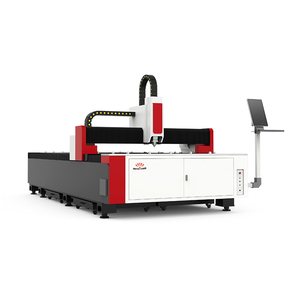
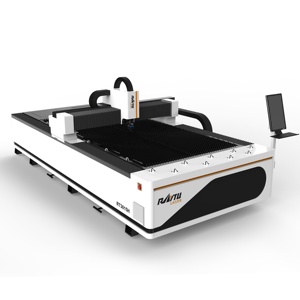
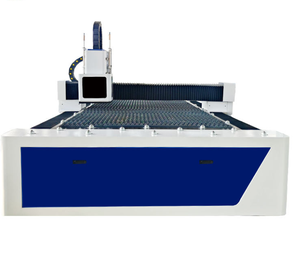
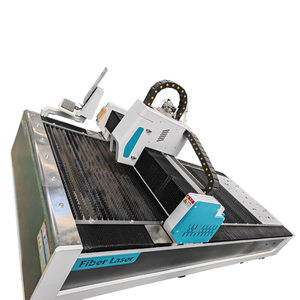
Pakistani fabricators are increasingly procuring synchronized paired machinery. Purchasing a high-power CNC Fiber Laser Cutter along with a CNC Electro-Hydraulic Press Brake running compatible control interfaces streamlines production. Flat DXF patterns cut on the fiber laser feed directly into the press brake offline programming software, eliminating manual measurement error.
Our press brakes and metalworking systems combine robust structural fabrication, world-class European hydraulics, and complete lifetime engineering support for Pakistani enterprises.
Every press brake frame is fabricated from high-tensile structural steel plate, fully stress-relieved in electric annealing furnaces, and machined on large floor-type CNC boring mills in a single setup. This guarantees structural rigidity under full tonnage load and prevents angular twist over decades of operation.
To prevent "canoe-effect" center angle deviations on long sheets (e.g., 3200mm or 4000mm length), our machines feature motor-driven mechanical crowning built into the lower worktable. Controlled dynamically by the CNC system, it compensates for frame deflection in real-time based on sheet thickness, tensile strength, and material length.
We do not compromise on key operational components. Our press brakes integrate Bosch Rexroth or Hoerbiger (Germany) valves, Sunny or VOITH pumps, Schneider electrics, and Yaskawa / Panasonic servo drives, ensuring local maintenance technicians in Pakistan can easily source standard consumable parts if required.
Featuring intuitive user interfaces like the Delem DA-53T, DA-58T, or DA-66T 3D Touchscreen Controllers. Operators can import CAD DXF files directly, automatically compute bend sequences, gauge positions, safety zones, and tool selection, cutting setup time from 45 minutes down to under 3 minutes.
Every exporter machine delivered to Pakistan includes lifetime remote diagnostic support. Our senior application engineers assist your team with software updates, bending angle troubleshooting, custom tooling design, and operator coaching via direct video link and cloud diagnostics.
We manage complete export documentation, heavy-duty seaworthy packaging, anti-rust oil treatment, and steel-frame containerized loading. Machines arrive at Karachi Port or Port Qasim ready for transport to your site with zero moisture degradation.
Clear, direct technical answers regarding machinery imports, power requirements, customs clearance, and local operational maintenance in Pakistan.
Selection depends directly on maximum material thickness, sheet width, and tensile strength. For standard HVAC, panel box, and door manufacturing using 1.2mm to 2.5mm mild steel up to 8 feet, a 100-Ton 2500mm or 3200mm CNC press brake is recommended. For agricultural machinery, trailer bodies, and heavy industrial chassis working with 6mm to 10mm carbon steel plates, you will typically require a 160-Ton to 300-Ton press brake with a 3200mm or 4000mm bed length. Contact our engineering team to run exact tonnage calculation curves for your part drawings.
Our export models feature heavy-duty industrial isolation transformers and wide-range voltage stabilizers (380V ±15%, 50Hz, 3-Phase). Sensitive microelectronics, linear optical scales, and CNC control boards (Delem/ESA) are shielded with surge protection modules and 24V DC isolated power circuits. Additionally, main motor starters are configured with phase-loss protection relays to protect against generator-to-grid switching faults common during local load-shedding shifts.
WC67Y (Torsion Bar) is an entry-level mechanical-hydraulic machine where a physical steel shaft connects both cylinders. It offers basic 2-axis control (Y-depth, X-backgauge) but suffers under off-center bending loads. WE67K (Electro-Hydraulic Synchro) utilizes independent proportional hydraulic servo valves on both Y1 and Y2 cylinders, monitored by high-resolution optical linear encoders. This guarantees parallel ram positioning within ±0.01mm, allows full off-center loading, enables complex multi-bend profiles, and supports computerized mechanical crowning systems.
Press brakes ship without hydraulic oil due to international maritime shipping safety regulations. Upon arrival at your factory in Karachi, Lahore, or Faisalabad, you will need to fill the hydraulic reservoir with standard anti-wear hydraulic oil—specifically ISO VG 46 for general Pakistani weather, or ISO VG 68 for ultra-high temperature summer environments like Multan or Sukkur. We provide complete fluid capacity documentation per model.
Standard machines include a segmented top punch (Standard Euro-Amada style or Promecam quick-clamping) and a multi-V lower die block (e.g., V8, V12, V16, V22, V35, V50) hardened to HRC 47±2. We also engineer custom acute-angle punches (30°, 45°), goose-neck punches for deep channel bending, offset joggle dies, and non-marking polyurethane lower dies for stainless steel and aluminum panels.
Manufacturing and factory testing typically take 15 to 25 business days depending on machine customization (e.g., 4+1 axis vs 8+1 axis). Direct sea freight transit from major loading ports to Karachi (Karachi Port Trust / Port Qasim) generally takes 14 to 22 days. Complete shipping tracking documents, commercial invoices, packing lists, bill of lading (B/L), and certificate of origin (Form E / CO) are dispatched promptly for expedited Customs clearance.
Every machine comes with step-by-step HD video installation manuals, wiring schematics, and controller programming guides in English. Our senior field application engineers provide direct remote setup sessions via live video call to guide your technical team through machine leveling, oil filling, axis calibration, and first-part bending program entry. On-site commissioning engineers are also available upon contract request.
Compare standard specifications across popular tonnage classes to determine the exact machine parameters for your shop floor.
| Model Tonnage / Length | Max Bending Thickness (MS) | Distance Between Frames | Ram Stroke (mm) | Standard CNC Controller | Main Motor Power |
|---|---|---|---|---|---|
| PB-63T / 2500mm | Up to 3.0 mm | 2000 mm | 125 mm | Delem DA-53T (Y1, Y2, X, R) | 5.5 kW / 7.5 HP |
| PB-100T / 3200mm | Up to 4.0 mm | 2600 mm | 150 mm | Delem DA-58T / ESA S630 | 7.5 kW / 10 HP |
| PB-160T / 3200mm | Up to 6.0 mm | 2600 mm | 200 mm | Delem DA-66T 3D Touch | 11.0 kW / 15 HP |
| PB-200T / 4000mm | Up to 8.0 mm | 3200 mm | 200 mm | Delem DA-66T + V-Crowning | 15.0 kW / 20 HP |
| PB-300T / 6000mm | Up to 12.0 mm | 5000 mm | 250 mm | Delem DA-69T 3D Offline | 22.0 kW / 30 HP |