
Explore our industrial line-up engineered for micro-precision, high material yield, and seamless integration into high-density urban production facilities.
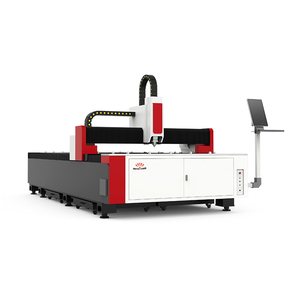
High-power CNC fiber laser workstation designed for rapid sheet metal profiling prior to precision bending operations.
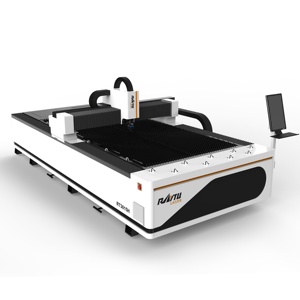
Optimized for precision sheet profiling in automotive prototype shops and stainless steel enclosure manufacturing.
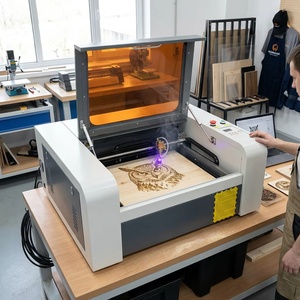
Compact water-cooled CO2 system engineered for precision prototyping, non-ferrous template alignment, and detail craft fabrication.
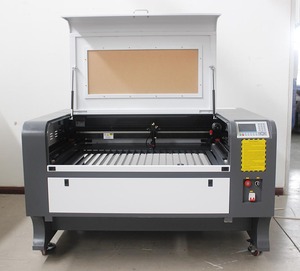
Versatile medium-format cutting system for synthetic materials, polymer gaskets, and precision metal marking applications.
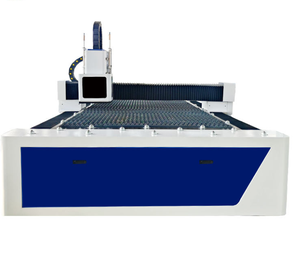
Heavy structural fiber laser platform engineered to process ultra-thick steel plates prior to heavy-tonnage hydraulic press bending.
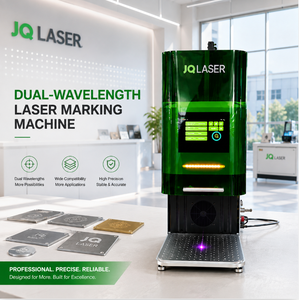
Dual-source precision marking system for metal part identification, serial code engraving, and fine tooling calibration.
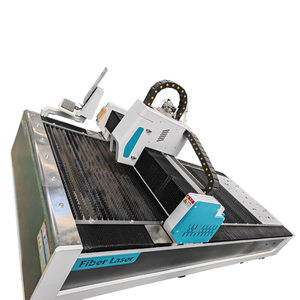
Manufacturer-direct 3-axis CNC platform utilizing Japanese Yaskawa drives for exact position accuracy and long-term stability.
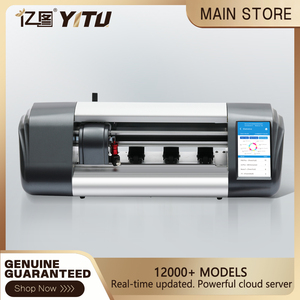
Automatic film and micro-substrate cutting unit with a 7-inch touch monitor, exemplifying precision small-footprint automation.
The Tokyo Metropolitan Area—encompassing major industrial hubs like Ota Ward (大田区), Shinagawa, and the broader Kanagawa-Saitama industrial corridor—represents one of the world's most concentrated centers of high-precision manufacturing. Known locally for its monozukuri (craftsmanship excellence) philosophy, Tokyo’s metalworking ecosystem requires machinery that delivers uncompromising accuracy, small spatial footprints, and low operational acoustics suitable for urban industrial zones.
Press brakes utilized within Tokyo factories must satisfy rigorous thermal stability requirements, micro-bend repeatability (often down to sub-millimeter tolerances), and strict compliance with Japanese Industrial Standards (JIS B 6219 for press brake safety and accuracy). As real estate premium forces plants to optimize floor space, manufacturers increasingly transition from legacy hydraulic machines to modern electro-hydraulic hybrid press brakes and pure electric servo press brakes.
Key Insight for Tokyo Procurement Teams: Modern sheet metal processing in Greater Tokyo requires seamless interoperability between laser sheet metal cutters and high-tonnage CNC press brakes. Reducing setting times (setup latency) via off-line 3D CAM software is critical to maintaining profitability on short-run, high-mix OEM contracts.
In high-density industrial hubs like Ota Ward, where micro-factories operate in close proximity to commercial areas, noise vibration level and energy conservation under METI (Ministry of Economy, Trade and Industry) directives play a paramount role. Advanced press brake manufacturers serving Tokyo must supply equipment featuring dynamic pump-stop technology, high-speed backgauges driven by Japanese Yaskawa or Mitsubishi AC servo motors, and real-time crowning compensation systems.
Selecting the optimal metal bending technology requires a deep technical understanding of hydraulic fluid dynamics, mechanical beam deflection, and electric servo torque curves. Below is a structural analysis comparing modern press brake configurations deployed across Tokyo fabrication plants:
Utilizes dual proportional valve technology coupled with optical encoders (Y1, Y2 axes) to maintain Y1-Y2 synchronization within 0.005mm. Best suited for medium to heavy sheet metal fabrication (40 Tons to 500+ Tons).
Replaces hydraulic fluid completely with high-torque AC servo drives and heavy-duty planetary ballscrews or belt drive pulleys. Zero oil contamination risk, 50%+ reduction in electrical usage, ideal for cleanroom medical parts.
Compensates for upper beam and bed deflection under high tonnage loads. Dynamic CNC crowning recalculates material yield strength variations instantly to guarantee linear bend angle consistency along 3-meter to 4-meter sheets.
| Performance Metric | Legacy Hydraulic Press Brake | CNC Electro-Hydraulic Synchro | Pure Electric Servo Press Brake |
|---|---|---|---|
| Positioning Repeatability | ±0.05 mm | ±0.01 mm | ±0.003 mm |
| Energy Consumption | High (Continuous Pump Run) | Medium-Low (Variable Servo Pump) | Ultra-Low (Power Only During Stroke) |
| Maintenance & Oil Changes | Annual (200L+ Fluid Disposal) | Bi-Annual Small Reservoir Check | Zero Hydraulic Maintenance |
| Thermal Sensitivity | High (Requires Warm-up) | Low (Proportional Valve Compensated) | Immune (Direct Mechanical Drive) |
| Acoustic Footprint | 75 dB - 85 dB | 62 dB - 68 dB | < 58 dB (Silent Idle) |
The industrial requirements of Tokyo's precision fabricators differ markedly from standard structural steel facilities. Machinery deployed in Tokyo must accommodate exotic alloys, thin-gauge stainless steel (0.5mm to 3.0mm), and complex multi-bend geometries. Key regional application sectors include:
Tokyo is home to world-leading semiconductor manufacturing equipment OEMs. Enclosures for cleanroom gas delivery modules, wafer handling robotics, and ultra-high vacuum (UHV) chambers demand scratch-free bending on mirror-finish stainless steel (SUS304/SUS316L) and aluminum alloys (A5052). Our press brakes utilize polyurethane die inserts, specialized V-groove tooling, and adaptive pressure control to eliminate surface scarring.
Sub-assemblies for Japan's high-speed rail network (Shinkansen) and urban subway networks require multi-axis backgauge positioning (X, R, Z1, Z2, X1, X2) to process long, narrow structural stiffeners. High-tonnage CNC press brakes equipped with laser angle measurement sensors ensure that springback variation in high-tensile steel sheets is corrected automatically during the stroke.
Tokyo's strict earthquake safety codes demand specialized curtain-wall brackets, damping system covers, and decorative exterior panels. Complex box bends and deep side flange profiles require specialized gooseneck punches, tall die holders, and extended daylight clearances (open height up to 600mm).
Factory owners across Tokyo face three primary economic forces: an aging technical labor pool, stringent metropolitan carbon reduction targets, and increasing demand for short lead-time prototyping. These drivers have reshaped sheet metal equipment selection:
Integration of 6-axis articulated robots (FANUC / Yaskawa) with CNC press brakes allows unattended night-shift operation, solving local operator shortages while maintaining sub-millimeter tolerances.
Eliminates setup delays on the factory floor by generating STEP file unfolding algorithms, collision checking, and backgauge positioning offline before code transmission to the CNC controller.
Variable-speed servo pumps cut power consumption by up to 70% during dwell periods, enabling plants to qualify for Japanese energy-efficiency equipment tax subsidies.
With over 35 years of engineering experience and more than 15,000 CNC systems deployed worldwide, our manufacturing facilities adhere to strict ISO 9001 quality management protocols. Our machinery architecture draws from the core engineering strengths built into industrial CNC router and laser platforms: stress-relieved welded steel frames, precision ground linear guides, and real-time controller feedback.
Key structural advantages built into our press brakes and sheet metal machinery include:
Written by our application engineers based on pre-purchase inquiries from Japanese fabricators and regional contract manufacturers.
Answer: All equipment exported to Greater Tokyo is factory-configured specifically for Japan’s eastern grid standards (200V / 220V 3-Phase, 50Hz). Transformers and control power supplies (24VDC) are integrated directly into the main electrical cabinet with CE and JIS compliant wiring standards, avoiding external step-down hardware.
Answer: Yes. Our press brakes can be configured with Universal Quick-Change Clamping systems compatible with standard European / Promecam style tooling, Japanese Amada style quick-clamping, or Wila Precision Hydraulic Clamping systems. This allows Tokyo factories to utilize existing, high-value tooling inventories without modification.
Answer: We supply comprehensive foundation engineering drawings detailing weight distribution, floor bolt patterns, and minimum clearance perimeters. For facilities located on upper floors or within restricted access doors in Ota-ku, we offer modular frame options and compact-footprint electric servo models that pass through standard industrial freight elevators.
Answer: We offer both mechanical motor-driven CNC crowning tables and real-time optical/laser angle measurement systems (e.g., Iris / Mitutoyo sensors). The CNC controller compares the actual bent angle against the target angle during the stroke, automatically adjusting Y1/Y2 positioning to compensate for material yield strength variations between metal batches.
Answer: Standard CNC press brakes and fiber laser cutters maintain a manufacturing cycle of 20 to 30 days. Emergency consumable spare parts (valves, seals, laser optics, servo drives, backgauge fingers) ship via priority air express (DHL/FedEx) arriving in Tokyo within 48 to 72 hours, backed by full remote online diagnostic capabilities.
Whether you require a compact electric bending machine for micro-electronics or a high-tonnage multi-axis CNC press brake for structural fabrication, our team provides custom technical proposals, bend sequence simulations, and factory-direct pricing.