Executive Technical Summary: Laser Tube Optics & Resonator Integration in South Africa
The South African manufacturing landscape is undergoing a systemic structural modernization. Driven by structural shifts in heavy mining equipment fabrication, automotive assembly hubs in Gauteng and the Eastern Cape, and expanding architectural sheet metal processing, regional manufacturing plants require robust, high-efficiency photonics infrastructure. At the core of every laser processing center—whether a high-power solid-state fiber laser system or a sealed gas CO2 laser engraver—lies the laser tube resonator.
Selecting the appropriate laser source supplier for South African manufacturing facilities involves navigating complex operational requirements: mitigating power grid volatility, surviving high ambient working temperatures in inland industrial regions like Alrode and Wadeville, and maintaining consistent beam modal quality ($M^2 \le 1.1$) over thousands of continuous duty hours. This technical paper provides an exhaustive overview of laser tube dynamics, local market trends, thermal management protocols, and procurement frameworks for Southern African industrial decision-makers.
1. Glass CO2 Gas Discharge Tubes vs. Metallic RF & Fiber Resonator Architectures
Industrial laser application across the South African market categorizes primary laser light generation into three main architectural classes:
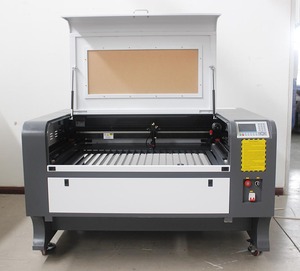
Sealed Glass CO2 Laser Tubes (Catalytic DC Discharge): Operating primarily at the 10.6 µm wavelength, these tubes utilize a gaseous mixture of Carbon Dioxide ($CO_2$), Nitrogen ($N_2$), Helium ($He$), and Xenon ($Xe$). Nitrogen molecules absorb electrical energy from high-voltage DC discharge and transfer quantum excitation energy directly to the $CO_2$ asymmetric stretch vibrational mode. Modern catalytic inner-wall coatings (such as platinum-gold catalysts) continually regenerate carbon monoxide back into active $CO_2$, expanding operation lifetimes to 10,000+ hours. These tubes are optimized for non-metallic processing: acrylics, timber, organic polymers, and leather.
Radio Frequency (RF) All-Metal CO2 Laser Tubes: Designed with metallic resonant cavities and ceramic electrode configurations, RF-excited tubes deliver microsecond pulse modulation, superior beam spatial mode purity ($TEM_{00}$), and elevated thermal dissipation capabilities. They excel in high-speed, dynamic micro-machining and non-metallic kiss-cutting applications where edge oxidation must be strictly minimized.
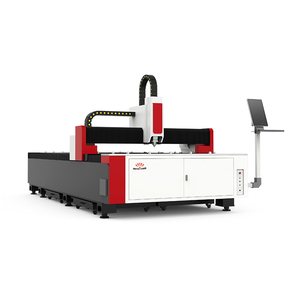
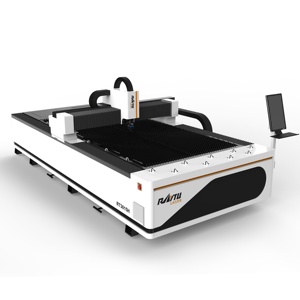
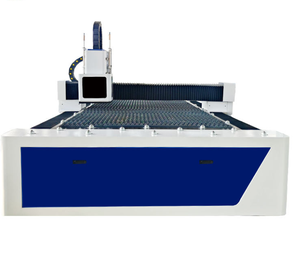
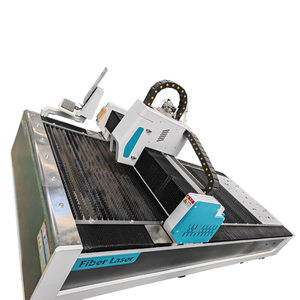
Ytterbium Doped Solid-State Fiber Laser Resonators: Generating laser radiation at a near-infrared wavelength of 1.064 µm (1064 nm), fiber laser tubes (modules) utilize semiconductor pump diodes to excite Ytterbium-doped active optical fiber cores. With wall-plug electrical conversion efficiencies exceeding 35-45% (compared to 10-15% for CO2 systems), fiber resonators eliminate free-space optic mirror alignments, beam delivery alignment maintenance, and gas refill requirements. Fiber systems dominate structural carbon steel, stainless steel, brass, copper, and aluminum sheet metal cutting applications across South African industrial zones.
South African Market Trends & Grid Resilience Engineering
Industrial procurement of laser tube systems and CNC cutters in South Africa cannot be approached purely through standard global spec sheets. Local manufacturing plants operate within a unique operational ecosystem characterized by specific environmental, electrical, and commercial constraints.
Loadshedding & Grid Isolation
Voltage fluctuations, sudden grid drops, and frequency surges during power switching can permanently degrade high-voltage DC glass tube power supplies and damage fiber pump diode driver boards. Modern laser factories targeting South Africa must integrate heavy-duty online double-conversion Uninterruptible Power Supplies (UPS), automatic voltage regulators (AVR), and isolated ground earthing matrices to preserve optical stability.
High Ambient Temp Chilling
Sub-tropical inland climates in Gauteng and northern regions reach ambient summer workshop temperatures exceeding 38°C. Laser tubes experience catastrophic thermal stress if coolant temperatures drift above 22°C. Integrating dual-circuit closed-loop industrial chillers equipped with environmental refrigerant compressors (R410A/R32) is mandatory for long-term optical gain stability and mode conservation.
Localization & Duty Logistics
With stringent SARS import tariffs, ITAC clearance protocols, and SABS electrical compliance standards, South African buyers prioritize manufacturers offering direct factory-backed spares distribution, fast air-freight optic replacements, and localized technical field service centers in Johannesburg and Cape Town.
2. Sector-Specific Applications Across South African Industrial Nodes
The practical deployment of laser tube machinery varies significantly by regional geographic clusters:
Gauteng Manufacturing Belt (Johannesburg, Ekurhuleni, Rosslyn): Heavy emphasis on high-wattage fiber laser cutting (3kW to 20kW) for structural steel beam profiling, mining roof bolt plate fabrication, subterranean transport chassis manufacturing, and high-volume automotive stamping dies for OEMs near Pretoria.
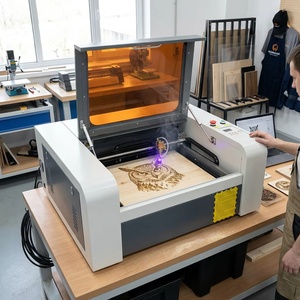
Western Cape Industrial Sector (Cape Town, Paarl, Saldanha): Demand is split between medium-to-high power fiber cutters for marine grade 5083 aluminum boat building, stainless steel wine tank fittings, and desktop/mid-range CO2 laser engravers (80W to 150W) for packaging, architectural model making, and sign manufacturing.
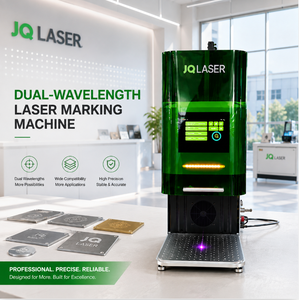
KwaZulu-Natal Maritime & Transport Hub (Durban, Pinetown): Focus on corrosion-resistant stainless steel processing, transport container modifications, HVAC ductwork cutting, and high-precision fiber laser marking for regional logistics barcode tracking plates.
Achieving maximum cutting speed and minimal heat-affected zone (HAZ) requires precise synchronization between the laser tube cavity specs, motion control system, and assist gas dynamic delivery.
Beam Quality Factor ($M^2$) and Optical Mode Profile
The transverse electromagnetic mode ($TEM_{m,n}$) of a laser tube determines its spot focusability and energy density distribution. For optimal industrial cutting, a fundamental mode $TEM_{00}$ (Gaussian profile) is target-critical:
Where $w_0$ represents the waist radius of the focal spot, $\theta$ is the far-field beam divergence angle, and $\lambda$ is the operating laser wavelength. A low $M^2$ value ensures that photonic energy is densely packed at the focal point, allowing a 3kW fiber laser tube to match the speed of older, less focused 5kW systems while dramatically reducing kerf width and gas consumption.
Focusing Optics, Assist Gases, and Piercing Protocols
In high-power metal cutting applications using fiber resonators (such as our 6000W to 12000W 4015 series), the selection of assist gas directly governs cut quality:
High-Pressure Nitrogen ($N_2$): Operates at 14–25 bar for oxidation-free, bright cuts on stainless steel, aluminum, and galvanized sheet metal. Prevents dross formation and eliminates downstream paint prep steps.
Oxygen ($O_2$) Assist Gas: Utilized for thick mild steel plate cutting (12mm to 25mm+). The exothermic reaction between iron and oxygen adds thermal energy to the kerf, allowing clean cutting at lower optical laser powers.
Compressed Clean Air Assist: Increasingly popular in South Africa to reduce ongoing gas cylinder rental costs. Requires dedicated oil-free, desiccant-dried air compressor systems operating at 16+ bar.
Our Enterprise OEM Advantage: Engineering Precision for South Africa
As a primary laser machinery manufacturer, our production philosophy centers on uncompromising structural integrity and technological synergy. We do not simply assemble off-the-shelf components; we engineer unified optical-mechanical systems.
CypCut & Yaskawa Integration
Our machines utilize top-tier Japanese Yaskawa AC Servo drives coupled with industrial CypCut software suites. This pairing provides precise micro-stepping position feedback, dynamic acceleration up to 1.5G, and real-time height sensing (BCS100) to prevent nozzle crashes on warped thermal metal stock.
Stress-Relieved Gantry Frames
Machine beds undergo high-temperature annealing heat treatment in computer-controlled kilns to eliminate internal structural welding stress. Heavy-duty aircraft-grade extruded aluminum gantries guarantee zero deformation during high-speed directional changes.
Full Warranty & Technical Support
Backed by a direct 3-Year Factory Warranty on fiber laser machinery and comprehensive lifetime technical assistance. Spare parts, focal lenses, protective windows, nozzles, and ceramic rings ship quickly to minimize operational downtime.
South African Procurement FAQ
Addressing essential technical, operational, and commercial questions raised by South African manufacturing plant managers and workshop owners.
How do your laser systems handle South Africa's frequent electrical grid fluctuations and loadshedding?
Our fiber and CO2 laser machines are engineered with integrated transient voltage surge suppressors (TVSS), heavy-duty phase-failure monitoring relays, and regulated control circuits. For plants utilizing back-up diesel generators or solar inverter installations, we supply specialized isolation transformers and recommend double-conversion online UPS systems to ensure smooth voltage output during automatic grid power switching.
What is the lifespan of a glass CO2 tube vs. a fiber laser source in a African industrial environment?
High-grade glass CO2 laser tubes (catalysts infused) provide operating lifespans between 8,000 and 10,000 working hours, provided coolant temperatures are maintained strictly between 18°C and 22°C. Solid-state fiber laser resonators (IPG, Raycus, or Maxphotonics sources) offer pump diode lifespans exceeding 100,000 hours (over 10 years of multi-shift operation) with zero gas maintenance or internal optical alignment requirements.
What assist gas setup is best for cutting stainless steel in Cape Town or Durban coastal areas?
Coastal applications demand oxide-free cutting edges to prevent marine atmospheric corrosion along cut seams. High-purity Nitrogen gas ($N_2 \ge 99.999\%$) supplied at 18 to 22 bar pressure is recommended. For high-volume production, installing a localized Liquid Nitrogen Dewar tank with ambient air vaporizers provides the most cost-effective per-meter gas expenditure compared to standard high-pressure cylinder bundles.
Can one fiber laser cutting machine process highly reflective metals like brass, copper, and raw aluminum?
Yes. Unlike older generation CO2 lasers where back-reflection could damage the glass laser tube output coupler, modern fiber laser heads feature anti-back-reflection optical isolators and specialized beam trapping geometry. Our fiber machines easily profile 6061/5083 aluminum alloys, commercial brass, and pure copper sheets with precision stability.
What logistics, clearance, and installation support do you provide for South African deliveries?
We provide full door-to-door (DDP) or port-to-door logistics support covering sea freight shipping into Durban, Cape Town, or Coega ports, complete with customs documentation, CE/SABS electrical compliance declarations, and specialized transport. Upon site arrival, our engineers assist with machine uncrating, precision leveling, optical calibration, software programming setup (CypCut/LightBurn), and operator safety training.
Upgrade Your South African Production Facility
Connect with our senior technical optical engineers today to discuss your material cutting specifications, request custom bed dimensions, or obtain a comprehensive factory-direct quote.