
Factory-direct fiber laser generators, 3-in-1 cutting packages, and precision diode sources certified for metal processing, manufacturing, and industrial research in Ethiopia.
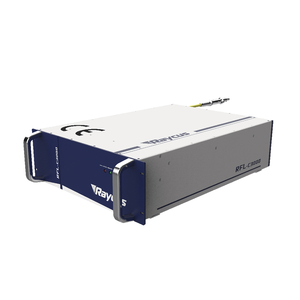
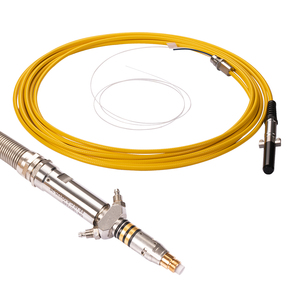
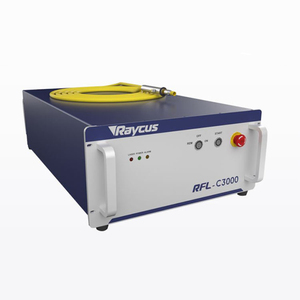
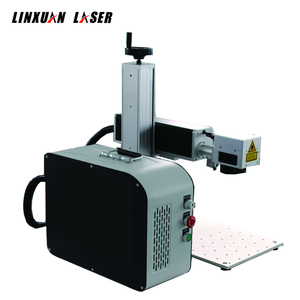
As Ethiopia advances its ambitious Ten-Year Development Plan (2021–2030), transforming from a predominantly agrarian economy into an East African light-manufacturing and heavy industrial powerhouse, modern metal fabrication infrastructure has become essential. Strategic industrial zones—including the Hawassa Industrial Park, Bole Lemi Industrial Park, Kilinto Industrial Park, Kombolcha Industrial Park, and the Dire Dawa Free Trade Zone—are experiencing exponential growth in structural steel cutting, sheet metal enclosures, agricultural machinery fabrication, and automotive assembly.
At the center of this industrial revolution lies high-brightness fiber laser cutting and welding systems. The engine driving these high-precision CNC units is the Industrial Fiber Laser Source. Selecting the optimal laser source for deployment in Ethiopia requires a rigorous engineering evaluation of local environmental conditions, power grid fluctuations, thermal management, optical stability, and lifecycle operational expenses (OPEX).
Our OEM fiber laser sources, ranging from 10W precision Q-switched pulsed modules up to 12,000W high-power continuous wave (CW) generators, are custom-engineered to withstand Sub-Saharan environmental variables while maintaining consistent beam quality ($M^2 \le 1.1$ for single-mode units) and maximum electro-optical conversion efficiency.
Multistage optical isolators safeguard laser diodes against back-reflections during processing of highly reflective metals like brass, copper, and aluminum alloys.
Integrated power stabilization circuits engineered to accommodate voltage fluctuations of ±15% commonly experienced in regional grid infrastructure.
Optical modules feature dust-proof, moisture-sealed enclosures preventing internal optical element degradation in high-dust regions like Akaki Kality.
Industrial fiber lasers generate high-coherence laser beams at a central wavelength of approximately 1064nm to 1080nm. Light emitted from high-efficiency semiconductor pump diodes is coupled directly into a Ytterbium-doped active fiber core. The energy conversion efficiency achieved in modern CW fiber sources exceeds 35% to 40%, far surpassing legacy CO2 lasers (which typically achieve only 8%–10% wall-plug efficiency).
In regions such as Addis Ababa (elevation 2,350m) and lower-altitude manufacturing clusters like Dire Dawa or Mekelle, atmospheric pressure and ambient temperatures vary significantly. High-power CW fiber sources (1500W to 12000W) release thermal energy through liquid cooling plates bonded directly to the pump diodes and fiber modules.
To prevent condensation internal to the laser chassis during periods of high relative humidity, our CE-certified Raycus and Maxphotonics fiber laser generators utilize double-sealed internal climate controls with built-in desiccant cartridges and internal temperature-humidity monitoring sensors. If the ambient temperature climbs above 40°C, the automatic interlock system adjusts thermal thresholds, maintaining a tight operational window of 22°C ± 1°C for the optical core and 28°C ± 2°C for the optics array.
The beam parameter product (BPP) and $M^2$ factor dictate the focusability and focal depth of the laser beam, directly impacting cutting speed and dross formation on sheet metal edges:
Compare key technical parameters across our primary fiber laser source lines supplied to Ethiopian machinery manufacturers and retrofitters.
| Laser Model / Power | Optical Fiber Core | Max Cutting Thickness (Mild Steel) | Wall-Plug Efficiency | Cooling Requirement | Primary Industrial Application |
|---|---|---|---|---|---|
| Linxuan Pulsed 20W - 100W | Single-Mode (1064nm) | N/A (Marking / Engraving) | >30% | Air-Cooled | Tool Marking, Serializing, Electronics |
| Raycus / Max 1500W CW | 50μm Multi-Mode | 14mm Mild Steel / 5mm SS | >35% | Dual-Temp Water Chiller | Light Fabrication, Ductwork, Furniture |
| Raycus 3000W CW Kit | 50μm / 100μm Multi-Mode | 20mm Mild Steel / 8mm SS | >38% | Dual-Temp Water Chiller | Agricultural Machinery, OEM Parts |
| Raycus CE 6000W - 12000W | 100μm Multi-Mode | 30mm+ Mild Steel / 20mm SS | >40% | High-Capacity Chiller | Structural Steel, Bus/Vehicle Frames |
Our industrial laser components are integrated into daily production lines across the country, fulfilling specific manufacturing workflows:
The Akaki Kality industrial district serves as Ethiopia's primary hub for heavy metal engineering. Local fabricators producing roofing sheets, door frames, electrical distribution cabinets, and cable trays require robust 1500W to 3000W fiber laser sources. Pairing a Raycus 1500W CW Laser Source with a Raytools BS03-CAT cutting head allows continuous 24-hour operation on 1mm to 6mm mild steel plates without thermal drift.
Agricultural equipment fabricators in Adama build grain threshers, plow attachments, and transport trailers. These heavy structural components require clean beveling and thick-plate cutting (10mm to 20mm carbon steel). Installing our 3KW Maxphotonics Laser Source Kit with Raytools BM110 automatic focus heads enables local manufacturers to eliminate manual flame cutting, reducing post-process grinding labor by over 70%.
Automotive body builders require consistent 3D tube cutting and flat sheet profiling for chassis frames and bus side panels. The high stability of our OEM armored optical cables (QBH/QD interfaces available up to 25 meters) allows seamless integration with heavy CNC gantry machines and robotic arms without optical transmission losses.
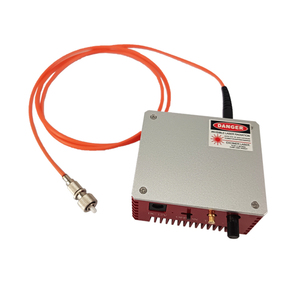
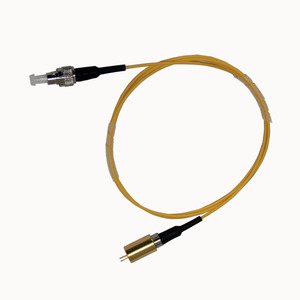
Universities such as Addis Ababa Institute of Technology (AAIT) and private marking shops utilize our low-power pulsed Linxuan Fiber Laser Sources (10W-100W) and 785nm / 905nm Single-Mode Diodes for scientific research, micro-machining, medical instrument serialization, and precious metal marking.
Navigating international procurement, customs compliance, and long-term machinery maintenance requires a supplier deeply committed to the East African market:
Selection depends on your primary material thickness. If your daily production consists of 1mm-5mm mild steel and stainless steel (e.g., enclosure cabinets, furniture, metal doors), a 1500W CW fiber source yields optimal cost-to-performance. If your work includes 6mm-16mm plate for machinery structures or structural brackets, a 3000W CW source offers double the cutting speed and superior edge quality. For heavy industrial cutting above 20mm, 6000W to 12000W CW sources are recommended.
We strongly advise installing a dedicated industrial Servo-motor driven Automatic Voltage Regulator (AVR) with a voltage stability tolerance of ±1% to ±2% paired with an isolation transformer matching your facility's incoming line voltage (typically 380V 3-Phase 50Hz in Ethiopia). Additionally, connecting the digital control system (such as the XC3000S) to an online Uninterruptible Power Supply (UPS) prevents controller data corruption during unexpected outages.
Unlike legacy CO2 systems that require constant mirror alignment and gas refilling, fiber laser sources are virtually maintenance-free. However, in dust-heavy environments, you must: (1) Ensure clean water in the chiller using deionized or distilled water, replacing it every 1-2 months; (2) Maintain clean air filters on the laser cabinet; (3) Inspect the protective window of the optical fiber head inside a clean-room or dust-free enclosure to prevent dust ingress into the optical path.
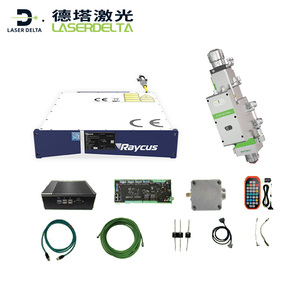
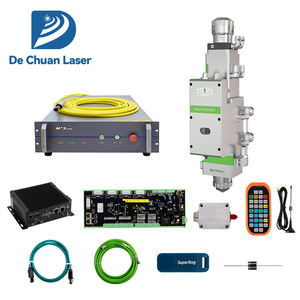
Yes. Many Ethiopian manufacturers upgrade older CO2 laser cutters or mechanical CNC plasma tables by installing our 3-in-1 integrated kits (Raycus/Maxphotonics Laser Source + Raytools Cutting Head + XC3000S CNC System). Our engineering team supplies complete wiring diagrams, IO pinout maps, and remote technical support to guide your technicians through the retrofit process.
We accept standard international trade payment methods including Letter of Credit (L/C at sight) and Telegraphic Transfer (T/T). Goods are packed in export-standard IPPC-certified wooden cases with vacuum-sealed anti-corrosion barrier bags. We ship via air freight directly to Addis Ababa Bole International Airport (ADD) for urgent orders, or via sea freight to Port of Djibouti for cost-effective heavy equipment deliveries.
Contact our senior laser application engineers to receive full technical specifications, laser source catalog parameters, factory-direct wholesale pricing, and localized Ethiopian shipping quotes.
Get Catalog