
Engineered for heavy-duty production in Kenya’s wood processing, signage, sheet metal, and architectural joinery sectors. Directly imported from factory lines with full technical warranties.
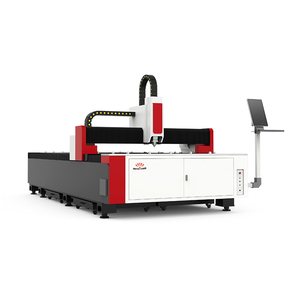
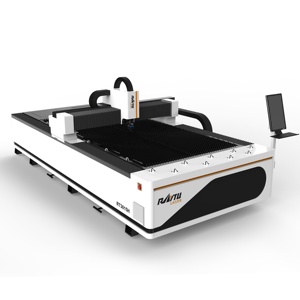
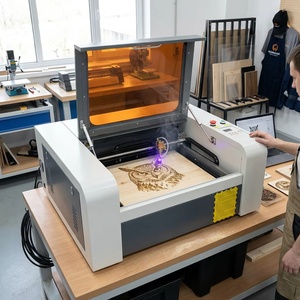
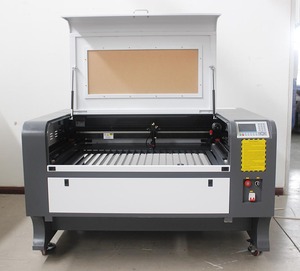
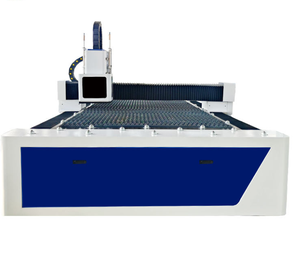

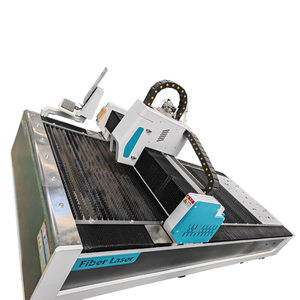

We manufacture and stock a full range of 1/8", 1/4", 1/2", 6mm, 8mm, and 12mm shank end mills, compression bits, ball nose cutters, surface planing bits, and fiber laser nozzles engineered for maximum longevity on African hardwoods and metals.
Request Custom Tooling CatalogKenya's manufacturing sector—anchored by aggressive regional expansion under Kenya Vision 2030 and the National Industrialization Policy—is undergoing a rapid technological migration from traditional manual carpentry and basic plasma cutting toward automated computer numerical control (CNC) machining. As workshops in Nairobi's Industrial Area, Mombasa, Nakuru, and Eldoret upgrade to high-speed 3-axis and 5-axis CNC routers and heavy-duty fiber laser cutters, the demand for high-durability tooling, specifically solid tungsten carbide router bits, PCD (Polycrystalline Diamond) cutters, and fiber optics consumables, has surged dramatically.
This technical whitepaper provides local machinery managers, procurement officers, joinery shop owners, and structural fabricators across East Africa with actionable technical criteria for selecting optimal CNC router bits, managing chip loads, optimizing feeds and speeds on native African timbers, and sourcing reliable equipment from trusted factory suppliers.
The operational lifespan of a CNC router bit is primarily dictated by its microstructural composition. In Kenya's varied operating environments—ranging from the high-humidity, high-salinity environment of coastal Mombasa to the high-altitude conditions of Nairobi and the Rift Valley—cutting tools are subjected to aggressive thermal cycling and friction-induced wear.
Achieving clean edge finishes on CNC routers without top-face tearout or bottom blowout requires matching the tool spiral geometry to the material substrate:
Directs chips upward toward the dust collection hood. Excellent for deep slotting, grooving, and mortising in solid timber. Prevents chip clogging but can cause light fraying on the top laminate surface if feed rates are incorrect.
Forces chip direction downward, packing chips into the cut to maintain crisp, chip-free top edge finishes. Essential for thin veneers, delicate laminates, and acrylic sheet profiling on vacuum beds.
Combines up-cut geometry at the tip with down-cut geometry on the upper body. Forces material compression toward the center of the sheet, yielding flawless top and bottom edges on double-sided melamine and plywood in a single pass.
A frequent mistake in Kenyan CNC operations is running spindles at maximum RPM (e.g., 24,000 RPM) while pushing feed rates too slowly. This creates micro-friction heat that thermal-anneals the carbide edge, dulling the bit within hours rather than weeks. Proper chip load calculation ensures that the bit cuts crisp shavings rather than rubbing wood dust.
The Fundamental Chip Load Formula:
When machining native East African hardwoods—such as Elgon Teak, Camphor, Cypress, Blue Gum (Eucalyptus), and African Mahogany—machinists should reference the technical guidance parameters below:
How regional fabricators leverage advanced CNC router tooling and laser platforms to capture key market segments across East Africa.
Fabricators in Ruiru, Baba Dogo, and Industrial Area run nested 4x8 ft and 5x10 ft CNC routers using 12mm nested compression bits to mill pre-laminated MDF and particle boards for modern estate developments in Kilimani, Westlands, and Kiambu.
Coastal workshops specialized in dhow building, resort architecture, and marine interior refitting use PCD (diamond) bits and 3KW-6KW fiber lasers to machine corrosion-resistant marine plywood, solid teak, aluminum plates, and stainless steel hardware.
Sawmillers in Rift Valley are shifting from selling raw timber flitches to manufacturing high-value finished products—such as architectural tongue-and-groove cladding, decorative ceiling panels, and structural timber joints using heavy 3-axis CNC systems.
Navigating machinery import logistics into East Africa can be challenging due to non-standard power supplies, freight delays, and lack of locally stocked spare parts. As a premier direct factory manufacturer, we provide Kenyan enterprises with end-to-end reliability:
We build our heavy industrial CNC systems specifically configured for Kenya’s electrical grid standard: 415V 3-Phase 50Hz (or single-phase 220V/240V for desktop CO2 lasers), equipped with heavy-duty voltage stabilizers and surge protection to withstand grid fluctuations.
With direct international logistics routes, we handle air freight dispatch to Jomo Kenyatta International Airport (JKIA) for high-urgency CNC router bit consumables, and sea freight containers directly to the Port of Mombasa (Kilindini Harbour) with full documentation for seamless KRA clearance.
Every industrial CNC system and tooling shipment comes with direct engineer-to-engineer remote support. We provide G-code optimization guidance, CAM toolpath post-processors for Artcam, Cabinet Vision, Alphacam, and Vectric Aspire, alongside continuous video troubleshooting.
Answers to common questions asked by industrial buyers in Kenya regarding customs clearing, KEBS standards, grid compatibility, and tool longevity.
Machinery imported into Kenya must comply with standards set by the Kenya Bureau of Standards (KEBS). Imports are subject to Pre-Export Verification of Conformity (PVoC) to obtain a Certificate of Conformity (CoC) before shipment. Our factory coordinates directly with authorized inspection agencies (such as SGS, Intertek, or Bureau Veritas) to issue valid CoC documents, ensuring fast clearance via KRA iTMS at Mombasa Port or JKIA airport customs.
Shank selection depends on your spindle collet system (ER20, ER25, ER32) and depth of cut. For heavy panel processing or profiling native African hardwoods over 18mm thickness, 1/2 inch (12.7mm) or 12mm shanks are strongly recommended due to superior torsional rigidity and resistance to deflection. 1/4 inch (6.35mm) and 6mm shanks are best suited for shallow decorative carving, fine detail engraving, and thin sheet slotting.
Yes. Our fiber laser cutting platforms (equipped with Raycus, MAX, or IPG laser generators and CypCut control software) feature active back-reflection protection systems. This allows stable cutting of highly reflective non-ferrous metals such as brass, copper, and specialized aluminum alloys without endangering the optical fiber core.
Standard tooling orders (CNC router bits, collets, laser nozzles) sent via express air courier (DHL/FedEx/UPS) arrive in Nairobi or Mombasa within 5 to 7 business days. Large machinery orders (4x8 ft CNC Routers, 6000W Fiber Laser Cutters) sent via ocean shipping take approximately 24 to 32 days transit time to Kilindini Harbour, Mombasa.
Yes. In addition to complete CNC equipment, we maintain a dedicated supply channel of replacement ER collets, ceramic spindle bearings, carbon vanes for dry vacuum pumps, high-pressure laser focusing lenses, and protective windows available for rapid dispatch.
Speak directly with our technical application engineers to get custom tooling recommendations, machine quotes, or CAM workflow advice tailored to your facility.
Contact Us