
Explore our export-ready heavy-duty industrial dust collection systems tailored for high-precision CNC machining, metal fiber laser cutting, woodworking, and composite processing across North America.
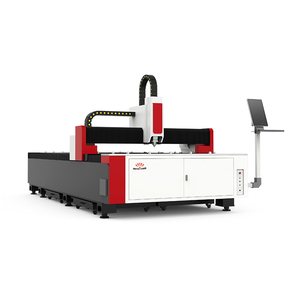
Heavy-duty pulse-jet cartridge dust collector designed specifically for high-wattage fiber laser cutting beds. Features flame-retardant filter media and spark arrestor traps.
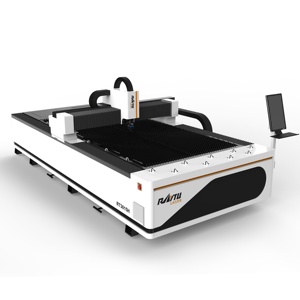
Engineered for medium-to-high capacity metal fabrication shops. Features automatic pulse-jet reverse air cleaning and anti-static PTFE membrane cartridges.
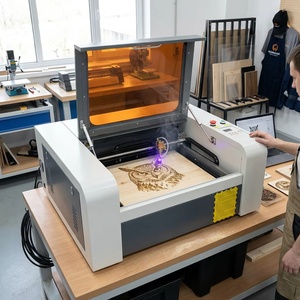
Ultra-quiet, multi-stage filtration unit with activated carbon filter beds tailored for acrylic, plywood, MDF, and leather laser engraving particulates.
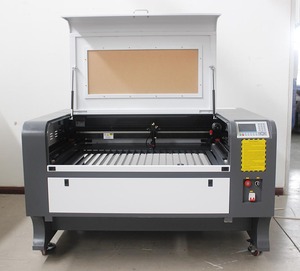
Designed for continuous wood, glass, and leather manufacturing lines. Prevents lens contamination and ensures toxic volatile organic compound (VOC) removal.
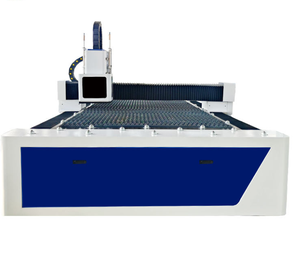
Centralized vacuum dust collection system designed for extreme metal cutting environments. Features explosion relief vents and spark trap integration.
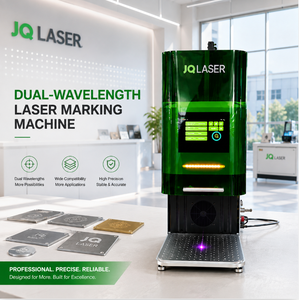
Specialized portable air handling system designed for dual-light source marking and metal identification processes in localized workshops.
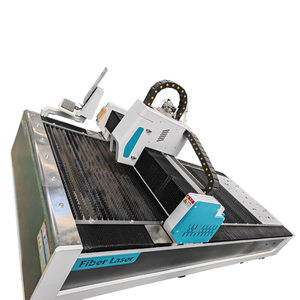
Integrates seamlessly with Cypcut CNC control systems. Features dynamic pressure differential monitoring and automatic dust discharge valves.
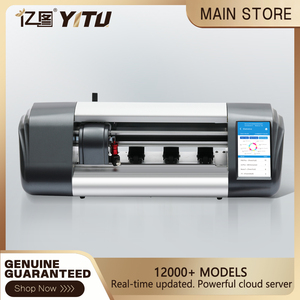
Engineered for cleanroom and retail repair desktop cutters. Captures fine film, glass dust, and synthetic polymer vapors efficiently.
Industrial air quality control in North American manufacturing facilities has entered a critical era of heightened regulatory enforcement and technological evolution. For US plant managers, safety officers, and facility engineers procuring international equipment, verifying that imported dust collection machinery complies with both European CE Safety Directives and domestic OSHA (Occupational Safety and Health Administration) and NFPA (National Fire Protection Association) standards is essential to legal compliance and workplace safety.
Manufacturing processes such as fiber laser metal cutting, high-speed CNC nesting woodworking, carbon fiber composite milling, and additive manufacturing generate respirable particulates ranging from 0.1 to 10 microns (µm). Exposure to these fine metallic fumes, hexavalent chromium ($Cr(VI)$), respirable crystalline silica, and combustible wood dust poses severe health risks and combustible explosion hazards. Modern industrial dust collectors supplied to the US market must deliver verifiable sub-micron filtration efficiency, low differential operating pressure, dynamic spark suppression, and reliable pulse-jet filter media cleaning.
Strict enforcement of OSHA PELs for respirable dust (15 $mg/m^3$ total dust, 5 $mg/m^3$ respirable fraction) and toxic metal fumes requires secondary HEPA filtration stages (H13/H14) with continuous particulate monitoring.
NFPA 652 and 654 dictate mandatory Dust Hazard Analysis (DHA). CE-certified dust collectors exported to North America incorporate ATEX-aligned explosion venting panels, flameless isolation valves, and anti-static filter media.
Industrial air filtration requirements vary significantly across different US manufacturing corridors. Below is an engineering breakdown of localized production environments in North America where CE-certified dust collectors are essential:
| US Manufacturing Region | Primary Industry & Process | Target Particulates & Fumes | Recommended Filtration & Engineering Configuration |
|---|---|---|---|
| Midwest Industrial Belt (Ohio, Michigan, Indiana, Illinois) | Heavy Sheet Metal Fabrication, Automotive Stamping, Fiber Laser Cutting (6kW - 40kW) | Sub-micron metal oxide fumes, iron dust, stainless steel hexavalent chromium | Down-flow pulse-jet cartridge collectors with flame-retardant PTFE membrane, spark traps, and secondary H14 HEPA banks. |
| Pacific Northwest & Southeast (Oregon, Washington, Georgia, Carolinas) | High-Speed Cabinetry, Furniture Manufacturing, CNC Router Plywood Nesting | Combustible hardwood & softwood dust, MDF particulate, resin adhesives | High-CFM central dust collectors equipped with anti-static filter cartridges, NFPA-certified explosion vents, and rotary airlocks. |
| Texas & Gulf Coast Region (Houston, Dallas, Louisiana) | Aerospace Composites, Oil & Gas Valve Machining, Structural Steel Cutting | Fiberglass dust, carbon fiber micro-particles, aluminum & brass shavings | Multi-stage dual-phase collector units with explosion mitigation mechanisms and variable frequency drives (VFD). |
| Northeast & West Coast Tech Hubs (California, Massachusetts, New York) | Medical Device Prototyping, Semiconductor Fixturing, Micro Electronics | Precision acrylic haze, synthetic resin fumes, fine conductive copper/aluminum mist | Compact, ultra-quiet localized fume extractors equipped with gas-phase activated carbon beds and HEPA H14 final filters. |
The North American industrial air filtration market is undergoing a major technological transformation driven by energy efficiency goals, strict environmental standards, and industrial automation. Exporters supplying equipment to US companies must align with four primary technical trends:
US facilities are rapidly adopting Smart Factory practices. Modern dust collectors feature digital Delta-P ($\Delta P$) pressure differential sensors, automated pulse-jet frequency timing, and Modbus/Ethernet connectivity for real-time remote monitoring of filter loading and airflow velocities.
Energy costs represent over 70% of a dust collector's total lifecycle cost. Integrating Variable Frequency Drives (VFD) with static pressure sensors allows dust collection blowers to automatically adjust fan RPM based on active CNC ports, saving up to 45% in electrical power consumption.
US insurance underwriters (e.g., FM Global) and OSHA inspectors strictly enforce NFPA 652 standards. Imported dust collection systems must provide certified explosion isolation valves, passive explosion venting panels, and conductive grounding wires to eliminate electrostatic discharge risks.
Traditional baghouse designs are being replaced by high-density, compact pulse-jet cartridge units utilizing spunbond polyester with nanofiber coatings (MERV 16 rating). Down-flow airflow paths assist gravity in purging cake dust during reverse pulse cleaning cycles.
As a premier CE-certified dust collector supplier and international exporter, our manufacturing operation bridges the gap between high-end international engineering standards and specific North American workplace requirements. Drawing on over 35 years of industrial machinery expertise, we deliver exceptional reliability and performance:
Our dust collector housings are manufactured using heavy-gauge, CNC laser-cut structural steel, stress-relieved and coated with industrial powder finishes to withstand high negative static pressure ($\ge 5000\text{ Pa}$) without structural deformation.
Every exported unit undergoes rigorous third-party inspection, bearing official CE marks alongside electrical control cabinets built with UL-recognized and Schneider/Siemens industrial components suitable for 230V/460V 60Hz US electrical grids.
We maintain comprehensive spare filter cartridges, pulse valves, solenoid boards, and replacement gaskets in stock. Through optimized export logistics, spare parts and consumables ship directly to US facility destinations with minimal downtime.
Our team of application engineers calculates exact air-to-cloth ratios, ductwork friction losses, and required capture velocity (FPM) for your specific machinery layout, guaranteeing optimal air volume (CFM) upon system commissioning.
Expert answers addressing compliance, sizing, maintenance, and international export logistics for the US industrial market.
Yes. While CE certification confirms compliance with European Union health, safety, and environmental protection standards, the underlying engineering—such as structural integrity, electrical safety, and sub-micron filtration efficiency—directly aligns with OSHA standards. For US installations, we customize electrical control panels with UL-508A compliant components and ensure filter efficiency meets or exceeds OSHA Permissible Exposure Limits (PELs).
Required CFM depends on duct diameter, capture hood design, total ductwork length, elbows, and target transport velocity (typically 3,500 to 4,500 FPM for wood dust or metal fumes). For instance, a 4015 fiber laser cutting bed generally requires between 4,500 and 6,500 CFM at 10-12 inches of water gauge static pressure. Our engineering team conducts full air-to-cloth ratio calculations prior to order finalization.
For applications handling organic wood dust, aluminum powder, or composite particulates, our CE-certified dust collectors can be configured with anti-static (aluminized) spunbond polyester filter cartridges, passive ATEX/NFPA burst explosion vents directed to safe external zones, spark arrestor inline traps, and rotary airlock isolation valves to prevent flame propagation.
Under continuous industrial operation with proper pre-filtration and automatic pulse-jet reverse air cleaning, high-grade PTFE membrane cartridges typically last between 8,000 and 12,000 operating hours (approx. 2 to 3 years). Cleaning is managed automatically via a digital differential pressure controller ($\Delta P$) that fires compressed air pulses (80-90 PSI) through the interior of the cartridges to drop accumulated dust cakes into the collection hopper.
All exported machinery can be built to native North American industrial voltage standards, including 208V, 230V, 460V, or 575V at 60 Hz, 3-Phase power. Control circuits operate on safe 24V DC control voltage with heavy-duty thermal overload protection.
Consult with our senior air engineering specialists to specify the ideal CE-certified dust collector for your US manufacturing line. Receive custom CAD duct drawings, technical proposals, and factory-direct export quotes within 24 hours.