
Explore our high-performance hybrid, closed-loop, and miniature stepper motor solutions engineered for demanding industrial workloads and high-precision automation.
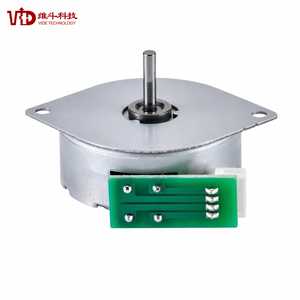
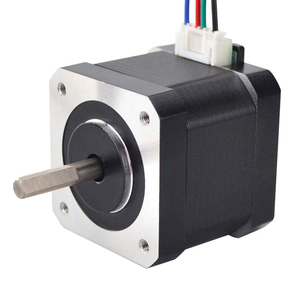
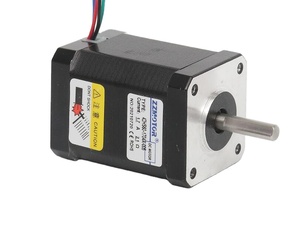
In modern industrial engineering, selecting the optimal digital motion control hardware is pivotal to achieving maximum mechanical throughput, micro-positional precision, and system longevity. As a recognized global exporter and manufacturer of industrial-grade motion drive solutions, our production methodologies bridge decades of heavy machine design with cutting-edge electro-magnetic innovation. Stepper motors—specifically hybrid two-phase bi-directional motors—form the structural backbone of high-accuracy CNC routing, automated medical diagnostics, robotic positioning, and semiconductor fabrication.
Understanding the balance between static holding torque, dynamic pull-out torque curves, thermal dissipation parameters, and microstepping driver synergy allows design engineers and procurement teams to eliminate position loss, lower operational resonance, and maximize total cost of ownership (TCO).
Utilizing high-grade Neodymium (NdFeB) N45H magnets certified up to 180°C to guarantee zero magnetic flux degradation under continuous duty cycles.
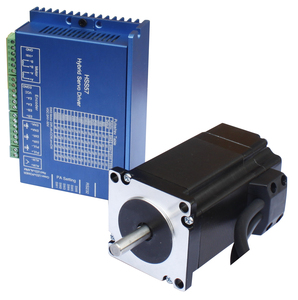
Eliminates lost steps entirely by integrating 1000+ line optical encoders with DSP field-oriented current matching.
Precision computer-wound 100% pure copper coils offering rapid current saturation for sustained high torque at elevated RPM ranges.
When selecting motor topologies for industrial applications, structural engineers must weigh cost constraints against feedback reliability. Open-loop stepper motors remain an exceptional, economical choice for steady-state velocity profiles and known inertial loads, such as standard 3D desktop printing or belt-driven linear slides. However, high-acceleration heavy CNC machines demand absolute step synchronization.
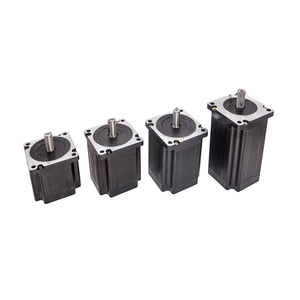
By pairing a NEMA 34 heavy-duty motor frame (up to 12N.m holding torque) with an integrated digital closed-loop driver (such as the HSS86 DSP driver series), machines gain real-time error correction. If external cutting forces induce transient mechanical resistance exceeding the motor's nominal torque curve, the closed-loop driver instantly adjusts coil current dynamically—preventing position offset, reducing thermal buildup by up to 30%, and eliminating workpiece scrapping.
| NEMA Size | Flange Dimension | Typical Holding Torque Range | Primary Industrial Applications | Optimum Drive Voltage |
|---|---|---|---|---|
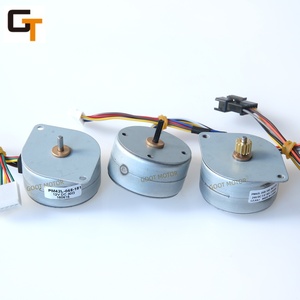
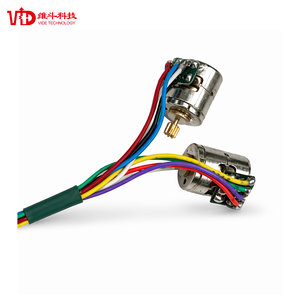
| NEMA 08 (Micro) | 20mm x 20mm | 0.01 N.m - 0.04 N.m | Medical optics, camera zoom, fluid pumps | 3.0V - 12V DC |
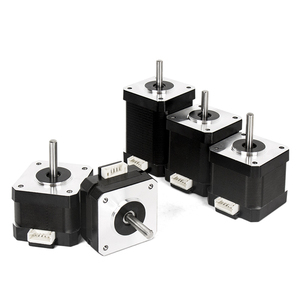
| NEMA 17 | 42mm x 42mm | 0.22 N.m - 0.70 N.m | 3D printing, light engraving, medical diagnostics | 12V - 36V DC |
| NEMA 23 | 57mm x 57mm | 0.90 N.m - 3.00 N.m | Mid-size CNC routers, pick-and-place, packaging | 24V - 48V DC |
| NEMA 34 | 86mm x 86mm | 3.50 N.m - 12.00 N.m | Heavy CNC milling, plasma cutters, industrial gantry | 48V - 110V AC/DC |
The global motion control market is undergoing a significant transition driven by the expansion of Smart Manufacturing (Industry 4.0), decentralized automation networks, and stringent energy efficiency mandates. Modern OEM procurement departments are shifting away from generic commodity motor sourcing in favor of specialized, high-reliability motion sub-assemblies.
Traditional motion architectures required separate cabinets for microstepping drives, multi-core shielded cabling, and external motion controllers. Modern enterprise buyers increasingly demand integrated stepper servo motors where the digital driver, feedback encoder, and communication bus (EtherCAT, CANopen, or Modbus RTU) are directly mounted on the rear end-bell of the NEMA motor housing. This reduces electrical cabinet space by up to 60% and eliminates cable-induced electromagnetic interference (EMI).
As global supply chain bottlenecks highlight the risks of single-source vulnerability, procurement directors favor manufacturers with standardized NEMA mechanical mountings combined with flexible shaft customization. Whether your production calls for D-cut shafts, keyways, hollow shafts for optical passthrough, or integrated precision lead screws (such as Tr8x8 or ball screws), strategic partnerships with vertically integrated exporters ensure rapid OEM prototyping and steady volume delivery schedules.
Under continuous factory operations, thermal management directly affects bearing lifespan and rotor magnet integrity. Modern high-torque stepper designs utilize low-loss silicon steel laminations for stators and automated winding techniques. This results in motor run temperatures up to 20°C cooler than legacy designs, extending bearing grease lifespans beyond 20,000 operational hours without requiring maintenance.
Built upon decades of mechanical engineering experience and rigorous quality assurance standards, our manufacturing operations deliver uncompromised precision, same-day component fulfillment, and lifetime application support.
We maintain deep operational inventory levels for all standard NEMA frame motors, matching digital drivers, cables, and mechanical accessories—ensuring immediate replacement and minimal line downtime.
Speak directly with experienced motion control engineers. From calculating required torque margins to configuring microstepping current profiles, our technical support is live, direct, and accessible for the life of your equipment.
Every motor batch undergoes automated magnetic curve measurement, dynamic phase resistance balance testing, high-voltage dielectric insulation checks, and micro-vibration analysis prior to export packaging.
Fully compliant with CE, RoHS, and ISO 9001:2015 international quality standards, backed by a worldwide distributor and logistics delivery network trusted across North America, Europe, and Asia.
Consult our quick engineering answers compiled from real-world OEM client consultations and pre-purchase technical specifications.
Holding Torque measures the maximum static torque the motor can apply to hold the shaft in place when fully energized with nominal rated current. Detent Torque is the residual un-energized magnetic attraction torque present when no electrical power is supplied to the coils. High holding torque is critical for machining accuracy, while low detent torque prevents cogging and ensures smoother low-speed rotation.
While a stepper motor may have a low nominal coil voltage rating (e.g., 2.4V DC), optimal high-speed dynamic performance is achieved by powering the microstepping driver at 4x to 25x the rated coil voltage (e.g., 24V - 80V DC). Higher driver bus voltages force current into the stator windings faster, overcoming back-EMF at high operating speeds and preserving torque performance across higher RPM ranges.
2-Phase hybrid steppers represent the global industrial standard due to their ideal balance of high holding torque, widely available driver options, and cost efficiency. While 3-phase or 5-phase motors offer slightly lower step resonance natively, modern 32-bit DSP microstepping drivers (utilizing anti-resonance algorithms) allow 2-phase motors to run virtually noise-free while maintaining higher static hold torque.
Yes. For specialized medical, aerospace, or outdoor industrial machinery, we offer custom shaft modifications (IP65 waterproof oil seals, dual shafts, flat D-cuts), high-temperature Class H insulation (180°C), custom wire harness terminations, and stainless steel housing options.
Shops upgrading from open-loop systems to closed-loop stepper configurations typically recoup their investment within 30 to 90 days. ROI is driven by the immediate elimination of ruined materials caused by missed steps, higher cutting speeds made possible by dynamic current boost, and lower motor operating heat, which extends overall mechanical drive life.
Send us your torque specs, mechanical load calculations, or machine drawings. Our engineering team will assist in sizing the exact motor and driver configuration for your production requirements.
Send an Inquiry