
Directly engineered for precision metal sheet profiling, architectural fabrication, signcraft, and high-duty optical processing. Select standard or ultra-high power configurations.
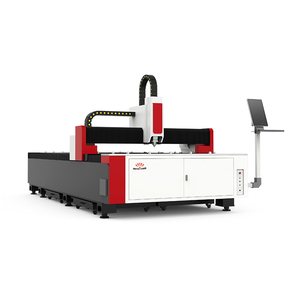
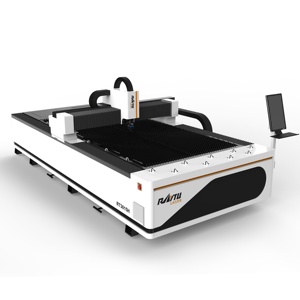
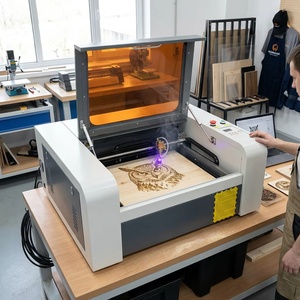
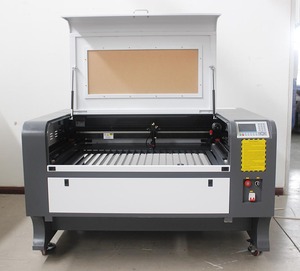
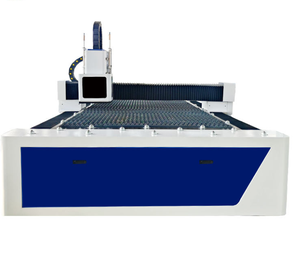
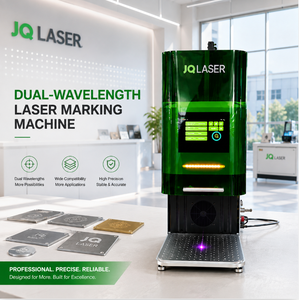
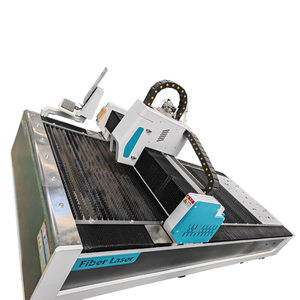
In modern industrial fabrication, selecting the correct laser source OEM is the single most critical decision determining structural uptime, kerf precision, wall-plug efficiency (WPE), and total operational expenditure over a 10-year machine cycle. From sealed-off CO2 glass resonators producing 10.6 µm far-infrared radiation to solid-state Ytterbium fiber lasers operating in the 1.06 µm band, procurement officers face complex trade-offs between beam quality ($M^2$), gas chemistry degradation, and thermal management stability.
Engineered upon 40+ years of American manufacturing legacy in Ronkonkoma, New York (established in 1985), our organization has deployed over 15,000 industrial CNC and laser systems worldwide. This experience proves that optical longevity depends not merely on initial wattages, but on catalytic gas regeneration, thermal expansion coefficient matching in optics, and structural vibration isolation in optical cavities.
Unlike commodity equipment trading entities, tier-one OEM manufacturers implement active catalytic coatings (such as gold-doped platinum matrices) within glass laser cavities to continuously re-combine carbon monoxide ($CO$) and oxygen ($O_2$) back into functional $CO_2$. This technical mechanism prevents power drop-offs and extends resonator operational life beyond 10,000 active duty hours.
Direct collaboration with US-based application engineers guarantees that spindle speed, optical collimation, and vacuum hold-downs match specific material portfolios.
Every laser power supply, chill-water solenoid, mirror mount, and focusing optic is stocked in Ronkonkoma, NY for same-day dispatch.
Eliminate call center loops. direct connection to experienced field service technicians ensures minimal mean time to repair (MTTR).
To optimize sourcing budgets, industrial procurement managers must evaluate the core physical properties of varying laser generation mediums. The interaction between laser wavelength and the complex refractive index of materials dictates energy absorption rates, cutting speeds, and gas consumption costs.
Fiber lasers operate at a wavelength of 1.064 µm (1064 nm), which exhibits a 7- to 10-times higher absorptivity rate in conductive ferrous and non-ferrous metals (such as 6061 aluminum, yellow brass, copper, and stainless steel) compared to traditional 10.6 µm $CO_2$ lasers. Consequently, a 3kW fiber source cuts thin sheet metals at linear speeds exceeding a 6kW $CO_2$ system, while reducing electrical power consumption by up to 60%.
Conversely, non-metallic organic polymers, timber, plywood, MDF, acrylics, and structural glass possess natural molecular absorption peaks matching the 10.6 µm output of sealed-off $CO_2$ laser tubes. Attempting to cut thick acrylic or hardwood with a 1.06 µm fiber laser results in energy transmission through the material rather than vaporization, demonstrating why $CO_2$ laser tubes remain indispensable in signmaking, cabinet making, and architectural millwork.
| Laser Source Technology | Operating Wavelength | Wall-Plug Efficiency (WPE) | Beam Quality Factor ($M^2$) | Typical Lifetime (MTBF) | Primary Industrial Applications |
|---|---|---|---|---|---|
| Sealed Glass CO2 Tube | 10.6 µm | 10% – 15% | < 1.2 (TEM00 Mode) | 8,000 – 12,000 Hours | Wood, Acrylic, MDF, Leather, Plastics, Signboard |
| RF Metal Canvas CO2 | 10.6 µm / 9.3 µm | 12% – 18% | < 1.1 (TEM00 Mode) | 20,000 – 35,000 Hours | High-Speed Packaging, Micro-Marking, Thin Foils |
| Ytterbium Fiber Laser | 1.064 µm | 35% – 50% | 1.1 – 2.5 (Single / Multi-mode) | 100,000 Hours | Carbon Steel, Stainless, Brass, Aluminum, Copper |
| Blue Diode / Hybrid Array | 450 nm / 1064 nm | 25% – 40% | 3.0 – 5.0 | 20,000 Hours | Electronics Identification, Thin Copper, Craft Cutting |
The spatial transverse electromagnetic mode (TEM) of a laser tube determines its energy distribution profile across the focal spot. For high-precision cutting and micro-engraving, the fundamental mode $\text{TEM}_{00}$ (Gaussian intensity profile, where $M^2 \approx 1.0$) concentrates 86% of total laser energy into the absolute center of the beam spot. This ultra-dense energy distribution minimizes heat-affected zones (HAZ), prevents material charring, and produces clean, dross-free edges.
As smart manufacturing initiatives accelerate worldwide, procurement strategies are evolving beyond initial hardware acquisition costs toward dynamic total cost of ownership (TCO) calculations, AI-integrated process controls, and supply chain resilience.
High-power fiber laser modules ranging from 12kW to 40kW are increasingly replacing traditional plasma and mechanical flame cutters in heavy structural steel plate processing up to 50mm thickness.
Closed-loop CNC platforms (such as CypCut with Yaskawa servo drives) integrate real-time optical thermal monitoring, auto-pierce sensing, and automated sheet nesting to maximize yield per raw sheet.
New gas formulations incorporating trace xenon ($Xe$) gas and nano-structured catalyst tubes extend $CO_2$ sealed glass tube warranties up to 3 years, narrowing the reliability gap with solid-state optics.
When calculating return on investment for a 6kW fiber laser versus a 100W CO2 machine, plant managers must evaluate consumable consumption, electrical utility rates, auxiliary gas selection (Nitrogen vs. Oxygen vs. Compressed Air), and routine mirror replacement schedules.
Using high-pressure dry compressed air (filtered to ISO 8573-1 Class 1:4:1 standards) as an assist gas for stainless steel cutting reduces assist-gas operational costs by up to 80% compared to liquid tank nitrogen deliveries. This capability has emerged as a key feature requirement among enterprise buyers in 2025.
Compiled by our senior optical application engineers based on enterprise buyer inquiries, factory audit protocols, and machine retrofitting workflows.
Glass catalyst CO2 tubes (water-cooled) offer a low initial capital investment, making them ideal for standard cutting beds processing wood, acrylics, and signcraft. Metal RF (Radio Frequency) tubes feature all-metal construction, air-cooling capability, faster modulation frequencies for high-speed raster engraving, and can be gas-refilled when depleted, extending service life beyond 30,000 hours.
Sealed CO2 laser tubes require dual-circuit refrigerated water chillers maintaining deionized water at $20^\circ\text{C} \pm 1^\circ\text{C}$. Operating above $25^\circ\text{C}$ causes rapid thermal expansion of optical cavity mirrors and accelerates gas mixture degradation, leading to a permanent drop in output power. Fiber laser sources require dual-temperature chilling—one circuit for the fiber optics module and a secondary circuit for the optics cutting head.
High-power fiber cutting requires rapid acceleration rates (often exceeding 1.2G to 2.0G) to maintain cut quality on tight corners. Yaskawa AC servo drives provide high closed-loop feedback resolution and torque response, while CypCut CNC software integrates dedicated edge-seeking, automatic lead-in positioning, and leapfrog cut sequencing to minimize non-productive gantry movements.
Power degradation primarily stems from gas dissociation ($CO_2 \rightarrow CO + O_2$) under high-voltage DC discharge, contamination of output coupler optics due to inadequate exhaust ventilation, and thermal shock causing micro-fractures in internal glass cooling jackets. Selecting tubes built with internal catalytic coatings mitigates gas breakdown effectively.
Every industrial system includes free live engineering support for the operational life of the equipment. Factory technicians in Ronkonkoma, New York handle troubleshooting, spare parts fulfillment, optical alignment guidance, and CAM software optimization directly via phone or remote diagnostic sessions.
Before issuing purchase orders to global laser suppliers, procurement committees should audit potential partners against four core technical parameters to mitigate supply chain risks:
Verify that laser tubes undergo a 48-hour continuous burn-in test with full beam spatial profile analysis ($M^2$ laser beam profiling) before factory crating.
Ensure CNC machine beds are constructed from heavy-duty welded steel frames that undergo high-temperature annealing/vibrational stress relief to prevent mechanical warping over years of continuous operation.
Confirm the equipment carries full CE, FDA laser product accessions, and UL-compliant electrical cabinet wiring for strict workplace safety compliance.