
Explore our flagship lineup of industrial-grade laser engravers, high-wattage metal fiber cutters, and intelligent desktop marking units designed for 24/7 manufacturing environments.
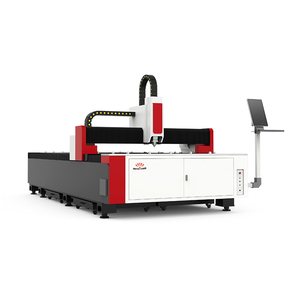
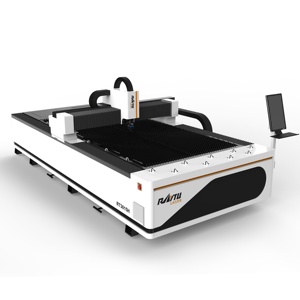
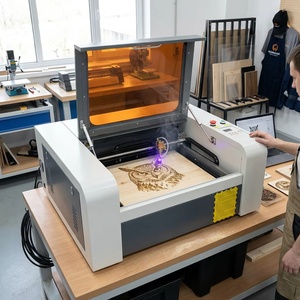
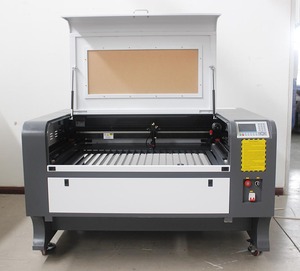
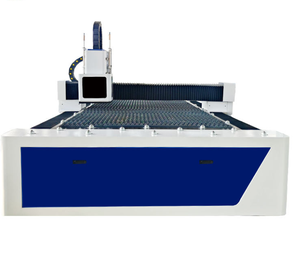
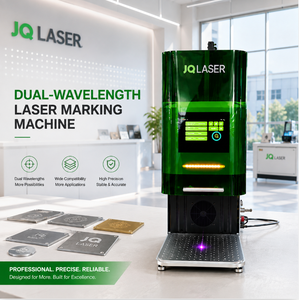
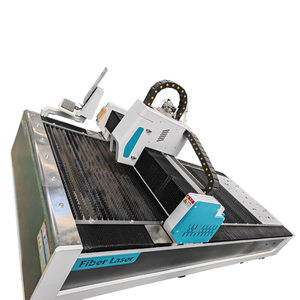
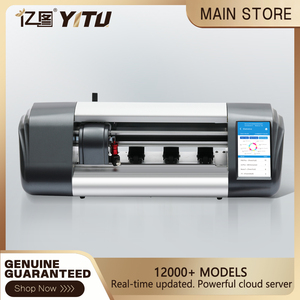
From stress-relieved welded steel frames to ultra-fast galvanometer scanners, our laser marking and cutting platforms are built to maximize yield and eradicate downtime.
Our machine beds undergo high-temperature thermal annealing at 600°C to relieve internal structural stresses. This guarantees zero frame deformation across decades of high-speed vectoring.
Utilizing premium fiber sources (Raycus, MAX, IPG), our laser markers provide pulse width adjustability (2ns to 500ns). Achieve black marking on anodized aluminum and vivid color engraving on stainless steel.
Equipped with original Japanese Yaskawa or Panasonic servo drivers and high-precision linear guides. Maintain micrometer-level positioning accuracy (±0.005mm) under aggressive acceleration curves.
The global manufacturing sector is undergoing a massive migration toward automated, traceable, and contactless material processing. Precise part identification—ranging from 2D DataMatrix codes and UID barcoding to high-contrast serial numbers—has shifted from a client preference to a mandatory regulatory requirement in automotive, aerospace, medical device, and semiconductor industries. As a premier laser marker factory and international OEM supplier, we engineer solutions designed to satisfy the rigorous demands of modern Industry 4.0 production environments.
SEO & Engineering Insight: When selecting an industrial laser marker or cutter, beam quality ($M^2 < 1.3$), Rayleigh length stability, thermal lens effect mitigation, and controller bus speeds (EtherCAT) dictate real-world ROI far more than peak output power alone.
Understanding wavelength interaction across organic and inorganic substrates is critical to establishing a lean manufacturing facility. Fiber lasers operating at 1064nm deliver unmatched absorption efficiency for metals, alloys, and dense engineered polymers. Conversely, CO2 laser technologies operating at 10.6µm remain the gold standard for organic material processing, including acrylics, hardwoods, glass, and technical textiles. Dual-wave systems and UV laser markers (355nm) bridge the gap for delicate cold-marking applications where thermal heat-affected zones (HAZ) must be totally eliminated.
To assist procurement teams and mechanical engineers in specifying the correct machinery, the following comparative dataset outlines energy coupling behavior and operational envelope specifications:
| Laser Source Type | Primary Wavelength | Optimal Material Compatibility | Marking / Cutting Speed | Expected Diode Lifespan |
|---|---|---|---|---|
| Fiber Laser (MOPA / Q-Switched) | 1064 nm | Stainless Steel, Carbon Steel, Aluminum, Brass, ABS, Polycarbonate | Up to 12,000 mm/s (Scanner) | 100,000+ Hours |
| CO2 Sealed Glass / RF Tube | 10.6 µm | Acrylic, Plywood, MDF, Leather, Organic Polymers, Glass | 500 - 1,200 mm/s (Plotter) | 10,000 - 20,000 Hours |
| UV Cold Laser | 355 nm | Silicon Wafers, HDPE, Flame-Retardant Plastics, Glass Micro-machining | Up to 8,000 mm/s | 30,000+ Hours |
| High-Power Fiber CNC (Cut) | 1064 nm | Thick Metal Sheet Fabrication (1mm to 50mm Carbon/Stainless Steel) | 0.5 - 60 m/min (Gantry) | 100,000+ Hours |
As smart manufacturing evolves, purchasing managers must look beyond unit price to evaluate lifetime total cost of ownership (TCO) and system adaptability. Key industry trends driving procurement decisions include:
Answers to common technical, logistics, and integration questions compiled by our senior field application engineers.
Consult with our laser engineering team to receive customized machine configurations, sample material testing reports, and competitive direct factory pricing.
Get Catalog & Custom Quote