
Engineered for high throughput, micron-level accuracy, and industrial-grade continuous duty cycles.
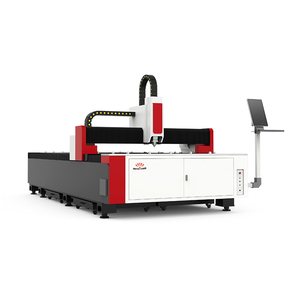
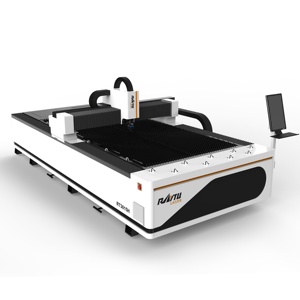
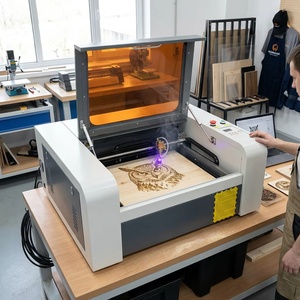
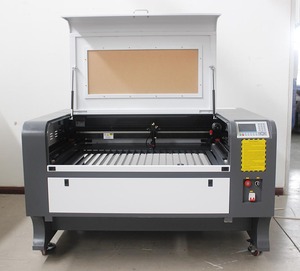
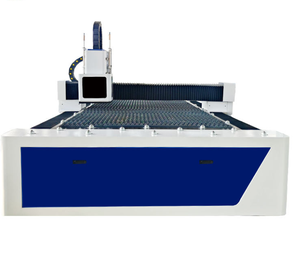
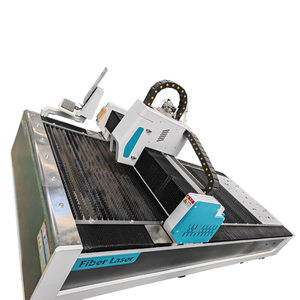
The global machine tool market has undergone a structural paradigm shift over the last decade. Modern industrial buyers, ranging from OEM tier-one automotive component suppliers to custom architectural millwork facilities, no longer view Chinese machining centers and laser cutting systems merely as budget-friendly alternatives. Instead, Chinese machinery manufacturers have established themselves as front-runners in high-power fiber laser innovation, heavy-duty CNC structural engineering, and bus-driven automated motion control platforms.
Selecting the optimal CNC machining center or industrial fiber laser cutter from top-tier Chinese manufacturing factories requires a systematic evaluation of bed frame metallurgy, mechanical drive stability, servo loop responsiveness, and thermal management systems. This white paper serves as an authoritative guide for corporate procurement officers, chief technology officers, and shop floor managers seeking to maximize capital return on investment (ROI) while minimizing total cost of ownership (TCO).
Top China factories utilize high-tensile steel plate welding combined with high-temperature stress-relieving annealing furnaces to eliminate internal structural strain, ensuring zero frame deformation over decades of high-G acceleration.
By pairing Japanese Yaskawa or German Siemens AC servo motors with dedicated Cypcut or Syntec CNC control hardware, high-end Chinese equipment achieves sub-millisecond communication cycles for continuous 3D contouring.
A primary difference between budget machine assemblers and top-tier China machining center factories lies in the thermal treatment process of the lathe bed. Leading factories subject structural gantry beds to 600°C anneal cycles followed by 72-hour natural vibration aging. This prevents geometric alignment drift under temperature fluctuations in non-climate-controlled factory environments.
When specifying a machine center—whether an industrial wood router or a heavy plate metal laser cutter—selecting the appropriate mechanical transmission system is crucial. The decision hinges on balancing positioning accuracy against maximum rapid feed rates.
| Drive Component | Positioning Accuracy | Max Acceleration | Optimal Target Materials | Maintenance Profile |
|---|---|---|---|---|
| Preloaded Precision Ballscrew | ±0.005 mm - ±0.01 mm | 0.5G - 0.8G | Aluminum tooling, brass, dense hardwoods, acrylics | Low wear, periodic synthetic grease purging |
| Helical Rack & Pinion | ±0.025 mm - ±0.04 mm | 1.5G - 2.5G | Structural sheet metal, 4x8 cabinet plywood, MDF | Regular automatic rail & pinion lubrication |
| Direct Drive Linear Motors | ±0.002 mm | 3.0G+ | Ultra-thin electronics foils, silicon, surgical stainless | Cleanroom environment required, near-zero friction |
Global demand for manufacturing agility has accelerated the convergence of traditional CNC material removal and fiber laser thermal ablation. Industry 4.0 connectivity standards are no longer luxury features; they are essential requirements for modern production ecosystems.
Where 3kW to 6kW fiber lasers once dominated metal fabrication, top Chinese factories are pioneering industrial deployment of 12kW, 20kW, 30kW, and 40kW laser sources. High-power fiber sources dramatically alter processing economics: a 30kW fiber laser cuts 20mm carbon steel using compressed air as an assist gas up to 400% faster than traditional oxygen-assisted cutting, drastically reducing gas consumption costs per linear meter.
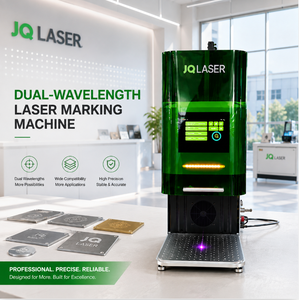
Future factory floors prioritize single-setup completion of complex geometries. Advanced Chinese manufacturers are combining heavy-duty 5-axis CNC routing spindles with secondary fiber or blue diode laser marking heads. This hybrid capability allows operators to rout aluminum profiles, drill mounting hole patterns, and burn permanent barcode identification marks on the same vacuum table bed without part re-clamping.
Modern Cypcut and Syntec control systems incorporate real-time monitoring sensors embedded within the laser cutting head and spindle housing. Capacitive height sensors automatically adjust for warped sheet metal in milliseconds, while thermal drift compensation algorithms adjust coordinate offsets as high-frequency spindles reach operating temperatures.
Purchasing directly from top Chinese machining center factories provides significant economic advantages when paired with rigorous engineering quality control protocols. Industry-leading OEMs back their systems with international warranties, lifetime technical support, and transparent spare parts logistics.
Tier-one factories provide full 3-year factory coverage on major mechanical structural parts, linear guide tracks, and Yaskawa servo drives, paired with direct factory replacement options.
Dedicated customer service centers maintain extensive inventories of laser protective windows, ceramic rings, cutting nozzles, collets, and carbide router bits to maintain operational uptime.
To avoid common pitfalls in direct sourcing, global buyers should follow a structured 5-step factory audit protocol before issuing purchase orders:
Selection depends primarily on material composition and thickness. Fiber lasers excel at high-speed sheet metal profiling (carbon steel, stainless steel, aluminum, brass) with zero mechanical tool wear and minimal kerf width. Conversely, CNC routers are designed for non-ferrous thick material milling, 3D wood carving, acrylic polishing, MDF nesting, and composite panel fabrication using rotary cutters.
Leading Chinese exporters coat all precision ground linear guide rails, rack gears, and ball screws with anti-rust marine grease before wrapping the entire chassis in vacuum-sealed moisture-proof foil. Machine frames are bolted directly to heavy steel shipping bases inside reinforced containers to prevent vibration-induced misalignment during transit.
Fiber lasers typically use three types of assist gases: Oxygen (O2) for thick carbon steel cutting via exothermic reaction, Nitrogen (N2) for oxidation-free clean cuts on stainless steel and aluminum, and High-Pressure Compressed Air (filtered and oil-free) for cost-effective rapid cutting of thin-to-medium gauge metals.
High-power industrial machinery typically operates on 3-Phase 380V/50Hz or 3-Phase 220V/60Hz power. Top Chinese factories custom-build electrical cabinets with integrated industrial transformers, voltage stabilizers, and Schneider protection breakers tailored to your country's regional power grid standards.
Most commercial fabricators recover their initial capital investment within 6 to 14 months. ROI is driven by bringing previously outsourced laser cutting in-house, achieving higher nesting sheet yields, accelerating processing speeds, and eliminating secondary grinding steps thanks to burr-free edge quality.