Explore premier precision machinery configurations manufactured under ISO 9001 and CE quality management systems. Click below to request customized OEM technical catalogs and factory direct pricing.
Over the past two decades, China’s industrial CNC manufacturing ecosystem has transformed from low-cost machinery assembly into a dominant global hub for high-precision, automated, and heavy-duty 4-axis machine tools. Modern procurement managers, manufacturing engineers, and enterprise buyers no longer evaluate Chinese machinery suppliers based solely on purchase price. Instead, evaluation protocols center around kinematic repeatability, thermal deformation resistance, dynamic servo responsiveness, and controller synergy.
The term 4-Axis CNC machining encompasses systems that integrate standard Cartesian X, Y, and Z spatial interpolation with an additional continuous or indexable rotational axis (commonly designated as the A-axis or C-axis). This fourth mechanical degree of freedom enables complex cylindrical geometry machining, helical slot cutting, multi-sided panel indexing without repositioning, and intricate architectural mold relief work.
Leading manufacturing clusters in Shandong, Jiangsu, Guangdong, and Zhejiang have developed standardized production supply chains incorporating Japanese Yaskawa and AC Panasonic servo hardware, German precision rack-and-pinion transmission mechanisms, Italian HSD electro-spindles, and proprietary Taiwanese or domestic CNC control algorithms like CypCut, Syntec, and Weihong. Consequently, international procurement teams can source machinery that complies strictly with ISO 9001 quality frameworks, CE machinery directives, and North American UL electrical compliance standards.
Continuous spatial dynamic interpolation across X, Y, Z, and Rotary A axes, allowing seamless complex surfacing and aerodynamic blade milling without step lines.
Heavy-duty gantry bases welded and subjected to high-temperature thermal stress relief (annealing) to eliminate residual casting strain and prevent bed warping over decades.
Every fully assembled gantry undergoes laser interferometer pitch calibration and ballbar testing to ensure absolute positioning accuracy across large bed travel zones.
When specifying machinery from top China 4-axis CNC factories, procurement engineering groups must differentiate between two distinct kinematic configurations: Indexable 3+1 Rotary Axis and Simultaneous 4-Axis Interpolation. Confusing these two methodologies often leads to improper machine sizing, suboptimal cycle times, or software incompatibility during CAM toolpath post-processing.
| Technical Criteria | Indexable (3+1 Axis) Rotary Systems | Simultaneous 4-Axis Continuous Motion |
|---|---|---|
| Kinematic Execution | Locks A-axis at specific angular increments (e.g., 0°, 90°, 180°), then executes 3-axis cutting. | Translates X, Y, Z linear feeds concurrently with active angular rotation of the A-axis. |
| Transmission Type | Worm gear mechanisms, standard planetary gearboxes, or pneumatic brake indexers. | Zero-backlash Harmonic Drives, direct-drive torque motors, or precision hypoid gears. |
| Typical Applications | Cabinet post tenoning, multi-sided square beam mortising, architectural block drilling. | Helical augers, turbine impeller blades, anatomical prosthetics, 3D artistic wood carvings. |
| CAM Post-Processor | Standard 3-axis post with plane rotation codes (G68 / G54.2 work offset shifts). | Dedicated 4-axis simultaneous post processor with inverse-time feedrate (G93) support. |
| Backlash Tolerance | < 30 arc-seconds (acceptable for indexing multi-face cabinet components). | < 5 arc-seconds (imperative for continuous smooth surface machining). |
Furthermore, machine stability relies on structural mass balance. Heavy-duty 4-axis machine tools utilize a box-type gantry constructed from high-tensile meehanite iron or thick-walled structural steel tubing. The bed undergoes shot blasting and vibration stress relief (VSR) to guarantee long-term stability under severe dynamic loading, such as high-speed roughing in hardwood, solid surface panels, or 6061-T6 aluminum alloys.

Our manufacturing philosophy bridges western engineering precision with scalable Eastern production efficiency. By incorporating design methodologies honed over 40 years of North American industrial machine tooling leadership, our factory production lines adhere to stringent validation criteria.
Every machine bed is milled on oversized 5-side gantry machining centers in a single setup. This ensures that linear guide rail mounting surfaces achieve parallelism tolerances within 0.01mm over a 3000mm length. High-precision Japanese linear guides and preloaded ballscrews are aligned using precision dial indicators and granite square blocks, preventing stick-slip friction and thermal expansion misalignment during continuous shift operation.
The global industrial manufacturing landscape is experiencing rapid technology convergence. As Industry 4.0 paradigms mature, factory buyers are shifting focus toward dynamic digital connectivity, energy efficiency, and adaptive cutting intelligence.
Next-generation CNC controllers integrate real-time sensor feedback monitoring spindle load, current draw, and vibration frequency. When cutting variable-density hardwoods or inhomogeneous composite sheets, the controller automatically scales cutting feedrates to maintain optimal chip load. This dynamic modulation reduces tool wear by up to 35% and eliminates thermal spindle burn.
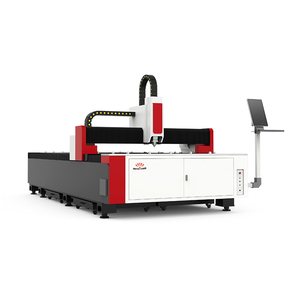
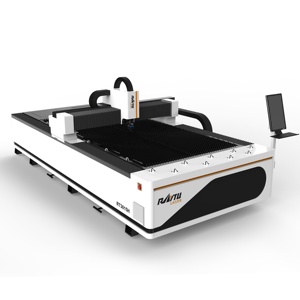
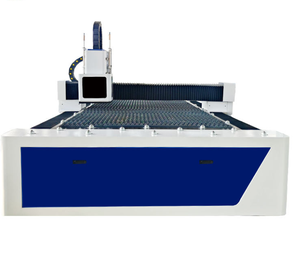
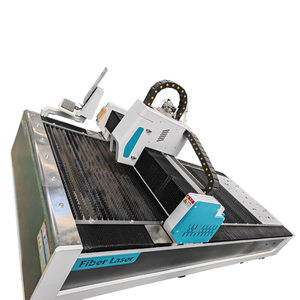
In metal sheet and tube fabrication, 4-axis fiber laser systems are rapidly replacing conventional plasma and waterjet setups. Systems leveraging 12kW to 40kW fiber sources allow single-pass cutting of thick carbon and stainless steel with nitrogen assist, delivering mirror-finish edge quality without secondary deburring. The addition of a fully synchronized rotary A-axis enables simultaneous tube profiling and sheet cutting on a single machine footprint.
Modern Chinese 4-axis CNC production centers are increasingly delivered equipped with integrated cloud telemetry modules. Machine operators and plant managers monitor spindle temperature curves, axis ball-screw wear metrics, and laser diode performance remotely via mobile application dashboards. Predictive algorithms issue automated maintenance alerts prior to mechanical component failure, reducing unplanned factory downtime.
Overseas buyers sourcing from Chinese CNC factories face evolving trade dynamics, logistics requirements, and technological customization choices. Successful procurement directors follow a structured Total Cost of Ownership (TCO) evaluation framework rather than relying solely on FOB quote figures.
Key procurement shifts include demanding full factory acceptance testing (FAT) via high-definition live streaming video feeds prior to crating, requesting modular spare part kits (containing spare servo drives, limit switches, and optical lenses), and establishing regional service level agreements (SLAs).
Factories capable of supplying comprehensive documentation—including localized wiring schematics, English CAM post-processors for Mastercam, Fusion 360, or Vectric Aspire, and step-by-step video setup guides—consistently gain competitive market share.

Selecting the correct spindle configuration, power rating, and hold-down substrate is essential for maximizing operational throughput. The matrix below outlines recommended machine parameter ranges across common industrial engineering materials.
| Material Type | Recommended Machine Type | Optimal Spindle / Laser Power | Hold-down / Fixturing Method | Tooling / Optic Setup |
|---|---|---|---|---|
| Hardwoods & MDF | 4-Axis Heavy Woodworking CNC Router | 9.0kW – 12.0kW HQD/HSD 24,000 RPM | High-Vacuum Matrix Bed (Bake-lite) | Solid Carbide Compression & Chipbreaker Bits |
| 6061-T6 Aluminum | Heavy Gantry CNC Router / Milling Center | 12kW Water-Cooled / Oil-Mist Coolant | T-Slot Clamp + Vacuum Pod Combination | Single Flute DLC Coated Carbide Endmills |
| Carbon / Stainless Steel | High-Power Fiber Laser Cutter | 3kW – 12kW Fiber Laser Generator | Serrated Steel Slat Exchange Table | Precitec / Raytools Auto-Focus Laser Head |
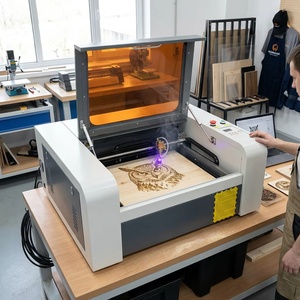
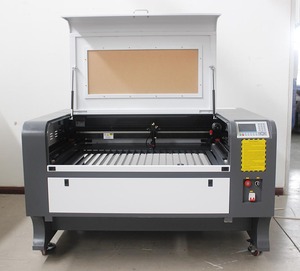
| Acrylic & HDU Board | CO2 / Fiber / Wood Router Platform | 100W – 150W CO2 / 6kW Router Spindle | Zoned Vacuum Hold-down | Single-Flute Spiral Polishing Cutters |
| Cylindrical Columns / Legs | Simultaneous 4-Axis Rotary Router | 9.0kW Auto Tool Change Spindle | 4th Axis Heavy Pneumatic Tailstock Chuck | Tapered Ball Nose & Roughing Endmills |
Prior to issuing purchase orders, enterprise procurement managers should evaluate potential China 4-axis CNC manufacturers against six non-negotiable factory auditing benchmarks:
Verify that raw steel frames undergo full thermal annealing at >600°C for 8 hours in an industrial furnace, rather than unheated natural aging.
Ensure the manufacturer owns large 5-face CNC milling machines capable of machining machine side rails in a single clamping operation.
Confirm the direct factory origin of core components (Yaskawa servos, Schneider electrics, HIWIN rails) to eliminate counterfeit grey-market parts.
Audit laser interferometer reports for positioning error compensation curves and pitch/yaw angle deviation across all linear axes.
Inspect wiring discipline, wire ferrules, routing channels, electrical noise shielding, and thermostatic cabinet cooling systems.
Check factory warehouse inventory for immediate replacement availability of drives, spindles, pumps, controllers, and optics.


Empower your factory floor with unmatched machining precision, structural frame rigidity, and long-term technical reliability. Contact our application engineering team today to review your drawings and request customized machine quotes.