
Direct from leading global manufacturing facilities: Industrial fiber laser cutters, high-precision CNC routers, and heavy-duty automatic woodturning lathes engineered for maximum yield, structural stability, and 24/7 continuous operation.
Years Engineering Excellence
Global Installations
Machining Precision
Live Engineering Support
In the contemporary industrial manufacturing ecosystem, the demand for precision woodturning, architectural column turning, stair spindle manufacturing, and intricate furniture component production has catalyzed a rapid evolution from manual wood lathes to advanced Automated CNC Wood Lathes and Multi-Axis Woodworking Machining Centers. Sourcing high-caliber woodturning lathes requires a rigorous evaluation of structural bed rigidity, spindle motor torque vectors, linear guide rail tolerances, and control software ecosystem integration.
This industry analysis compiles empirical data, mechanical benchmarks, and supply chain insights to evaluate the Top 10 Wood Lathe Manufacturers & Exporters worldwide. Whether your facility produces high-volume baseball bats, solid-wood furniture legs, decorative balusters, or large-scale artistic wood turnings, understanding the engineering distinctions between single-spindle single-cutter models, dual-spindle dual-cutter CNC lathes, and hybrid woodturning-laser machinery is vital for achieving rapid Return on Investment (ROI) and minimizing operating expenditure (OPEX).
Core Procurement Insight: Machine bed vibration dampening is the single greatest factor influencing surface finish quality (Ra) in high-speed woodturning. Premium exporters utilize heavy cast-iron or stress-relieved, fully welded tubular steel frames subjected to high-temperature annealing to eliminate residual internal stresses prior to precision machining of rail seats.
When shortlisting international wood lathe manufacturers and export partners, procurement directorates and technical leads must scrutinize five critical mechanical and electronic pillars:
Vibration is the chief adversary of high-speed wood turning. When turning off-center, asymmetrical, or heavy hardwood logs (such as oak, walnut, or maple), centrifugal forces induce severe resonance. High-end wood lathe builders deploy cast-iron beds or heavy-gauge steel structures weighing anywhere from 1,500 kg to over 4,000 kg. This mass absorbs chatter, protects the cutter carbide tips from premature chipping, and yields glass-smooth turned surfaces that require minimal secondary sanding.
Modern CNC wood lathes utilize heavy-duty AC induction motors paired with high-performance vector Inverters (VFDs) or direct-drive AC Servomotors. Step-less speed regulation ranging from 0 to 4,000 RPM allows operators to match cutting velocity dynamically with workpiece diameter. Torque maintenance at low RPMs is essential when roughing raw square timber down to a cylinder.
To maximize factory throughput, premier exporters offer dual-blade configurations where a roughing tool precedes a finishing tool in a single linear pass. Advanced models feature dual spindles capable of turning two timber blanks simultaneously, effectively doubling output without increasing labor footprint.
Industrial buyers prioritize CNC controllers that support standard G-code (NC format) generated by mainstream CAD/CAM software packages such as AutoCAD, Mastercam, Artcam, and PowerMill. DSP handheld controllers with USB offline loading or panel-mounted industrial touchscreen PCs equipped with Cypcut or Syntec control cards facilitate rapid job setup for workshop technicians.
The matrix below contrasts the operational parameters of three primary woodturning machinery categories available from global exporters:
| Machinery Category | Typical Spindle Power | Max Turning Diameter | Feed Speed Range | Optimal Production Application |
|---|---|---|---|---|
| Manual / Semi-Auto Copy Lathe | 1.5 kW – 3.0 kW | 200 mm – 350 mm | Manual Feed / Hydraulic Copy | Low-volume custom turning, restoration & artisanal workshops |
| Heavy-Duty CNC Dual-Spindle Lathe | 4.5 kW – 7.5 kW Vector Servo | 300 mm – 500 mm | 0 – 8,000 mm/min (NC Control) | High-volume furniture legs, stair spindles, baseball bats |
| Multi-Axis CNC Turning & Milling Center | 5.5 kW Main + 3.5 kW Router Head | 400 mm – 800 mm (Custom) | 0 – 12,000 mm/min Interpolated | Complex 3D carved columns, spiral turning, slotted posts |
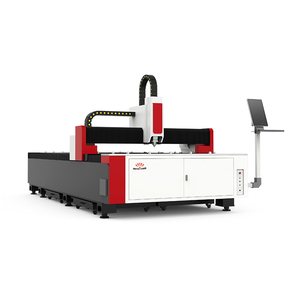
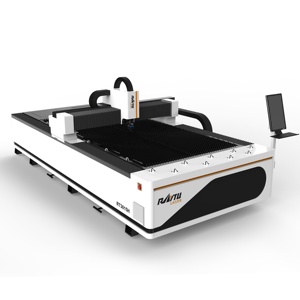
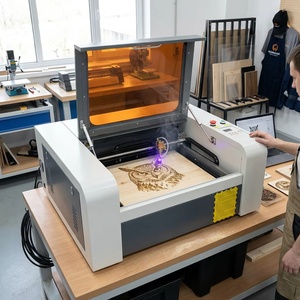
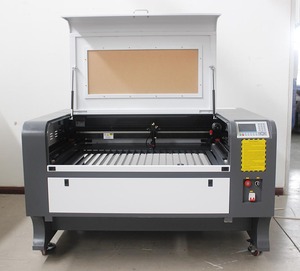
| Hybrid Laser-Machining Wood Station | Fiber / CO2 Laser Auxiliary Engine | Custom Bed Lengths | High-Speed Laser Scanning | High-detail wood engraving, branding & sheet processing |
As global timber processing factories transition toward Smart Manufacturing and Industry 4.0 paradigms, several key technological shifts are redefining wood lathe machinery procurement:
Integration of pneumatic hopper feeders and 6-axis articulated robotic arms for continuous blank loading and part offloading, enabling unattended "lights-out" manufacturing shifts.
Real-time vibration, thermal sensor monitoring on main spindle bearings, and automatic alerts for knife edge wear to prevent unexpected spindle downtime and surface quality drop-offs.
Combining traditional high-speed alloy lathe knives with secondary fiber or CO2 laser modules for precise surface texturing, serial branding, and dark accent burning without unclamping.
High-efficiency AC servo drives that capture braking energy during rapid spindle deceleration, reducing total workshop kilowatt-hour consumption by up to 22% annually.
Laser tool setters automatically measure knife offset, tip radius wear, and thermal elongation, dynamically adjusting tool length offsets in the CNC controller.
Pneumatic dust hood shroud designs synchronized with tool movement, removing wood shavings directly at the cutting zone to maintain clean optics and mechanical components.
As an international leader in industrial CNC routers, wood lathes, and heavy laser cutting machinery, our manufacturing setup is structured around absolute precision, reliable component selection, and lifetime service availability.
Every lathe bed and machine chassis undergoes five-stage thermal stress-relieving heat treatment, eliminating structural distortion over decades of heavy production loading.
We partner exclusively with tier-1 automation vendors including Yaskawa servo systems, TBI high-precision ground ball screws, Hiwin linear guide rails, and Cypcut CNC controllers.
No automated phone bots or ticket queues. Direct, immediate phone and video access to experienced application engineers, backed by same-day spare parts dispatch.
A single-spindle wood lathe turns one piece of timber at a time, making it suitable for custom, oversized, or highly detailed turnings. A dual-spindle CNC wood lathe features two parallel headstocks and tailstocks driven by synchronized drives, enabling the operator to mount and turn two timber blanks simultaneously. Dual-spindle machines double factory output for high-volume products such as chair legs, stair balusters, and table columns while maintaining a single operator footprint.
Yes. By upgrading from a standard 2-axis (X-Z) wood lathe to a multi-axis CNC turning and milling workstation equipped with an auxiliary high-speed router spindle (C-axis indexing), the machine can perform spiral twisting, surface fluting, 3D relief carving, off-center mortising, and intricate decorative cuts directly on the turned workpiece without requiring manual benchwork.
Most industrial CNC wood lathes utilize standard G-code input. Designs can be created in 2D vector CAD software such as AutoCAD, CorelDRAW, or Illustrator (exported as .DXF or .EPS), and converted via standard CAM post-processors (e.g., Artcam, Mastercam, Vectric Aspire, or Powermill). Many machines also feature direct DSP hand-controller file recognition for immediate plug-and-play operation via USB flash drives.
For dense hardwoods such as mahogany, teak, maple, and walnut, solid tungsten carbide alloy knives or indexable carbide insert turners provide superior wear resistance and thermal stability compared to high-speed steel (HSS). Indexable carbide blades allow operators to rotate to a fresh cutting edge in seconds without needing to re-grind the tool profile, maintaining consistent part dimensions throughout long production runs.
Tier-1 exporters build machinery in strict alignment with CE standards and ISO 9001 quality management systems. Safety protocols include fully enclosed safety interlock doors, emergency stop circuitry, shielded cable carriers, pneumatic pressure sensors, overload circuit breakers, and comprehensive electrical grounding to ensure compliance with North American (UL/CSA) and European safety directives.
Contact our application engineering team today to review your production blueprints, calculate estimated cycle times, and receive a complete turnkey factory quote with global shipping support.
Send an Inquiry