
Explore engineered metalturning equipment ranging from heavy-duty benchtop lathes and stone-profiling machinery to multi-axis CNC turn-mill work centers and automated robotic loading cells.
In the contemporary manufacturing ecosystem, selecting a metal lathe supplier or exporter is no longer a simple transactional equipment purchase. It is a core strategic capital investment that directly influences a factory's mechanical throughput, part tolerance retention, yield ratios, and total operational expense (TCO). As global supply chains prioritize resilience, high-mix low-volume flexibility, and sub-micron repeatability, industrial buyers must evaluate machinery suppliers against rigorous technical, structural, and service metrics.
Metal turning technology has rapidly evolved beyond conventional manual engine lathes into multi-axis CNC turning centers, live-tooling mill-turn platforms, and robotically integrated manufacturing cells. Whether sourcing benchtop equipment for prototyping labs or multi-axis production centers for aerospace component milling, structural rigidity—achieved through stress-relieved welded steel frames or cast meehanite iron bases—remains the non-negotiable bedrock of machining stability.
When engineering and procurement teams audit global machine tool builders and exporters, standard catalog specifications often fail to reveal long-term dynamic performance. To establish verifiable E-E-A-T (Experience, Expertise, Authoritativeness, and Trustworthiness), buyers should benchmark suppliers against five critical structural pillars:
Every frame undergo robotic welding and thermal stress-relief baking to prevent structural warp, ensuring micro-inch bed alignment across decades of usage.
Industrial uptime demands instant spare parts availability. Comprehensive inventories of spindles, drives, gearboxes, and tooling ship within 24 business hours.
Strict quality assurance protocols verify concentricity, surface finish (Ra), and pitch accuracy with laser interferometers prior to factory sign-off.
A analytical comparative breakdown evaluating tier-1 global machinery builders, export vendors, and engineering OEMs across key production capabilities.
| Supplier Tier & Category | Primary Machine Focus | Structural Frame Type | Automation Compatibility | Ideal Procurement Intent |
|---|---|---|---|---|
| 1. Heavy Industrial Turning OEMs | Multi-Tasking Turn-Mill Lathes | Cast Meehanite / Heavy Ribbed | High (Barfeed / Robot Ready) | High-Volume Automotive & Aerospace |
| 2. USA Precision Machinery Builders | Ballscrew CNC Routers & Lathes | Welded & Stress-Relieved Steel | Full Cobot & PLC Integration | Production Workshops & OEM Parts |
| 3. European Toolroom Specialists | Ultra-Precision Manual & CNC | Polymer Concrete / Composite | Medium (Custom Cell) | High-Precision Mold & Tooling Labs |
| 4. Taiwanese Production Exporters | Slant-Bed Heavy Duty CNC Lathes | Cast Iron Monoblock | High (Automated Gantry) | Medium-to-High Batch Manufacturing |
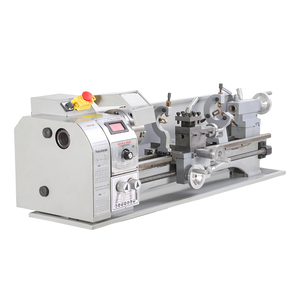
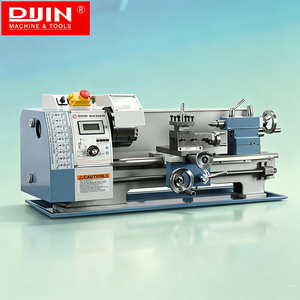
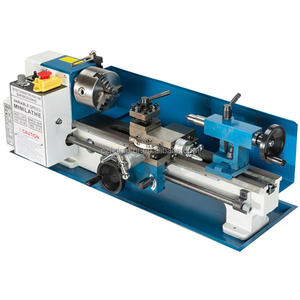
| 5. Compact Benchtop Manufacturers | 220x600 & WM210V Mini Lathes | Cast Iron Bedways | Manual / Basic Digital Readout | Prototyping, R&D & Hobbyist Shops |
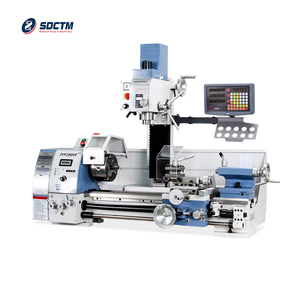
| 6. Combo Machine Builders | Lathe-Mill Combination (JYP290VF) | Reinforced Bench Frame | Manual / Integrated Dro | Maintenance Shops & Education Labs |
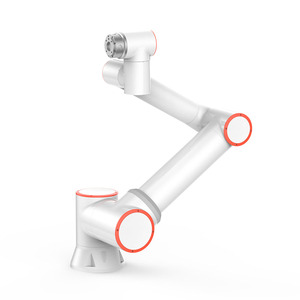
| 7. Robotic Automation System Integrators | Cobot Tending Cells (FR10 6-Axis) | Articulated Arm & Steel Base | Native PLC & Ethernet/IP | Lights-Out Automated Machine Tending |
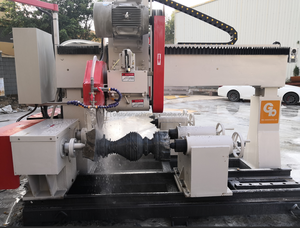
| 8. Specialized Stone & Granite Profilers | Column & Baluster Stone Lathes | Gantry Heavy Steel Structure | Automated Template Profiling | Architectural & Masonry Manufacturing |
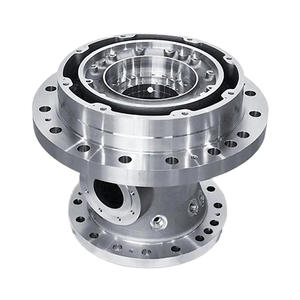
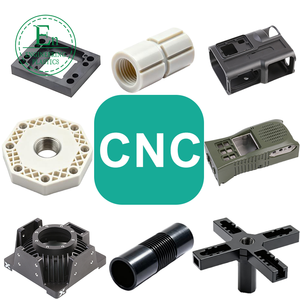
| 9. Precision Contract Machining Exporters | 3/4/5 Axis ISO Certified Services | Fixed Industrial Workstations | Full Production Manufacturing | Outsourced Complex Metal Processing |
| 10. Brushless Direct-Drive Toolroom Exporters | 0618 Brushless Variable Lathes | Precision Ground Steel Bedways | Digital Speed Feedback Control | Compact Instrument & Medical Prototype |
The metalworking sector is undergoing a profound digital and mechanical transformation driven by shifting demographics, energy costs, and demands for zero-defect production. Industrial buyers must align their procurement strategies with several macro developments shaping the lathe manufacturing landscape:
Human operator scarcity has elevated machine tending automation from a luxury to an absolute necessity. Modern lathes are increasingly paired with 6-axis collaborative arm systems, such as the 10kg payload FR10 Cobot unit featuring integrated PLC controllers, pneumatic vacuum grippers, and safe force-sensing operation. This setup allows continuous "lights-out" second- and third-shift machining without requiring extensive physical safety fencing.
Single-setup manufacturing is replacing traditional sequential machining (turning on a lathe, followed by transferring to a vertical machining center). Advanced 3, 4, and 5-axis CNC turn-mill machines execute face milling, off-center cross drilling, tapping, and contouring within one clamping cycle. This setup eliminates human transfer error, cuts lead times by up to 60%, and guarantees geometric concentricity across complex component features.
Mechanical pulley belts are rapidly giving way to direct-drive brushless DC and AC permanent magnet servo motors. In machines like the 0618 750W brushless bench lathe, direct drive technology delivers flat torque curves even at low RPMs, drastically reduces acoustic noise, eliminates maintenance-heavy wear parts, and vastly improves power transfer efficiency.
Next-generation CNC turning centers feature embedded IoT sensors monitoring spindle vibration harmonics, motor thermal signatures, and ball-screw backlashes. By analyzing dynamic telemetry in real time, maintenance managers receive automated alerts before critical component failure occurs, transforming unplanned operational downtime into scheduled maintenance windows.
Built upon over four decades of machine design excellence, our equipment and service ecosystem provides unmatched operational reliability to machine shops globally.
Founded in 1985, our engineering core designs, stress-relieves, and constructs heavy-duty machine frames engineered for maximum structural dampening and rigidity under demanding loads.
Bypass unhelpful AI chatbots and endless queue systems. Connect directly with real mechanical and application engineers for machine diagnostics, tooling selection, and operational guidance for the life of your equipment.
We maintain an extensive, centralized inventory of factory spindles, hardened gearboxes, control boards, digital readouts, and precision chucks to ship out within hours of an order.
Expert technical responses to common questions encountered during metal lathe procurement and shop floor integration.
Selection depends entirely on batch volume, part complexity, and required tolerance repeatability. Benchtop lathes (like the WM210V or 0618 750W model) excel in low-volume prototyping, quick repair jobs, toolroom modifications, and educational labs where quick manual setup is preferred. Conversely, production environments running medium-to-high batch quantities requiring sub-0.01mm concentricity across complex radii and thread forms should invest in full CNC turning centers or turn-mill workstations.
Brushless DC motors (such as the 750W motor on the 0618 lathe) deliver significantly higher torque at low rotational speeds without stalling during heavy cuts. They eliminate wearing carbon brushes, resulting in near-zero electrical maintenance, reduced thermal emission, lower energy consumption, and quieter shop operation.
Yes. The FR10 6-Axis Collaborative Robot features standardized PLC interface protocols and configurable I/O communication cards designed for simple retrofitting. It links directly with automatic pneumatic chucks, chip blowers, and safety interlock doors to enable autonomous loading and unloading of metal blanks on legacy and modern lathe equipment alike.
During steel welding, extreme localized heat introduces severe internal mechanical stresses. If a machine frame is assembled without post-weld stress relief (via thermal baking or controlled mechanical vibration), internal stresses naturally relax over months of operation, causing permanent bed twisting and alignment drift. Stress-relieved framing guarantees long-term geometric flatness and precision alignment under heavy industrial loads.
Combo machines combine a precision horizontal lathe bed with an overhead vertical milling head on a single unified footprint. This allows small job shops, maintenance crews, and R&D facilities to turn, bore, face-mill, keyway-slot, and drill parts on one machine, minimizing floor space needs and lowering machinery capital outlay.
ISO certified machining services utilize calibrated Coordinate Measuring Machines (CMM), optical comparators, and laser interferometers to verify that dimensional tolerances meet customer specs—frequently reaching tolerances down to ±0.005 mm across stainless steel, brass, titanium, and aluminum components.
Contact our senior application engineers today for custom equipment sizing, technical drawings, spindle configuration advice, or detailed quotation packages.