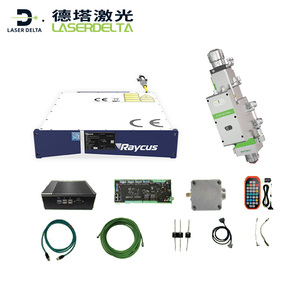

Direct factory supply of high-efficiency Fiber Laser Sources, Optical Delivery Cables, and 3-in-1 Smart Cutting Systems certified for global industrial fabrication lines.
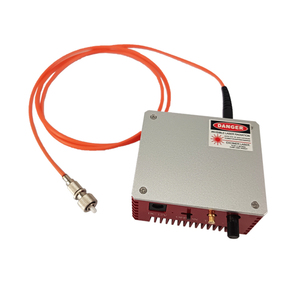
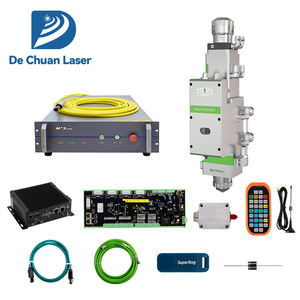
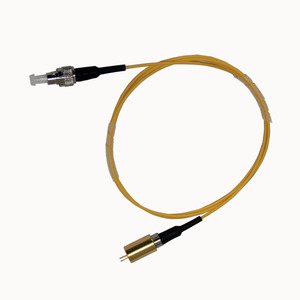
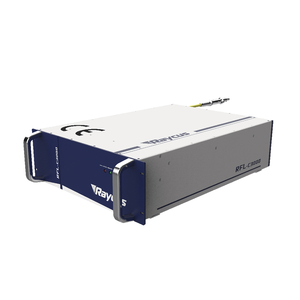
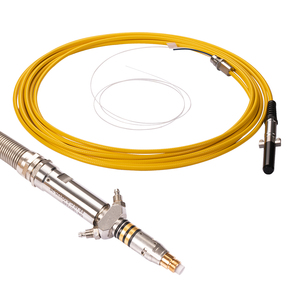
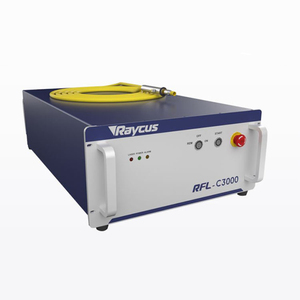
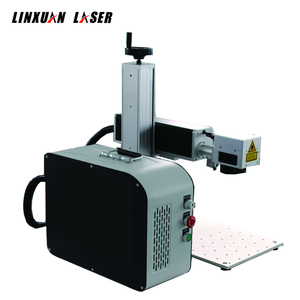
In modern industrial manufacturing, the laser source—often designated as the optical power engine—serves as the critical determinant of system capability, processing throughput, operational reliability, and total cost of ownership (TCO). Whether deployed in multi-axis CNC sheet metal cutting cells, robotic high-speed welding systems, additive manufacturing (3D metal printing), or semiconductor micro-machining, selecting an optimal laser source manufacturer requires rigorous optical, thermal, and economic evaluation.
Over the past decade, the global photonics landscape has witnessed a fundamental shift from traditional $CO_2$ and lamp-pumped solid-state lasers toward high-brightness Ytterbium (Yb) doped continuous-wave (CW) fiber lasers, MOPA (Master Oscillator Power Amplifier) short-pulse fiber systems, and direct diode modules. Modern fiber laser engines convert electrical energy into concentrated optical radiation with electro-optical efficiencies (EOE) exceeding 40%, drastically outperforming legacy gas lasers operating at mere 8% to 12% conversion ratios.
To provide B2B procurement managers, original equipment manufacturers (OEMs), and industrial system integrators with an objective, data-driven perspective, our application engineering team has analyzed the top 10 laser source manufacturers worldwide based on technical innovation, product reliability, market share, and technical support response capabilities.
| Manufacturer | Primary Architecture | Max Commercial Power | EO Efficiency | Core Optical Strengths | Target Applications |
|---|---|---|---|---|---|
| IPG Photonics | Fiber Laser (CW & Ultrafast) | 120 kW CW | 45% - 50% | Single-mode high power, custom diode chips | Automotive, Aerospace, Heavy Fabrication |
| Raycus Laser | Fiber Laser (CW / Q-Switched) | 100 kW CW | 38% - 42% | Cost-performance ratio, robust anti-reflection | Sheet Metal CNC Cutting, Cleaning, Welding |
| TRUMPF | Disk Laser / Fiber / $CO_2$ | 24 kW Disk / CW | 35% - 40% | TruDisk optical stability, insensitive to back-reflection | Precision Automotive, 3D Metal Printing |
| Maxphotonics | Fiber Laser (Single & Multi-module) | 80 kW CW | 38% - 42% | Compact footprint, high peak-power pulses | High-speed Medium/Thick Plate Processing |
| Coherent / Lumentum | Diode / Fiber / Ultrafast | 30 kW Fiber / UV | 35% - 45% | Picosecond & Femtosecond optical stability | Semiconductor, Micro-machining, Medical |
| nLIGHT | Semiconductor / Programmable Fiber | 20 kW Corona CW | 40% - 45% | Programmable ring-mode beam shaping (Corona) | Copper/Aluminum Battery Welding, Cutting |
| Jenoptik | Direct Diode / Solid State | Multi-kW Stack | 48% - 55% | High-brightness diode laser bars, optical optics | Material Processing, Medical Diagnostics |
| SPI Lasers (TRUMPF Group) | Pulsed MOPA & CW Fiber | 10 kW CW / MOPA | 36% - 40% | Pulse-shaping flexibility (gtWave technology) | Precision Marking, Fine Micro-Welding |
| Han's Laser | Integrated Fiber & Solid State | 30 kW CW | 35% - 40% | Vertical integration with CNC gantry systems | Electronics Manufacturing, Heavy Machinery |
| Lumibird (Keopsys) | Erbium / Doped Fiber Lasers | Specialty Pulsed | 30% - 35% | Specialty wavelengths (1.5µm, 2µm eye-safe) | LIDAR, Defense, Remote Environmental Sensing |
Processing highly reflective metals (copper, brass, aluminum, gold) causes back-scattered laser energy that can instantly destroy optical delivery fibers and diode modules. Leading manufacturers like Raycus and IPG integrate multi-stage optical isolators and real-time optical feedback sensors to divert reflected beams safely into water-cooled dump dumps.
Next-generation laser engines feature real-time variable beam parameters. By adjusting the spatial energy distribution between a central core beam and an outer ring beam (e.g., nLIGHT Corona or Raycus ABP technology), fabricators can switch instantly from spatter-free high-speed copper foil welding to clean thick carbon steel plate cutting.
Single-mode laser sources ($M^2 < 1.1$, typically $10\mu m-14\mu m$ core diameter) concentrate power into a diffraction-limited spot, ideal for thin sheet cutting, precision micro-welding, and additive manufacturing. Multi-mode sources ($50\mu m-100\mu m$ core) yield a broader kerf, optimal for thick plate cutting and heavy cladding applications.
Industrial laser technology is undergoing rapid architectural changes driven by automation, EV battery manufacturing, aerospace light-weighting, and energy conservation imperatives. Procurement strategy must adapt to the following industry transitions:
While 3kW to 12kW fiber lasers remain the workhorses of standard sheet metal job shops, 30kW, 40kW, and 60kW ultra-high-power fiber lasers are aggressively replacing plasma cutting and oxy-fuel systems in shipbuilding, structural steel fabrication, and heavy machinery industries. Higher power density allows nitrogen/compressed-air cutting of $50mm+$ stainless steel and carbon steel plates at speeds previously unachievable, drastically reducing cost-per-meter machining metrics.
For micro-electronics, semiconductor packaging, medical device fabrication, and EV battery tab welding, thermal damage (Heat Affected Zone or HAZ) must be minimized. Master Oscillator Power Amplifier (MOPA) fiber lasers permit independent control of pulse duration (from 2ns to 500ns) and pulse frequency (1kHz to 4MHz). Simultaneously, sub-picosecond and femtosecond lasers enable "cold material processing," vaporizing material instantaneously without thermal diffusion into adjacent micro-structures.
System integrators increasingly favor pre-tuned "3-in-1" optical bundles containing a certified Fiber Laser Source (e.g., Raycus or Maxphotonics), an autofocus Laser Cutting/Welding Head (e.g., Raytools BS03 or BM110), and an industrial CNC motion controller (e.g., XC3000S). This pre-tested hardware/software integration eliminates field impedance matching issues, reduces commissioning timeline by 60%, and ensures single-point support warranty coverage.
When evaluating laser source investment options, forward-thinking enterprises compare capital expenditure (CAPEX) against operating expenditure (OPEX). A comprehensive TCO model incorporates three primary operational vectors:
As a leading supplier and integrator of precision optical components, laser generators, and CNC tooling accessories, our organization bridges the gap between raw laser manufacturer specs and real-world industrial plant floor execution. We maintain technical partnerships with premier laser generator makers including Raycus, Maxphotonics, IPG, and Linxuan to deliver customized photonics solutions.
Every laser source and integrated kit sold is backed by certified optical engineers. We provide direct optical spectrum analysis, beam profiling diagnostics, remote controller firmware tuning, and localized emergency repair support to keep your spindles and cutting heads turning around the clock.
We supply factory-tested OEM QBH, QD, and Q+ fiber delivery cables ranging from 10 meters to 25 meters in length. Custom armored outer jackets, dust-proof optical connectors, and internal temperature sensor wiring ensure seamless connection between stationary power units and robotic gantries.
Prior to shipment, every fiber laser generator undergoes a rigorous 48-hour continuous full-power burn-in protocol, power stability testing under extreme back-reflection scenarios, and optical wavelength verification to guarantee 100% compliance with international CE and FDA standards.
Written by our senior optical application engineers to answer common pre-purchase technical queries from factory managers and CNC machinery integrators.
A Continuous Wave (CW) fiber laser emits an uninterrupted beam of laser light at a constant power level, making it optimal for continuous sheet metal cutting, deep penetration welding, and high-speed cladding. A Pulsed Laser (such as Q-switched or MOPA) delivers laser energy in rapid spikes or pulses (nanoseconds to micro-seconds). Pulsed lasers excel at surface marking, precision engraving, rust removal, and micro-drilling where thermal input must be strictly regulated to prevent localized structural distortion.
Selection depends directly on your dominant material type, sheet thickness profile, and required cutting speed. A 1500W source comfortably processes carbon steel up to 14mm and stainless steel up to 6mm. A 3000W source increases carbon steel capability to 20mm and stainless to 10mm with significantly faster linear speed. For industrial heavy-plate cutting ($25mm+$) or continuous high-volume production with compressed air assist, 6000W to 12000W sources yield the lowest overall processing cost-per-part.
The optical fiber delivery connector (QBH/QD/Q+) transfers high-density laser power safely from the generator engine into the cutting head. QBH (Quarter-Turn Bayonet Head) is the standard interface for laser power up to 10kW. QD (Direct Plug) and Q+ connectors are engineered for higher power levels (12kW to 30kW+), featuring specialized water-cooling channels and integrated interlock safety pins. Mismatched or low-quality optical connectors can suffer thermal lens explosion, leading to catastrophic fiber core destruction.
Yes, provided the laser source is equipped with a hardware-level anti-back-reflection system. Highly conductive non-ferrous metals bounce optical radiation back up the beam delivery tube. Quality laser sources from Raycus, Maxphotonics, and IPG feature active optical isolators, photodiode feedback alarms, and light-dumping heat sinks that safely absorb reflected 1064nm light, permitting safe processing of yellow brass, red copper, and alloy aluminum.
The semiconductor pump diodes inside a premium fiber laser source have an MTBF (Mean Time Between Failures) rating of over 100,000 operational hours. Under clean factory conditions with controlled ambient temperature ($20^\circ C - 30^\circ C$), proper chiller water conductivity maintenance, and clean optical protection windows, a quality laser generator will deliver reliable operational service for 8 to 12 years.