
An authoritative technical evaluation guide for OEM production managers, industrial fabricators, and procurement directors seeking maximum electro-optical conversion efficiency, spatial precision, and lowest total cost of ownership (TCO).
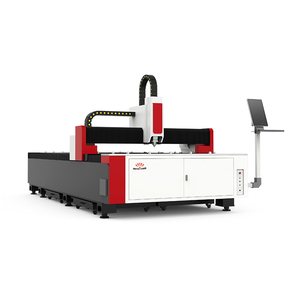
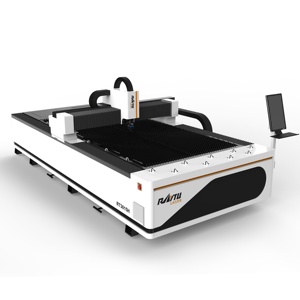
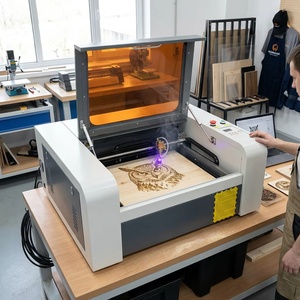
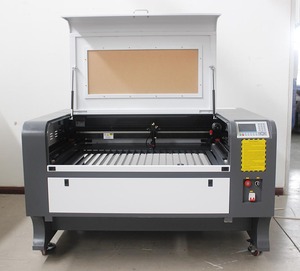
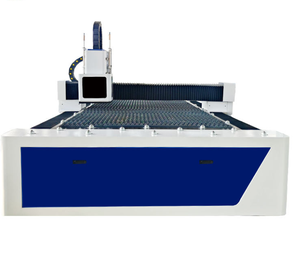
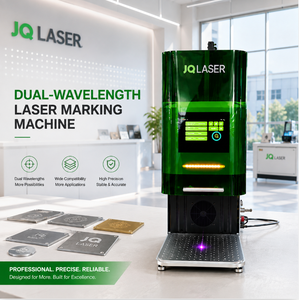
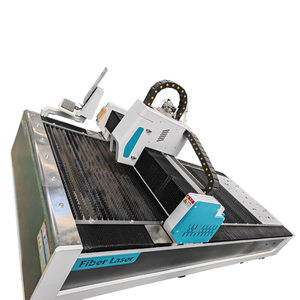
Industrial fiber laser machinery has fundamentally transformed global sheet metal fabrication, structural steel processing, and precision component manufacturing. Utilizing an optical fiber doped with rare-earth elements—typically Ytterbium (Yb³⁺)—these systems generate a high-luminance, coherent laser beam at a fundamental wavelength of 1064nm (1.064 microns). This specific spectral output is absorbed up to five times more efficiently by metallic substrates (carbon steel, stainless steel, aluminum, brass, and copper) compared to legacy 10.6-micron CO2 gas lasers.
When procurement officers evaluate top-tier fiber laser manufacturers and global OEM suppliers, the decision matrix hinges on critical parameters: electro-optical wall-plug efficiency (WPE), beam quality factor ($M^2$), dynamic acceleration performance of the gantry, capacitive height tracking responsiveness, and long-term optical system protection against back-reflection damaging thermal spikes.
Modern Ytterbium-doped fiber lasers achieve wall-plug efficiencies exceeding 40-45%, whereas traditional CO2 lasers hover between 8% and 12%. This drastic efficiency differential reduces total factory electrical draw, lowers chiller refrigeration loads, and yields a direct operational cost (OPEX) reduction of up to 60% per cut meter.
| Performance Parameter | Solid-State Fiber Laser (1064 nm) | CO2 Gas Laser (10,600 nm) | Nd:YAG Crystal Laser (1064 nm) |
|---|---|---|---|
| Wall-Plug Efficiency (WPE) | 35% - 48% (Ultra High) | 8% - 12% (Low) | 3% - 5% (Very Low) |
| Maintenance Interval (MTBF) | > 100,000 Hours (No mirrors) | ~ 15,000 Hours (Optics mirror clean) | ~ 5,000 Hours (Flashlamp replace) |
| Thin Sheet Cut Velocity (<4mm) | 3x - 5x Faster Velocity | Baseline Reference Velocity | 1.5x Reference Velocity |
| Non-Ferrous Metal Cutting | Excellent (Copper, Brass, Al) | Poor (High Back-reflection risk) | Moderate (High operational cost) |
| Consumable Optics Overhead | Minimal (Protective Cover Slides) | High (Focus Lenses, Beam Benders) | High (Excitation Lamps, Cavities) |
Selecting an OEM machine builder from the global ecosystem of fiber laser suppliers requires looking beyond rated laser source wattage. Production managers must rigorously assess the structural engineering of the CNC chassis, motion control dynamics, optical cutting head integration, and software nesting intelligence.
Top manufacturers employ heavy welded carbon steel plate beds subjected to high-temperature stress-relief annealing (600°C) inside industrial furnaces. This eliminates internal mechanical stresses, preventing bed warping or structural deformation over decades of high-G acceleration.
Tier-1 suppliers partner with established resonator manufacturers (e.g., IPG Photonics, nLIGHT, Raycus, Maxphotonics). Premium optical resonators feature active back-reflection isolation mechanisms to safely cut reflective brass and copper without damaging pump diodes.
Closed-loop AC Servo systems (such as Yaskawa Sigma-7 or Panasonic high-inertia drives) paired with hardened helical rack-and-pinion assemblies deliver positional accuracies of ±0.03mm and repeatability down to ±0.02mm under 2.0G dynamic acceleration.
Intelligent cutting heads (such as Precitec ProCutter or Raytools Auto-Focus series) utilize integrated capacitive sensors to continuously adjust focal position in real-time, optimizing pierce times and edge roughness across varying plate thicknesses.
Advanced numerical control suites (e.g., CypCut FSCUT, Beckhoff Automation, Siemens 840D) incorporate fly-cutting algorithms, common-line cutting, micro-joint placement, and automatic collision control to minimize non-productive traverse moves.
CE and FDA compliant Class 1 laser safety enclosures equipped with laser-protective glass windows, multi-zone partitioned exhaust ducts, and automatic shuttle exchange beds safeguard operators while maximizing continuous sheet load/unload cycles.
The industrial laser processing landscape is undergoing rapid technological convergence driven by high-power optical physics, artificial intelligence, and automated materials handling.
The market has crossed the threshold where ultra-high-power fiber lasers (20kW, 30kW, and up to 60kW) actively replace traditional plasma arc cutters and waterjet systems for thick plate section cutting (>25mm). High wattage allows high-pressure compressed air cutting of thick carbon steel, drastically reducing operational cost compared to pure liquid oxygen or nitrogen assist gases.
Next-generation fiber laser cutting machines embed machine vision cameras inside the working chamber alongside real-time thermal optical sensors. AI algorithms continuously monitor kerf spark emissions, automatically adjusting cut speed, focus shift, and gas pressure on-the-fly to prevent kerf bridging, dross accumulation, or lost pierces.
Modern production facilities require standalone CNC laser cutters to interface seamlessly with automated loading tower systems, vacuum suction sheet lifters, and robotic part sorting units. Manufacturing Execution System (MES) software integration enables real-time OEE tracking, predictive maintenance alerts on collimating optics, and dynamic nesting generation for mixed-lot orders.
Direct Diode Laser (DDL) technology is emerging as a compelling complement to conventional fiber lasers. Offering superior beam absorption at shorter wavelengths (~970nm) and even higher electro-optical efficiency, DDL sources provide unprecedented cut speeds on ultra-thin sheet metals (<2mm) and non-ferrous alloys.
Procurement strategies for heavy machinery have shifted from focusing solely on initial capital expenditure (CAPEX) to analyzing Total Cost of Ownership (TCO) across a 10-year machine operational lifecycle.
Leading metal service centers and OEM fabricators now evaluate vendors using Total Cost per Part (TCPP) metrics. TCPP factors in electricity consumption, auxiliary gas volume (N2 vs. O2 vs. Compressed Air), protective window replacement frequency, nozzle wear rates, and planned downtime versus raw cutting velocity.
With a foundation rooted in over 35 to 40 years of precision motion control engineering, our industrial manufacturing platform delivers field-tested fiber laser cutting machines engineered for rigorous round-the-clock factory operations.
Built upon robust structural design principles, our CNC gantries are finite-element-analyzed (FEA) to eliminate resonance vibration during high-speed directional changes, maintaining tight kerf tolerances.
Every fiber laser cutting cell utilizes premier industrial drives—including Yaskawa servo amplifiers, CypCut FSCUT intelligence, Schneider electrics, and SMC pneumatic regulators—ensuring global spare parts availability.
We provide comprehensive live technical support for the entire operating life of your machinery. In-house replacement optics, nozzles, ceramic rings, and spare modules ship same-day to keep your spindles and cutting heads active.
Essential guidance answered by senior laser application engineers to streamline your machinery purchasing decision.
Selection depends on your primary material thickness gauge:
Auxiliary gas selection affects edge quality and cost per cut meter:
Solid-state Ytterbium fiber laser resonators feature a Mean Time Between Failures (MTBF) exceeding 100,000 operational hours for their semiconductor pump diodes. Under normal operating conditions (clean environment, temperature-controlled cooling water, correct power supply), a fiber source typically operates reliably for 8 to 12+ years without diode replacement or gain fiber degradation.
Welding heavy steel plates creates localized thermal stresses inside the metal structure. If a machine bed is machined without stress relief, the frame will slowly shift, twist, or warp over time as ambient temperatures fluctuate and high-G dynamic forces act upon it. High-temperature annealing (heating to 600°C and slow cooling inside a furnace) relieves internal stress, guaranteeing long-term mechanical accuracy and axis squareness.
Fiber lasers require significantly less maintenance than CO2 systems due to the absence of mirror alignment optics. Routine maintenance involves:
Highly reflective metals like copper, brass, and polished aluminum can reflect laser energy directly back into the optical path during piercing. To prevent diode damage, select a laser source with active back-reflection optical isolators (such as nLIGHT nPULSE or IPG protective isolators) and ensure the CNC control software uses dynamic frequency pulsing during initial pierce cycles.
Speak with our senior application engineers to obtain full dimensional drawings, cut-speed charts, parameter databases, and factory direct quotes tailored to your production requirements.
Get Catalog