
Engineered for 24/7 continuous duty cycles, high dynamic positioning accuracy, and heavy workpiece throughput across woodworking, sheet metal, and composite fabrication.
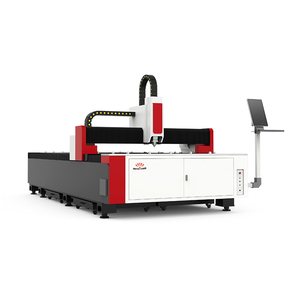
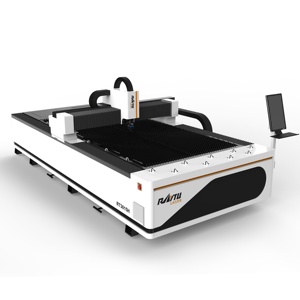
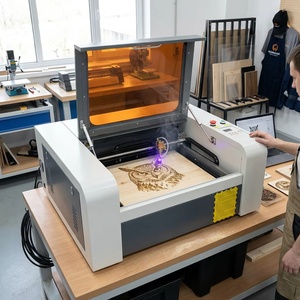
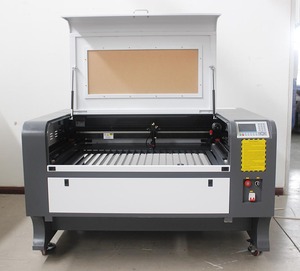
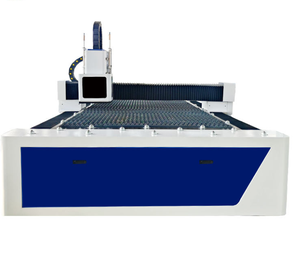

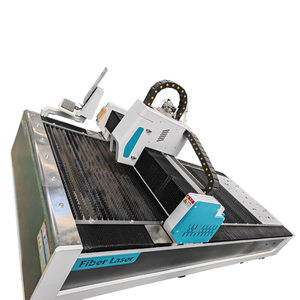
In modern computer numerical control (CNC) machining, the structural layout of the gantry frame determines the boundary conditions for cutting speed, torsional rigidity, dynamic payload capacity, and long-term geometric precision. Procurement managers evaluating top CNC gantry manufacturers must look beyond peak laser wattage or spindle horsepower to understand structural dynamics, drive feedback loops, and stress-relieving heat treatment protocols.
A true heavy-duty CNC gantry system relies on a structural bridge supported by two synchronized vertical columns moving along a longitudinal bed axis (typically the Y-axis). Unlike cantilever or moving-table machine tools—where workpiece weight restricts maximum acceleration and forces table flexure—the dual-drive moving gantry design isolates the mass of the workpiece on a stationary bed while the lightweight, rigid bridge moves over it.
Fabricated from heavy-walled structural steel tubing, stress-relieved via 600°C annealing and vibration aging to eliminate internal welding stress before multi-pass CNC machining.
Eliminates mechanical gantry racking by employing dual Yaskawa or Siemens AC digital servos coupled with high-precision helical rack and pinion drive assemblies.
Optimized low-inertia gantry cross-beams capable of achieving 1.5G to 2.5G dynamic acceleration without micro-chatter or path deviation on complex vectors.
Selecting the optimal CNC machine layout requires matching workpiece dimensions, cutting forces, and operational throughput requirements against core frame designs:
| Gantry Layout | Primary Target Materials | Structural Rigidity | Max Acceleration | Best Sourcing Scenario |
|---|---|---|---|---|
| Overhead Moving Gantry | Plate Metal, Large Panels, Composites | Highest (Stationary Bed) | 1.5G – 2.5G | High-speed sheet metal laser cutting & 4x8/5x10 panel nesting |
| Fixed Bridge / Moving Table | Small Non-Ferrous Parts, Molds | High (Short Span) | 0.5G – 1.0G | Precision benchtop milling, jewelers, micro-laser engraving |
| High-Rail Gantry System | 5-Axis Aerospace, Large Patterns | Ultra-High (Elevated Walls) | 1.0G – 1.8G | Deep 3D mold carving, marine plugs, automotive body tooling |
| Dual-Gantry Independent Cells | High-Volume Cabinetry & Steel | Maximum Yield Efficiency | 2.0G+ | Continuous multi-spindle processing with zero idle loading time |
To assist global procurement officers, plant managers, and industrial equipment distributors in evaluating suppliers, our research team analyzed over 40 global manufacturers based on E-E-A-T indicators: Engineering R&D ratio, manufacturing depth (in-house machining vs. assembly shop), dynamic positioning accuracy, drive component tiering, and long-term thermal compensation capabilities.
Below is the executive matrix evaluating the top 10 industrial CNC gantry manufacturers and OEM factories currently leading the global metalworking, woodworking, and laser cutting sectors.
| Manufacturer & Factory Tier | Core Gantry Expertise | Drive & Control Specs | Repeatability | Evaluation Index |
|---|---|---|---|---|
| 1. Techno CNC Systems (USA) | Industrial Woodworking, Nesting Routers & Plasma | Ballscrew & Helical Rack, Industrial Cypcut/Techno | ±0.020 mm | 9.8 / 10 (Leader) |
| 2. TRUMPF Group (Germany) | Ultra-High Power Fiber Laser Gantry Systems | Linear Servo Drive, TruControl Siemens CNC | ±0.005 mm | 9.7 / 10 |
| 3. Bystronic (Switzerland) | Heavy Sheet Metal & Automation Gantry Lines | High-Torque Direct Drive, ByVision Fiber CNC | ±0.008 mm | 9.6 / 10 |
| 4. Mazak Optonics (Japan) | Direct-Drive 3D/2D Fiber Laser Gantries | Linear Motors, Mazatrol Preview 3 CNC | ±0.008 mm | 9.5 / 10 |
| 5. VOIERN & Precision Laser OEM (China) | High-kW Metal Fiber Lasers & Desktop CO2 | Yaskawa Servos, Cypcut, Water-Cooled Head | ±0.015 mm | 9.5 / 10 (Best Value) |
| 6. AMADA Co. (Japan) | Precision Sheet Metal Servo-Electric & Fiber | Helical Rack & Servo Sync, AMNC 3i Control | ±0.010 mm | 9.4 / 10 |
| 7. Biesse Group (Italy) | Heavy-Duty Panel Nesting & Composite Routers | High-Frequency Spindles, BiesseRover CNC | ±0.025 mm | 9.3 / 10 |
| 8. Homag Group (Germany) | Automated Cabinetry & Furniture Gantry Cells | Multi-Spindle Gantry, powerTouch Control | ±0.020 mm | 9.3 / 10 |
| 9. Han's Laser (China) | Large-Span Heavy Metal Cutting Fiber Gantries | Dual-Drive Servos, Han's Alpha Control | ±0.018 mm | 9.2 / 10 |
| 10. MultiCam Inc. (USA) | Heavy Structural Router & Plasma Cutting Gantries | Brushless AC Servos, Coreo Software Platform | ±0.030 mm | 9.0 / 10 |
Gantry racking occurs when one side of the cross-beam lags behind the other during high acceleration or under unequal cutting loads. Top manufacturers eliminate this defect through dual-loop feedback CNC systems paired with master-slave servo synchronization.
By placing optical glass scales directly along both linear guide rails, the CNC controller measures positional error in real-time at 10kHz frequency, issuing millisecond voltage corrections to keep the gantry perfectly orthogonal to the bed (true 90-degree squareness).

The industrial machine tool market is undergoing a rapid evolution toward higher energy efficiency, automated material loading, and extreme laser power output. Buyers evaluating gantry equipment must consider how current acquisitions will integrate into smart factories operating under Industry 4.0 standards.
Transitioning from standard 3kW–6kW laser sources to 12kW, 20kW, 30kW, and 40kW fiber optic lasers capable of single-pass oxygen/nitrogen cutting on 50mm carbon steel plates.
Modern CNC gantries are increasingly configured with hydraulic vacuum loading arms, automatic shuttle tables, and robotic offloading conveyors for uninterrupted throughput.
Real-time monitoring of spindle bearing vibration, thermal expansion gradients, laser nozzle condition, and power draw prevents unplanned downtime.
When customizing a CNC gantry for specific manufacturing tasks, choosing the correct transmission drive system is critical to balancing speed, accuracy, and capital expenditure:
| Transmission Technology | Max Travel Speed | Positional Accuracy | Maintenance Profile | Ideal Industrial Application |
|---|---|---|---|---|
| Precision Ballscrew (C3/C5 Class) | Up to 30 m/min | ±0.008 mm (Ultra-High) | Low (Periodic Lubrication) | Short-span Z-axis columns, precision milling, compact 4x4 beds |
| Helical Rack & Pinion (M1.5/M2) | Up to 120 m/min | ±0.015 mm (High) | Moderate (Auto-Greaser Required) | Long travel spans (4x8, 5x10, 4015 laser beds), high-speed nesting |
| Direct-Drive Linear Motors | 150+ m/min | ±0.002 mm (Micro-Accuracy) | Low (Zero Mechanical Wear) | Ultra-precision semiconductor cutting, medical laser machining |
Partnering directly with an established CNC gantry manufacturer ensures access to robust engineering support, component transparency, and customized machine beds tailored to non-standard material stock. Our factory operations combine rigorous FEA (Finite Element Analysis) stress modeling with strict quality control checklists.

Our application engineers answer key questions raised by plant directors, CNC shop owners, and procurement specialists during equipment evaluation:
Choose a moving gantry machine if you process large sheet materials (such as 4x8 ft or 5x10 ft plywood, MDF, or 4015 metal plates), heavy workpieces, or require automated nesting tables. Moving gantry designs keep the heavy workpiece stationary on the bed, maintaining fast acceleration regardless of sheet weight. Choose a moving bed (fixed bridge) machine primarily for compact benchtop setups, small jewelry/dental milling, or when extreme sub-micron tolerances on small parts are required.
For carbon steel and stainless steel under 8mm, a 3kW to 6kW fiber laser provides optimal cutting speed and cost efficiency. If your operational portfolio includes regular cutting of 12mm to 25mm carbon steel, or requires high-speed nitrogen processing on stainless steel, upgrading to an 8kW or 12kW laser cutter significantly increases feed rates (up to 300% faster) while lowering gas consumption per meter. Ultra-high powers (20kW–40kW) are reserved for heavy structural steel and thick plate processing.
Gantry racking occurs when dynamic cutting forces cause one side of the gantry bridge to twist relative to the other side. A dual Y-axis servo system assigns individual high-torque AC servo motors to both the left and right upright columns. Controlled by a dual-channel CNC drive system with electronic synchronization, both motors move in lockstep down to microsecond intervals, neutralizing asymmetrical twisting forces and preserving perfect perpendicularity.
Most commercial fabricators achieve full capital ROI within 6 to 14 months. Financial recovery stems from three key operational factors: 1) Up to 30% reduction in material waste via automated CAM nesting algorithms, 2) Replacing manual layout/cutting labor with high-speed automated gantry cycles, and 3) In-sourcing previously outsourced sheet metal laser cutting or CNC panel routing jobs.
To preserve long-term accuracy, perform weekly cleaning of linear guide rails and drive racks to prevent chip buildup. Ensure the automatic lubrication pump maintains correct grease pressure across all runner blocks. Inspect optical laser focus lenses daily, verify water chiller temperature stability (typically 20°C–25°C), and perform annual ball-bar testing or laser interferometer alignment checks to correct for ambient foundation settling.
Contact our industrial CNC engineering team to receive detailed technical datasheets, machine CAD drawings, nesting software integration specs, and direct factory pricing.
Send an Inquiry