
Explore our heavy-duty CNC boring systems, laser cutting platforms, and precision automation machinery manufactured under strict ISO/CE standards.
In the high-stakes ecosystem of heavy equipment production, aerospace engineering, automotive tooling, and modular millwork, the choice of OEM (Original Equipment Manufacturer) and ODM (Original Design Manufacturer) boring machine factories determines a enterprise's operational efficiency and long-term scalability. Boring machines—encompassing horizontal boring mills (HBM), floor-type boring centers, vertical boring turning mills (VTL), and specialized deep-hole drilling platforms—form the cornerstone of structural metalworking. When selecting a manufacturing partner, global procurement teams must navigate not merely machine price, but comprehensive life-cycle value, dynamic kinematic accuracy, thermal stability, and custom spindle configurations.
Modern industrial procurement has evolved past standardized off-the-shelf acquisitions. Today's global supply chain demands bespoke OEM/ODM engineering where machine beds, gantry rigidity, drive kinematics, and CNC control systems (such as Cypcut, Siemens 840D, or Fanuc platforms) are tailored precisely to structural substrate parameters. Whether machining massive engine blocks, large-format valve bodies, structural steel frames, or intricate non-ferrous components, selecting a supplier backed by over three decades of factory-direct innovation ensures seamless integration into automated Industry 4.0 production environments.
Core Procurement Insight: Sourcing OEM/ODM boring machinery requires a holistic audit of structural vibration damping, dynamic torque delivery across variable RPM bands, and post-installation technical support infrastructure. Factories providing direct engineering access dramatically reduce deployment timelines and operational downtime.
Contract manufacturing partners utilize several distinct categories of boring and milling technologies depending on workpiece geometry, volumetric material removal rates, and required surface finish tolerances:
As smart manufacturing frameworks reshape the global industrial market, procurement officers and plant managers must anticipate technological shifts before finalizing capital equipment investments. Sourcing strategies for 2025 and beyond are governed by four transformative trends:
Integration of ultra-high wattage fiber lasers (10kW to 40kW) with traditional mechanical boring beds to allow thermal stress relief, pre-cutting, and rapid profile sectioning within unified work cells.
OEM factories are embedding advanced vibration sensors, thermal compensation probes, and predictive spindle wear diagnostics directly into CNC controllers for remote cloud telemetry.
Procurement is shifting heavily toward dual-bed configurations, automated pallet changers (APC), and gantry robotic loading systems that eliminate spindle idle times during part transfer.
A frequent pitfall in B2B machinery sourcing is evaluating vendors solely on initial purchase cost. Leading industrial engineering studies reveal that capital expenditure accounts for only 25% to 35% of a boring machine's overall lifetime cost. The remaining 65%+ is consumed by energy efficiency, maintenance, scrap rates caused by thermal expansion, replacement tooling, and unscheduled downtime.
Partnering with premier OEM/ODM suppliers ensures access to heavy stress-relieved welded steel machine frames, precision ground ball screws, and premium servo networks (such as Japanese Yaskawa drives). These industrial-grade components maintain positioning accuracy across decades of multi-shift operation, lowering total cost of ownership and maximizing return on investment (ROI).
Rooted in over 35 years of engineering leadership, our manufacturing setup provides global B2B clients with complete end-to-end custom equipment design, production, and lifecycle support. Operating from dedicated industrial facilities equipped with heavy structural machining bays, dynamic balancing rigs, and laser interferometer calibration suites, we build machinery that powers global production.
Our in-house mechanical and electrical design teams customize bed dimensions, axis travel, spindle torque curves, dynamic vacuum hold-downs, and custom enclosure shielding tailored to your raw material matrix.
Every boring machine, fiber laser cutter, and CNC router undergoes rigorous 72-hour continuous thermal run-in testing, ballbar circularity verification, and laser alignment to guarantee sub-micron precision.
We eliminate complex call centers. Buyers gain direct access to senior application engineers, same-day spare part shipments, remote software diagnostics, and comprehensive operator training modules.
Our machinery platforms are engineered to process a diverse spectrum of industrial substrates with maximum speed and edge quality:
Standard stock machinery is manufactured to fixed specifications regarding table size, spindle travel, horsepower, and CNC control interfaces. An OEM (Original Equipment Manufacturer) boring machine is customized from the ground up—allowing buyers to specify bed dimensions (e.g., 4x4, 4x8, 5x10, or custom larger footprints), spindle cooling types (air vs. liquid), servo drive platforms (such as Yaskawa or Panasonic), internal coolant pressure levels, and specialized tool changer layouts tailored to specific manufacturing lines.
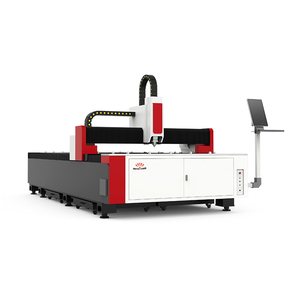
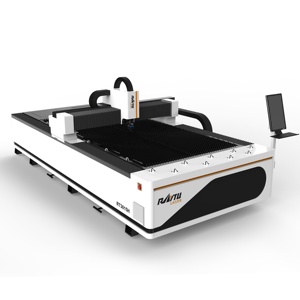
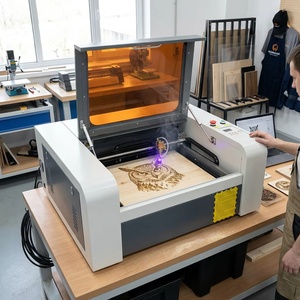
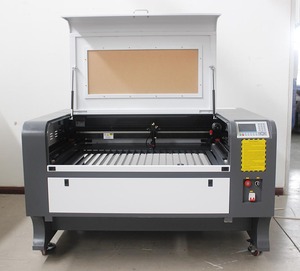
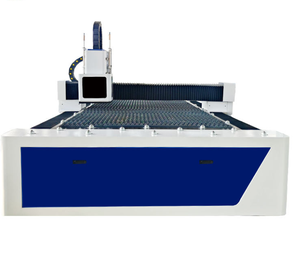
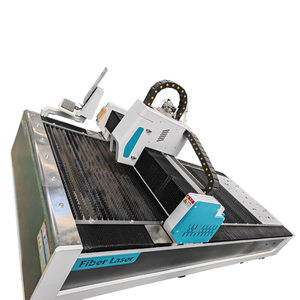
Fiber laser cutting platforms (ranging from 1kW to 40kW) excel at high-speed sheet profiling, intricate geometry sectioning, and high-volume sheet metal processing without physical tool wear. Mechanical CNC boring and milling machines are required when operations involve deep pocketing, internal thread tapping, blind hole boring, facing heavy castings, or profiling non-conductive thick substrates such as wood, plastics, and dense composites. Modern production shops frequently deploy both technologies side-by-side.
Every OEM/ODM machine shipped from our manufacturing facility includes a comprehensive Quality Assurance Pack containing: ISO 9001 factory inspection certificates, laser interferometer calibration charts verifying dynamic positioning accuracy, vibration analysis baseline reports, electrical compliance documentation (CE/UL standard compliance), and a complete spindle run-out tolerance sheet proving sub-micron repeatability.
Standard catalog machinery typically ships within 2 to 3 weeks. Custom OEM/ODM engineering projects requiring structural frame modifications, specialized multi-spindle boring heads, or custom automation interfaces generally carry a lead time of 6 to 10 weeks from final CAD approval. Global shipping is managed via heavy-duty seaworthy crating, complete with corrosion protection and full logistical support for ocean or air freight.
We provide lifetime direct engineering support for every machine built. Spare parts—including spindles, Yaskawa servo drives, Cypcut controllers, precision linear guide trucks, ball screws, laser consumables, and collets—are stocked in our centralized warehouse and dispatch same-day. Remote IP diagnostics allow our technicians to assist your team in real time, minimizing operating downtime.
Consult directly with our senior mechanical engineers to discuss custom OEM/ODM specifications, request detailed machinery quotes, or schedule live equipment demonstrations.