
Explore our high-precision hydraulic, electro-hydraulic servo, and automatic rebar bending equipment designed for heavy-duty metal fabrication.
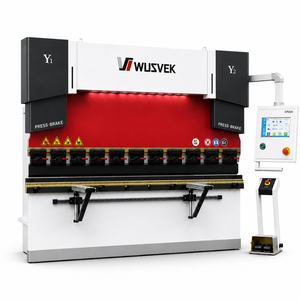
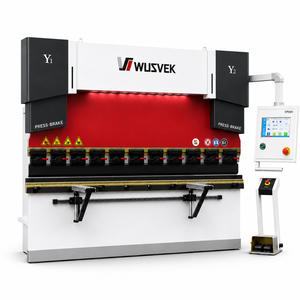
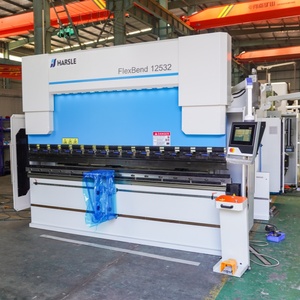
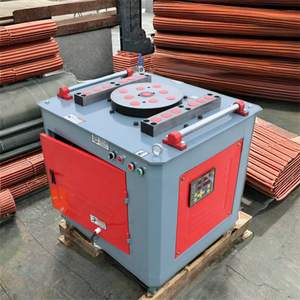
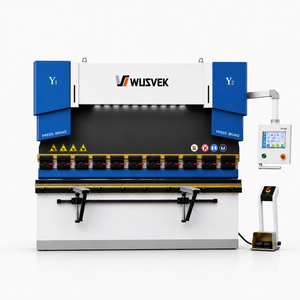
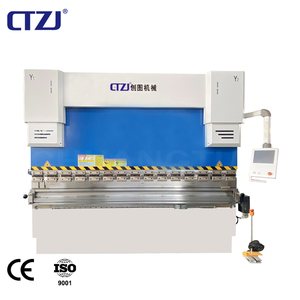
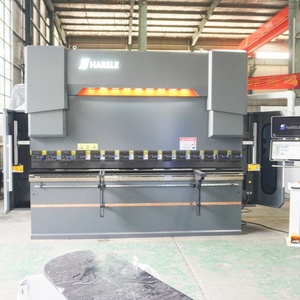
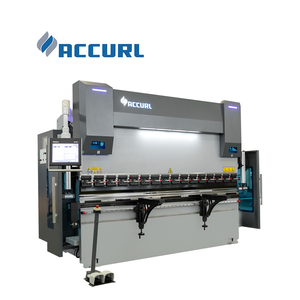
Providing end-to-end original equipment manufacturing and custom design services for international brands, machinery distributors, and specialized metal fabricators.
We tailor frame dimensions, throat depths (up to 800mm), ram stroke lengths, and open heights according to your operational envelope. Welded steel structures undergo thermal stress relieving to guarantee lifetime structural integrity.
As an authorized OEM partner for Delem, Cybelec, and ESA, we integrate multi-axis controllers (Y1, Y2, X, R, Z1, Z2) featuring 3D graphical offline software, automatic bend sequence optimization, and collision detection.
Equipped with Bosch-Rexroth or Hoerbiger proportional valves, Voith oil pumps, and Schneider electrical systems. Custom voltage matching (220V–480V, 3-Phase, 50/60Hz) ensures plug-and-play operation globally.
Our engineering design department evaluates sheet material yield point, thickness variation, and production cycle times to configure optimized machinery suites.
| Specification Feature | Standard Factory Model | OEM / ODM Tailored Specification |
|---|---|---|
| Bending Capacity (Tonnage) | 40T – 300T Standard Range | Up to 2000T Tandem Configuration |
| Backgauge Axis Control | 2-Axis (X, R) Standard | Up to 8-Axis Independent Servo (X1, X2, R1, R2, Z1, Z2) |
| Crowning System | Manual Mechanical Crowning | CNC Hydraulic V-Axis / Motorized Wave Crowning |
| Safety Compliance | Standard Rear Guarding | DSP / Lazersafe Cat 4 Optical Laser Protection |
| Color & Branding | Standard Industrial Grey/Blue | Full OEM Private Labeling, Custom RAL Colors & UI |
Information Gain Insight: Modern sheet metal fabrication has shifted from raw tonnage demands to precise energy control, angle accuracy feedback, and smart automation connectivity. Operators require machines that offset operator skill gaps while maintaining high throughput.
The global metalworking machinery landscape is undergoing a structural transition. While conventional hydraulic press brakes remain the benchmark for heavy-plate fabrication above 12mm thickness, Servo-Electric (e-Brake) and Hybrid Servo-Hydraulic systems are setting new standards for thin to medium sheet processing.
Hybrid systems utilize dual-servo motors driving bidirectional pumps directly coupled to hydraulic cylinders. This architecture eliminates proportional throttling valves, reducing hydraulic fluid volume by up to 70% and slashing power consumption by 40% to 60% compared to traditional asynchronous motor-driven hydraulic circuits. Furthermore, thermal expansion of oil is virtually eliminated, guaranteeing stable bend angle repeatability over long continuous production shifts.
Variations in sheet metal tensile strength, grain direction, and thickness tolerances inherent to rolled stock traditionally lead to angle deviations. Advanced OEM bending machinery now integrates non-contact laser angle measurement systems.
During the bending stroke, dual laser sensors project lines onto the workpiece surface, continuously reading the real-time deformation angle. The CNC controller calculates the material's specific springback coefficient dynamically and adjusts the Y1/Y2 axis depth penetration on the fly. This closed-loop control guarantees bend accuracy within ±0.3° on the very first part, eliminating material waste during setup phases.
Labor shortages in skilled press brake operating positions have accelerated demand for flexible robotic bending cells. OEM manufacturers are designing machinery with standardized fieldbus interfaces (Profinet, EtherCAT) and open API architectures.
Integrated robotic bending cells utilize 6-axis industrial robots equipped with magnetic or vacuum grippers, automatic tool exchangers (ATC), and sheet thickness detection sensors. The CNC software syncs robot motion directly with ram movement (bend tracking), allowing complex multi-bend parts to be produced continuously without manual intervention.
Key economic and technical factors guiding B2B machinery sourcing decisions over the next decade.
Procurement directors are shifting focus from initial capital expenditure (CapEx) to lifetime operational expenses (OpEx). Energy-efficient servo press brakes and machines featuring remote diagnostics minimize long-term power consumption and unprogrammed downtime.
To hedge against geopolitical risks, equipment buyers demand flexible OEM partners capable of supplying customized modular machinery kits, modular replacement parts, and direct local technical support documentation.
Adoption of standardized clamping systems (Wila, Promecam / European Style) allows fabricators to swap tooling across multi-brand press brake fleets seamlessly, accelerating setup times and cutting tool inventory overhead.
Expert answers to essential questions asked by machine buyers, plant managers, and procurement specialists.
Bending tonnage depends on material tensile strength, sheet thickness (t), bend length (L), and V-die opening width (V). The standard formula for air bending mild steel (tensile strength ~450 N/mm²) is:
P (Tons) = [650 × t² (mm) × L (m)] / V (mm)
For stainless steel, multiply the resulting tonnage by 1.5. For aluminum, multiply by 0.5. Our engineering team provides custom tonnage charts and automated sizing calculators for non-standard alloy grades.
NC Torsion Bar Press Brakes (e.g., WC67Y/K series): Mechanical torsion bars connect left and right hydraulic cylinders to maintain synchronization. They are cost-effective for straightforward, high-tonnage work but offer limited axis expansion and lower precision over long lengths.
CNC Electro-Hydraulic Press Brakes (e.g., WE67K series): Utilize independent proportional servo valves and optical linear encoders on Y1 and Y2 axes. The controller adjusts oil pressure real-time, delivering high precision (±0.01mm repeatability), supporting off-center loading, and allowing integration of multi-axis backgauging.
Standard model configurations ship within 15–20 days. For custom OEM/ODM projects requiring structural modifications (throat depth expansion, tandem synchronization setups, specialized controller integrations), engineering design takes 7–10 days, followed by manufacturing, assembly, and testing over 30–45 business days. Factory Acceptance Testing (FAT) videos and quality reports are supplied prior to shipment.
Deflection occurs naturally when pressing high-tonnage sheet along long beds. Mechanical crowning uses a series of precision wedge blocks manually or motor-adjusted across the work table. Hydraulic crowning utilizes hydraulic cylinders embedded in the lower beam, dynamically pressurized by the CNC controller based on tonnage calculations. Hydraulic crowning provides smoother continuous curve compensation for high-precision architectural paneling.
All machinery manufactured in our facilities complies strictly with the European Union Machinery Directive 2006/42/EC and Electromagnetic Compatibility Directive 2014/30/EU. Equipment carries CE certification and is built under ISO 9001:2015 quality management oversight. Optional safety options include Lazersafe IRIS laser guards and light curtain guarding meeting ANSI B11.3 standards.
Whether you are expanding your sheet metal fabrication shop or building a custom product line for your distribution brand, our engineering team is ready to design and deliver your ideal bending solution.