
High-efficiency OEM photonics, modular CNC laser cutters, and customized optical processing machines engineered for demanding industrial environments.
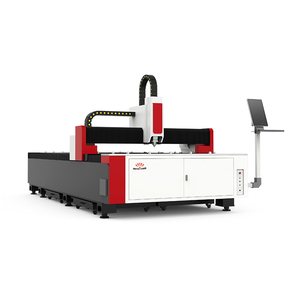
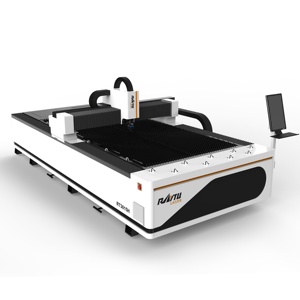
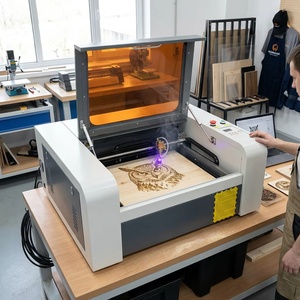
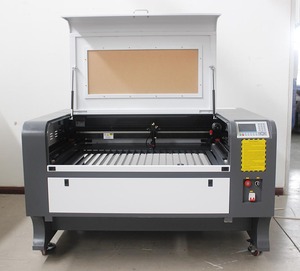
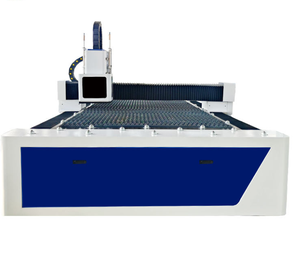
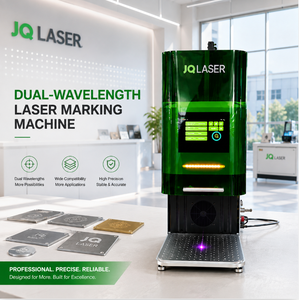
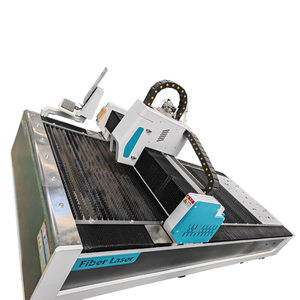
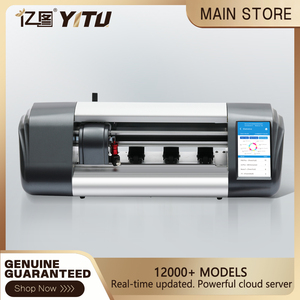
In the rapidly evolving landscape of advanced photonics manufacturing, off-the-shelf laser systems often fail to meet the rigorous demands of specialized industrial workflows. As a premier Custom OEM CO2 Laser Manufacturer & Supplier, our core technical capability lies in engineering tailor-made laser systems that integrate seamlessly into complex production lines, automated cells, and customized OEM enclosures.
Whether your application requires high-peak-power continuous wave (CW) CO2 gas lasers for organic polymer processing, high-frequency RF metal tube systems for micromachining, or multi-kilowatt fiber systems for heavy structural steel fabrication, our engineering team manages the complete lifecycle—from optomechanical CAD design and thermal dynamics modeling to custom firmware integration and international regulatory compliance (CE, FDA Class I/IIIb/IV, IEC 60825-1).
Information Gain Insight: Unlike standard distributors who assemble prefabricated components, full-scale OEM laser manufacturing requires stress-relieved welded steel chassis construction, interferometrically calibrated linear guide alignment, and custom-tuned optical beam delivery systems to eliminate spatial mode distortion across large working envelopes.
We build tailored optical setups featuring beam expanders, auto-focusing cutting heads, and mirror reflections tuned to 10.6µm, 10.2µm, or 9.3µm CO2 wavelengths, preventing beam divergence over long distances.
Utilizing high-tensile stress-relieved steel gantry structures and precision-ground helical racks, our frames maintain sub-pixel mechanical repeatability even under 2G acceleration dynamics.
Our controls support standard EtherCAT, Modbus, and CANopen industrial protocols. We offer white-label touchscreen GUIs, customized nesting algorithms, and IoT cloud diagnostic integration.
The global photonics sector is undergoing a massive transformation driven by automation, material diversification, and energy efficiency goals. As enterprise buyers evaluate laser systems for multi-year capital investment, several critical technology trends dominate procurement strategy:
While glass (DC) CO2 laser tubes remain cost-effective for entry-level cutting, industrial procurement is shifting heavily toward RF (Radio Frequency) metal cavity CO2 lasers. RF tubes deliver superior pulse stability, smaller focal spot diameters (M² < 1.1), and rapid modulation frequencies up to 250 kHz. This enables razor-sharp edge quality on delicate acrylics, thin films, and medical-grade polymers with zero charring or kerf taper.
Modern production facilities process diverse materials daily. The market demands unified workstations equipped with dual optical paths—combining a 10.6µm CO2 gas laser for organic substrates (wood, leather, acrylic, textiles) alongside a 1064nm Fiber Laser or 450nm Blue Diode engine for metal identification and micro-machining. This hybrid architecture eliminates machine footprint redundancy and dramatically lowers capital expenditure.
Advanced camera vision systems (CCD) integrated directly into the motion controller now perform real-time registration of printed fiducials, automatically warping cut paths to match material distortion. Simultaneously, AI-driven nesting algorithms maximize sheet utilization up to 94%, significantly trimming scrap costs on expensive engineered plastics and high-grade stainless sheets.
Industry 4.0 standards mandate embedded sensors throughout the optical train. Modern OEM laser platforms continuously track cooling fluid temperature, optical mirror transmissivity, gas pressure ratios, and dynamic motor torque. Anomalies trigger instant automated alerts, allowing engineering teams to replace optics or replenish laser gas before catastrophic failure occurs.
When procuring industrial CO2 laser systems, evaluating suppliers based solely on initial sticker price creates significant long-term financial risk. Smart procurement managers analyze Total Cost of Ownership (TCO) across a 5-to-10-year operating horizon. Below is an engineering evaluation framework designed for B2B buyers:
| Evaluation Parameter | Standard Commercial Grade | Our OEM Custom Industrial Grade |
|---|---|---|
| Structural Frame | Lightweight bolted sheet metal (Vibrates at speed) | Heavy welded tubular steel (Annealed & stress-relieved) |
| Optical Components | Standard Chinese ZnSe Lenses (High absorption) | Imported II-VI / CVD ZnSe Focus Optics (<0.2% absorption) |
| Drive Mechanics | Open-loop stepper motors / basic timing belts | Yaskawa / Panasonic AC Servos with Helical Racks |
| Operational Lifespan | 2,000 – 4,000 Working Hours | 40,000+ Working Hours (RF Tube Configuration) |
| Technical Support | Third-party ticketing system (Delayed response) | Direct Live Senior Application Engineer Support |
Comprehensive answers curated by our senior optics engineers to help buyers specify the right equipment.
Consult with our optoelectronic engineers today to analyze your material processing requirements, request custom system CAD specs, or schedule a live video demonstration of our industrial CO2 and fiber laser cutters.
Contact Us