


In the modern industrial manufacturing ecosystem, sourcing cutting tools from China router bits factories & suppliers has transitioned from a pure cost-reduction play into a strategic quality and technology partnership. Global original equipment manufacturers (OEMs), architectural millwork facilities, and aerospace composite fabricators increasingly rely on Chinese manufacturing clusters in Zhuzhou, Changzhou, and Guangdong for high-precision solid carbide router bits, diamond (PCD) tooling, and high-speed CNC cutters.
The technical superiority of leading Chinese tool manufacturers lies in their integrated supply chain: raw virgin tungsten carbide powder synthesis, ultra-fine grain rod extrusion (grain size <0.4µm), 5-axis CNC grinding on ANCA and Walter platforms, and advanced physical vapor deposition (PVD) multi-layer coating technologies. This technical depth ensures that modern industrial router bits deliver exceptional wear resistance, reduced thermal stress, and maximum chip clearance under high feed-rate operational conditions.
| Substrate Grade | Tungsten Grain Size (µm) | Coating Type | Hardness (HV / HRC) | Primary Application Field |
|---|---|---|---|---|
| Micro-Grain Carbide (K20-K30) | 0.6 µm – 0.8 µm | TiAlN / AlTiN | HV 3000 / HRC 65 | Hardwood, MDF, Plywood, Cabinetry |
| Nano-Grain Carbide (K10-K01) | 0.2 µm – 0.4 µm | nACo / Diamond-Like (DLC) | HV 4000 / HRC 70 | Non-Ferrous Metals (6061 Aluminum, Brass) |
| PCD (Polycrystalline Diamond) | 2.0 µm – 10.0 µm | Uncoated Ultra-Hard Edge | HV 8000+ / HRC 90+ | High-Abrasive Carbon Fiber, Compact Laminates |
| HSS-Co (Cobalt Alloy Steel) | N/A (Forged Matrix) | TiN Single Layer | HV 900 / HRC 68 | Intermittent Cutting, Educational STEM Labs |
Distinguishing tier-one Chinese tool suppliers from standard trading agents requires analyzing factory-level quality controls. Enterprise tool manufacturing relies on rigorous mechanical standards and structural steel machining principles developed over decades of industrial experience.
Using automated Swiss Rollomatic and German Walter grinders, flutes are ground with mirror-finish polishing (Ra < 0.1 µm), minimizing cutting resistance and preventing resin buildup during long nested panel production runs.
All high-speed router bits undergo ISO 1940 G2.5 dynamic balancing up to 36,000 RPM. This mitigates spindle vibration, eliminates chatter marks on edge finishes, and extends machine tool bearing life.
Factories support custom cutter geometries, specialized helix angles (upcut, downcut, compression), customized shanks (metric and imperial), laser marking, and retail-ready white-label packaging for international brand owners.
In high-production cabinetry nesting, standard upcut or downcut bits present edge quality trade-offs. Upcut bits pull chips upward cleanly but cause tear-out on the top veneer; downcut bits push chips downward to protect top veneers but cause bottom fraying and pocket packing. China's premium tooling factories utilize dual-helix compression bits where upcut and downcut flutes meet in the cut plane. By optimizing the transition zone length (upcut length matched to sheet thickness), operators achieve chip-free edge finishes on both top and bottom melamine faces at feed speeds exceeding 30 meters per minute.
Procurement directors and factory buyers managing international tooling inventories face evolving macroeconomic dynamics. Sourcing router bits from Chinese suppliers is no longer just about transactional unit prices; it centers on total cost of ownership (TCO), supply security, and customized technical solutions.
Traditional TiAlN coatings are increasingly being replaced by nACo nanocomposite coatings and Diamond-Like Carbon (DLC) films. DLC coatings deliver friction coefficients as low as 0.05, preventing aluminum galling and plastic melting on high-speed CNC routers. Buyers are shifting procurement allocations toward specialized coatings designed for specific workpiece materials.
Leading global buyers are consolidating multi-vendor supply chains into single strategic China-based OEM manufacturing hubs. Through third-party audits (such as ISO 9001:2015 and TÜV Rheinland certifications) and remote video quality checks, buyers evaluate raw material traceability, raw tungsten batch certificates, and batch runout inspection reports prior to shipment.
To hedge against sea freight disruptions and supply bottlenecks, major distributors are establishing Vendor-Managed Inventory (VMI) arrangements with Chinese suppliers. High-volume standard items (like 1/4" and 1/2" compression spiral cutters) are held in regional buffer warehouses for rapid fulfillment.
The high-precision machining sector is experiencing a rapid technological shift driven by automation, composite materials, and green manufacturing standards.
With the rise of carbon-fiber reinforced polymers (CFRP) and fiber-cement cladding, PCD router bits with sintered diamond tips offer up to 50 times the working lifespan of standard solid carbide tooling, drastically reducing machine downtime for tool changes.
By engineering asymmetric flute spacing and variable helix angles (e.g., 35°/38° combination flutes), modern router bits break up harmonic frequencies during deep cavity milling, preventing tool chatter and extending spindle life.
Integrated chip-breaker grooves ground into the periphery of roughing bits break continuous wood and plastic ribbons into small swarf granules. This improves dust extraction performance through vacuum hoods and lowers cutting load requirements.
Working with a top-tier Chinese router bits manufacturer provides industrial operations with scalable production capacity, consistent dimensional accuracy, and direct technical support. By combining European precision grinding machinery with localized tungsten carbide material supplies, China's tooling suppliers offer exceptional price-to-performance ratios for industrial woodworking, sign making, metalworking, and composite machining sectors worldwide.
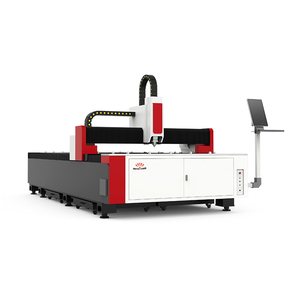
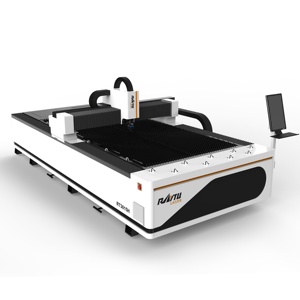
Whether you are looking to source high-volume standard compression bits, specialized PCD diamond cutters, or heavy-duty CNC fiber laser equipment, our engineering team provides end-to-end tooling advice, sample testing, and custom OEM manufacturing tailored to your operational targets.
Consult with our senior technical application engineers to evaluate tool geometries, coating options, and bulk pricing schedules for your production line.
Contact Us