Heavy-Duty Fiber
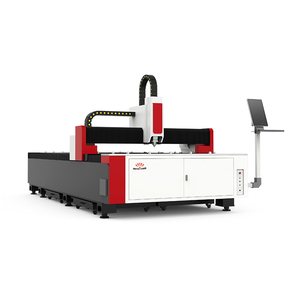
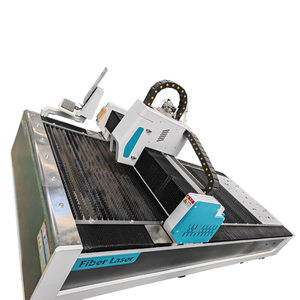
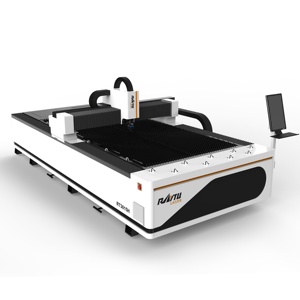
4015 Fiber CNC Laser Cutter Machines (6000W–12000W)
- Bed Size: 4000mm x 1500mm
- Power Options: 6kW / 8kW / 12kW
- Drive: Precision Rack & Pinion

Direct manufacturer solutions ranging from ultra-high power 40kW fiber metal cutters to precision smart desktop CNC platforms.
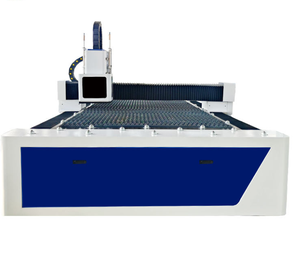
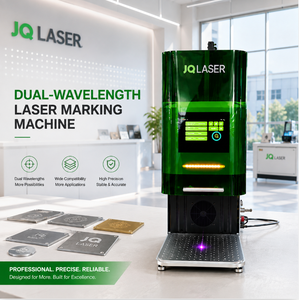
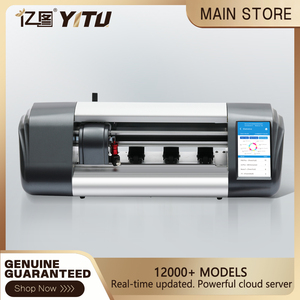
Bridging tier-one OEM component integration with stress-relieved structural design to maximize enterprise uptime.
Unlike lightweight bolt-together frames, our heavy-duty fiber laser beds undergo high-temperature annealing heat treatment to eliminate internal mechanical stress. This guarantees decades of zero structural deformation under high dynamic acceleration (up to 1.5G).
Every industrial fiber cutter incorporates Japanese Yaskawa AC Servo drives, Raycus/MAX/IPG fiber laser generators, and CypCut CNC control suites with integrated height sensing. This ensures smooth interpolation, minimal kerf taper, and instant operator adaptation.
We provide zero-bot live technical support, backed by engineers with decades of CNC application expertise. In-house replacement optics, ceramic rings, focus lenses, and drive components ship same-day to ensure your production floor maintains maximum uptime.
An in-depth whitepaper examining high-power density fiber scaling, assist gas economics, and purchasing parameters for international manufacturing facilities.
Over the past decade, the global metal fabrication sector has undergone a fundamental technological transition from traditional Carbon Dioxide ($\text{CO}_2$) gas-tube lasers to solid-state Ytterbium Fiber Laser systems. While $\text{CO}_2$ lasers operating at a wavelength of $10.6\,\mu\text{m}$ maintain specific thermal surface absorption advantages for non-metallic substrates (such as acrylics, timber, and high-density polymers), fiber lasers produce a wavelength of approximately $1.064\,\mu\text{m}$—one tenth that of $\text{CO}_2$.
This shorter wavelength yields an exceptionally higher energy density and electrical conversion efficiency (wall-plug efficiency exceeding 35–40%, compared to a mere 8–10% for $\text{CO}_2$). Furthermore, the optical transmission of a fiber system is contained completely inside flexible glass fibers, eliminating the complex, alignment-sensitive internal mirror networks and beam-bellows maintenance historically required by flying-optics $\text{CO}_2$ frames.
Modern top-tier Chinese laser manufacturers utilize optical setups designed to preserve low Beam Parameter Product (BPP). A lower BPP yields a tighter focal spot size, allowing a 12kW fiber laser to cut thin carbon steel faster than a legacy 20kW system while consuming less electricity and assist gas.
As top-tier OEM factories in China push fiber laser source capacities beyond the 10kW threshold into ultra-high power regimes (20kW, 30kW, and 40kW), the operational metrics for thick plate metal cutting have radically evolved. Historically, cutting carbon steel thicker than 20mm required oxygen ($\text{O}_2$) assist gas to induce an exothermic oxidation reaction. However, high-power fiber beams generate sufficient kinetic energy to process thick structural steel using high-pressure nitrogen ($\text{N}_2$) or compressed air assist.
| Laser Source Technology | Optimal Wavelength | Target Substrates | Wall-Plug Efficiency | Maintenance Profile |
|---|---|---|---|---|
| Industrial Fiber Laser | 1.064 μm | Carbon Steel, Stainless, Aluminum, Brass, Copper | 35% – 45% | Near Zero (Solid State Optical Module) |
| Sealed CO2 Glass/RF Tube | 10.6 μm | Wood, Acrylic, MDF, Leather, Fabrics, Glass | 8% – 12% | Periodic Tube Replacement & Mirror Alignment |
| Hybrid Blue Diode/Fiber | 450 nm + 1064 nm | Reflective Precious Metals & Craft Polymers | 25% – 30% | Low (Air-Cooled Multi-Diode Array) |
When procuring industrial machinery from top Chinese manufacturers, smart enterprise buyers look beyond the nominal kilowatt rating of the laser generator. Modern procurement strategies focus on four critical technological trends:
A. Vision-Guided Nesting & Automated Offloading: Integration of overhead CCD cameras and CAD/CAM software (such as CypCut / HypCut ecosystems) allows automatic edge-seeking on misaligned sheet metal. Automated nesting algorithms increase raw material yield by reducing kerf waste by up to 15% per sheet.
B. Active Anti-Collision Focal Heads: Cutting heads fitted with capacitive height sensing and rapid servo-driven Z-axis response prevent costly nozzle tip collisions caused by thermal tipping of small cut parts.
C. Dual Bus-Based Motion Control Architecture: Top-tier CNC fiber cutters utilize EtherCAT fieldbus communication protocols instead of legacy pulse-type signals. EtherCAT provides microsecond-level synchronization between the CNC controller, Yaskawa/Panasonic servo drives, and the fiber source modulating frequency.
Direct answers from application engineers regarding machine selection, international duty compliance, and operational setup.
Contact our application engineering team today to receive a complete machine specification matrix, customized sample cutting report, and factory-direct pricing brochure.