
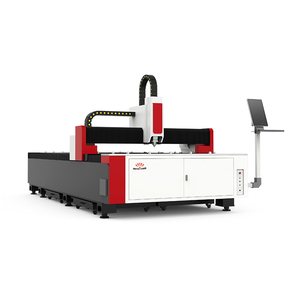
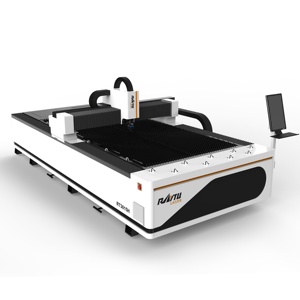
High-rigidity slant-bed turning centers, heavy-duty fiber laser cutters, and multi-axis automated machining units built to international ISO9001 and CE standards.
The global manufacturing paradigm requires sub-micron tolerances, continuous thermal stability, and operational uptime exceeding 98.5%. When evaluating prospective vendors among China top CNC lathe manufacturers & suppliers, procurement directors must look beyond basic catalog parameters. Machine dynamics, structural damping, drive train rigidity, and closed-loop control integration form the foundation of high-precision metal removal.
Modern Computer Numerical Control (CNC) turning equipment has evolved from conventional flat-bed configurations into heavy-duty 30-degree and 45-degree slant-bed designs. Slant-bed architecture places the linear guideways and ball screws on an inclined plane. This structural orientation delivers three fundamental engineering advantages: superior torsional rigidity, optimized chips evacuation away from critical guide surfaces, and a reduced thermal expansion vector relative to the cutting zone.
Technical Insight: High-grade Meehanite cast iron (HT300 standard), subjected to dual-stage thermal stress annealing and natural aging for 6 to 12 months, guarantees micro-structural stability. This eliminates residual casting stresses and prevents bed distortion across decades of multi-shift machining.
To withstand high-speed intermitted cutting forces when processing difficult-to-machine alloys (such as Inconel 718, Titanium Grade 5, and hardened D2 tool steel), leading Chinese manufacturers integrate structural components engineered via Finite Element Analysis (FEA). FEA optimization reveals stress concentrations and resonance hot spots, allowing engineers to place internal cross-ribbing precisely where dynamic loads peak.
Heavy-duty, fine-grain gray iron construction provides vibration damping properties 10 times higher than fabricated structural steel frames.
Built-in motor spindles eliminate belt-slip, reduce thermal vibration, and deliver instant high torque across low RPM ranges.
Heidenhain or Fagor full closed-loop feedback scale integration compensates for ball screw pitch errors and thermal drift.
Furthermore, precision spindle alignment is certified under strict ISO/DIS 230-2 protocols. Spindle runout at the nose is routinely held within 0.002 mm (2 microns), while dynamic balance meets ISO 1940 G0.4 specifications. High-end turning centers utilize hybrid ceramic angular contact ball bearings preloaded to maintain zero radial and axial play during intense heavy-roughing cuts.
China's CNC machine tool sector has transitioned from low-cost machinery production to high-precision engineering and advanced automation integration. Global OEMs and tier-1 machining facilities increasingly rely on Chinese manufacturing partners for multi-axis turn-mill centers, Swiss-type automatic lathes, and flexible manufacturing cells (FMS).
Traditional manufacturing workflows requiring secondary setup operations on vertical machining centers introduce cumulative clamping errors and extend lead times. Advanced Chinese CNC lathes now feature primary and secondary (sub) spindle configurations equipped with C-axis contouring and Y-axis off-center milling capabilities. By enabling "Done-in-One" machining, complex aerospace fittings, medical bone screws, and automotive transmission shafts are finished in a single setup, cutting total cycle times by up to 65%.
Thermal deformation accounts for up to 75% of overall geometric machining errors in continuous production environments. Leading Chinese machine tool builders incorporate real-time thermal compensation networks. Temperature sensors strategically positioned on the spindle housing, bed frame, and ball screw support bearings feed real-time thermal expansion data into the CNC controller (e.g., Fanuc 31i-B, Siemens SINUMERIK ONE, or Syntec 220MA). The controller adjusts axis offsets dynamically in increments of 0.1 micron.
| Performance Benchmark | Conventional Flat-Bed CNC Lathe | High-Precision Slant-Bed Lathe | Multi-Axis Turn-Mill Center |
|---|---|---|---|
| Positional Accuracy (X/Z) | ±0.010 mm | ±0.005 mm | ±0.003 mm |
| Repeatability (X/Z) | ±0.005 mm | ±0.002 mm | ±0.0015 mm |
| Spindle Max Speed | 2,500 – 3,500 RPM | 4,500 – 6,000 RPM | 8,000 – 12,000 RPM |
| Turret Index Time | 0.8 – 1.2 sec | 0.2 – 0.4 sec | 0.15 sec (Servo Driven) |
| Guideway Type | Box Way / Hardened Slide | Precision Roller Linear Rails | Heavy Roller Linear Rails + Box Ways |
For small-diameter fasteners, medical implants, and electronic pins, Swiss-type CNC lathes featuring sliding headstock designs are critical. The bar stock feeds through a guide bushing, ensuring that the cutting tool always operates adjacent to the support point. Chinese manufacturers have refined Swiss-type machinery to support up to 9-axis simultaneous machining, secondary operations on sub-spindles, and high-pressure coolant injection (up to 140 bar) for instant chip breaking.
Procurement teams navigating global equipment investments are adjusting their evaluation metrics. Capital Expenditure (CAPEX) is no longer analyzed in isolation; Total Cost of Ownership (TCO), energy consumption efficiency, software ecosystem compatibility, and vendor response speeds now drive purchasing decisions.
Industrial buyers are overwhelmingly requesting machine tool packages pre-configured for robotic loading and unloading. Standard procurement packages from top suppliers now include integrated automatic door operators, pneumatic/hydraulic chuck interface lines, high-pressure chip flushing systems, post-process automatic gauging probes (such as Renishaw TS27R or optical laser setters), and standardized OPC-UA data communication bridges.
With international carbon reporting mandates taking effect, energy consumption per cubic centimeter of material removed has become a core procurement metric. Modern CNC lathes feature regenerative servo drives that capture kinetic energy during spindle deceleration and feed it back into the facility grid. Variable-frequency hydraulic units and smart standby modes cut idle electrical draw by up to 40%.
Procurement Trend Checklist: Ensure your vendor provides certified energy management reports under ISO 14955 standards, alongside detailed mean time between failures (MTBF) documentation exceeding 5,000 continuous operating hours.
To eliminate maintenance bottlenecks and guarantee local spare part availability across Europe, North America, and Southeast Asia, top Chinese lathe builders standardize key sub-assemblies around globally available industrial brands:
Building high-precision CNC machinery requires strict adherence to quality assurance at every step of fabrication. Our manufacturing footprint combines decades of mechanical engineering experience with modern, state-of-the-art assembly facilities.
100% of machine axes are measured and pitch-compensated using Renishaw XL-80 laser calibration systems to verify sub-micron accuracy.
Dynamic circularity testing guarantees precise interpolation between X and Z axes, ensuring roundness tolerance within 0.003mm.
Every turning center undergoes continuous 72-hour operational dry running and hot-cut testing prior to final export inspection.
Whether you require custom bed lengths, specialized multi-axis tool turrets, automated gantry loading systems, or tailored colorways and interface languages, our engineering group offers complete OEM/ODM flexibility. We manage the entire lifecycle—from CAD layout verification and CAM post-processor creation to export sea-packaging and international onsite commissioning support.
Clarifications to common technical and operational questions asked by global sourcing managers, shop owners, and chief engineers.
Consult directly with our senior application engineers to obtain customized machine configurations, turn-key tooling proposals, and competitive FOB/CIF factory direct quotations.