
Explore high-precision CNC press brakes, heavy-duty fiber laser cutting systems, and multi-axis fabrication tools optimized for global manufacturing excellence.
A comprehensive analysis of CNC sheet metal bending machinery, structural frame stability, hydraulic-electric synchronisms, and key supplier verification protocols.
Navigating China's industrial equipment ecosystem requires a deep understanding of structural engineering, component integration, and quality assurance standards. Leading OEM press brake manufacturers engineered in China build upon decades of CNC innovation—utilizing stress-relieved annealed steel frames, precision-ground linear guides, and state-of-the-art European hydraulic components.
By leveraging advanced Finite Element Analysis (FEA) during design and integrating proven CNC control systems such as Delem, Cybelec, and ESA, premier Chinese suppliers deliver heavy-duty metal forming solutions that match European performance standards while optimizing Total Cost of Ownership (TCO) for global fabricators.
Modern CNC press brakes feature closed-loop electro-hydraulic servo systems (Y1-Y2 axes) equipped with optical linear encoders from brands like Heidenhain or Fagor. This ensures real-time ram position feedback, yielding repeatable angle precision of ±0.01 mm even during asymmetric bending workloads.
To eliminate the "canoe effect" in long sheet bending, high-tier Chinese suppliers integrate CNC-controlled motorized crowning systems (such as WILA style or wave wedge mechanical deflection compensation). The CNC controller dynamically calculates required deflection compensation based on sheet thickness, tensile strength, and bend length.
From standard 2-axis (X, R) up to complex 6-axis (X1, X2, R1, R2, Z1, Z2) backgauge systems driven by Yaskawa or Panasonic AC servo motors, machines handle complex geometric profiles, stepped bends, and tapered shapes with ultra-precise backstop positioning.
| Drive Architecture | Ram Synchronization | Energy Consumption | Bending Speed & Cycle | Target Applications |
|---|---|---|---|---|
| Torsion Bar Hydraulic | Mechanical Torsion Bar (±0.05mm) | Standard Baseline | Moderate (80–100 mm/s) | Basic sheet metal bending, job shops with standard tolerances |
| Electro-Hydraulic Servo (Y1-Y2) | Proportional Valves & Encoders (±0.01mm) | 20% Reduction via Demand Control | High (160–220 mm/s) | Industry Standard High-precision automotive, electronics, HVAC |
| Hybrid Servo-Hydraulic | Dual Servo Motors + Direct Pump (±0.005mm) | 40-50% Reduction (Idle Shutoff) | Ultra Fast (230+ mm/s) | Continuous 24/7 industrial production, eco-conscious facilities |
| All-Electric Pure Servo | Heavy-Duty Ballscrew & Belt Drive (±0.003mm) | 60% Reduction (Zero Oil Usage) | Maximum Precision & Acceleration | Medical equipment, high-end electronics, short-bed micro bending |
How automation, Industry 4.0 IoT connectivity, and hybrid laser-bending ecosystems are reshaping global machine procurement decisions.
The global metal fabrication landscape faces skilled labor shortages. Leading Chinese press brake manufacturers are shifting towards fully integrated robotic bending cells. By coupling 6-axis industrial robots (KUKA, ABB, or FANUC) with automatic tool changers (ATC) and sheet follower arms, shops achieve continuous unmanned production cycles while eliminating human error during heavy plate handling.
Material springback caused by variations in sheet tensile strength and grain orientation remains a primary challenge in sheet bending. Future-ready CNC press brakes incorporate contact-less laser angle measurement systems (such as LVD Laser-Assist or Data M Spectro-Optics). The system measures the angle during the initial press phase and dynamically adjusts ram depth in milliseconds to achieve exact angular tolerances on the first bend.
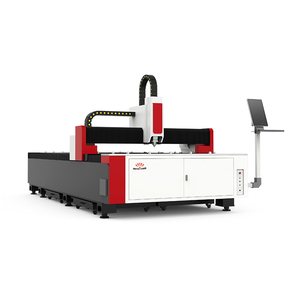
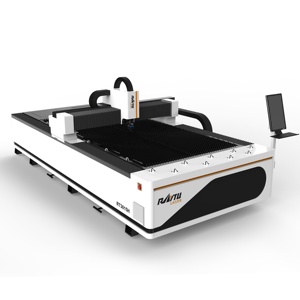
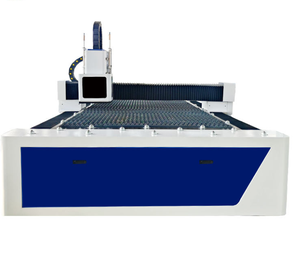
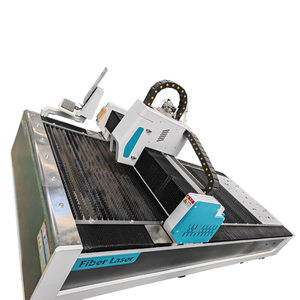
Modern metal fabrication demands a unified production ecosystem. Fiber laser cutters (capable of 6kW–40kW ultra-high power cutting) prepare flat blanks with micro-joint precision. CAD/CAM software suites (such as Lantek, MetaCAM, or Radan) generate parametric flat patterns, automatically transferring bend allowances, DXF geometry, and tooling selection directly to the CNC press brake's controller via OPC-UA cloud architecture.
With global sustainability standards (ISO 50001) driving procurement requirements, manufacturers are replacing traditional continuously running induction motors with dual-servo hydraulic pump drives (e.g., eSEB systems). These pumps remain completely silent and motionless during standby, reducing fluid temperature, extending hydraulic oil life from 2,000 to 10,000 hours, and lowering electrical consumption by up to 50%.
Essential quality verification steps for industrial buyers procuring press brakes and laser machinery from Chinese suppliers.
Verify whether the manufacturer performs high-temperature thermal annealing (vibrational or furnace stress relieving) on welded heavy steel side frames. Unrelieved residual stresses cause frame warping over 2 to 3 years of heavy tonnage operation, permanently destroying bending accuracy.
Ensure critical hydraulic valves (Bosch Rexroth, Hoerbiger), electrical contactors (Schneider, Siemens), servo drives (Yaskawa, Panasonic), and controllers (Delem DA-66T / DA-69T) are genuine tier-1 global brands backed by international service networks.
Require dynamic laser interferometer testing (Renishaw) for backgauge pitch error correction, VDI 3441 positioning precision verification, and full-load 48-hour continuous cycling test reports prior to container packing and ocean transport.
Detailed technical answers addressing common questions asked by industrial equipment buyers, plant managers, and procurement officers.
Bending tonnage depends on material tensile strength ($R_m$), metal thickness ($t$), bend length ($L$), and the V-die opening width ($V$, typically $8 \times t$). The standard formula for air bending mild steel ($R_m \approx 450 \text{ N/mm}^2$) is:
$\text{Tonnage (Tons)} = \frac{650 \times t^2 \times L}{V} / 1000 \times 1.1$.
For stainless steel, multiply the calculated tonnage by 1.5; for aluminum, multiply by 0.5. Premier Chinese suppliers offer software integrated into the CNC controller to automate this calculation.
Torsion bar press brakes rely on a solid mechanical steel rod to synchronize movement between the left and right cylinders. They lack individual cylinder feedback, limiting accuracy and preventing off-center bending. Synchronized Electro-Hydraulic (Y1-Y2) press brakes utilize independent servo-valves and optical linear scales on each cylinder connected to a multi-axis CNC controller. This allows independent depth adjustments, precise tilt for tapered profiles, and flawless off-center bending capability.
Hydraulic crowning uses cylinders embedded in the bottom beam that create dynamic pressure points. Mechanical crowning (such as wedge systems) utilizes computer-machined continuous sine-wave wedges tailored to the machine's deflection curve. Mechanical crowning delivers continuous, precise deflection compensation along the entire bed length, unaffected by hydraulic oil temperature fluctuations or valve wear.
Industrial safety compliance is crucial. Ensure your machine includes CE certified optical laser safety curtain systems such as DSP, Lazersafe, or Fiessler. These systems safeguard operators at the pinch point without sacrificing high-speed ram approach rates. Additionally, verify electrical cabinet compliance with IEC 60204-1 and CE/UL standards.
Top-tier Chinese suppliers provide comprehensive warranty programs (typically 2 to 5 years covering structural frames, ball screws, and CNC controllers). Global support includes remote cloud telemetry diagnostics, spare parts dispatched via DHL/FedEx within 24 hours, and local field engineer dispatch through regional service partners.
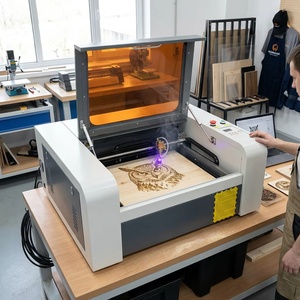
Integrating high-power fiber laser cutting (e.g., 6kW to 12kW) with precision CNC bending streamlines flat-to-finished metal part fabrication. Fiber lasers provide burr-free edges and consistent hole geometries without mechanical stress, allowing press brakes to bend parts cleanly using standardized tooling without secondary grinding or manual deburring.
Connect with our senior engineering team for customized machine configurations, tonnage calculations, factory direct pricing, and detailed equipment catalog requests.