
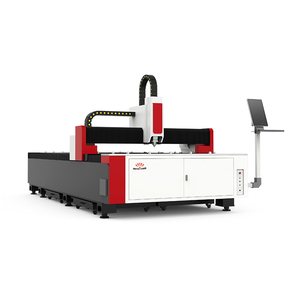
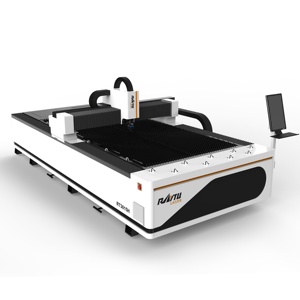
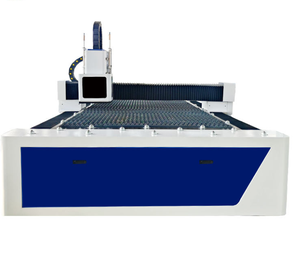
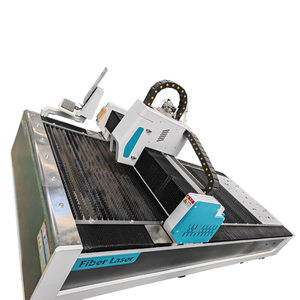
Engineered to rigorous EU safety standards (Machinery Directive 2006/42/EC). Select from our duty-tested industrial systems designed for continuous multi-shift production.

Years Engineering Excellence
CE & EU Directive Compliance
Global Installations
Direct Technical Support
In modern industrial sheet metal fabrication, purchasing plasma cutting and fiber CNC machinery requires strict adherence to international safety, structural, and electrical standards. As global supply chains shift toward automated production and high-yield operational models, verifying a manufacturer's CE Certification (Conformité Européenne) is more than a legal prerequisite—it is the baseline measure of machine engineering integrity, operator safety, and long-term operational uptime.
Ensures structural rigidity, emergency stop response times, automated interlocking safety guards, and integrated fume extraction compatibility across all industrial plasma beds.
High-frequency arc ignition systems are isolated with multi-stage filter networks, preventing RF interference with nearby CNC controls, robotics, and industrial networks.
Complete insulation, grounding integrity, and thermal overload protection designed to safeguard operators during high-duty continuous inverter plasma arc torch operations.
To assist procurement directors and manufacturing engineers in selecting the optimal cutting power source, the table below provides an engineering comparison of standard air plasma cutting versus high-definition fine-focus systems.
| Evaluation Parameter | Standard Air Plasma Inverter | High-Definition (HD) FineFocus Plasma | High-Power Industrial Fiber Laser |
|---|---|---|---|
| Bevel Angle Deviation | 3.0° – 5.0° (ISO 9013 Range 4-5) | 0.5° – 2.0° (ISO 9013 Range 2-3) | 0.0° – 0.5° (ISO 9013 Range 1) |
| Dross / Slag Formation | Moderate; requires secondary grinding | Minimal to dross-free on mild steel | Zero dross; clean edge output |
| Operating Gas Requirement | Clean Compressed Air / N2 | O2, N2, H35, Air (Automated Mix) | N2, O2, Air Assist |
| Duty Cycle Rating | 60% – 100% at rated amperage | 100% Continuous (24/7 Industrial) | 100% Continuous (24/7 Industrial) |
| Pierce Capacity (Mild Steel) | Up to 32 mm | Up to 50 mm | Up to 60 mm (30KW+) |
| Operational Cost / Hour | Low baseline operational investment | Medium; optimized consumable life | Lowest per-part cost at high speed |
Combining heavy structural machine tool building with advanced numerical controls. Backed by factory-direct engineering support and global export logistics.
Unlike light aluminum extrusion frames that flex under dynamic acceleration, our CNC plasma and fiber beds are constructed from heavy plate structural steel. Each chassis undergoes a thermal stress-relieving annealing process in high-temperature ovens before precision machining on 5-axis gantry milling centers. This guarantees frame alignment stability and positional accuracy over decades of heavy shop use.
We outfit our CE-certified machines with industry-standard Japanese Yaskawa absolute servo motors, precision helical rack-and-pinion systems, and ground ball screws. Motion is monitored continuously via closed-loop feedback, eliminating lost steps and part scrapping caused by unexpected thermal expansion or material tipping.
Machine downtime translates directly to lost revenue. We maintain an extensive inventory of torches, consumables, digital height control (THC) modules, linear guide blocks, and electrical relays in our central distribution facilities. OEM spare parts and consumables are packaged and shipped same-day to keep your production line running without interruption.
Compliance with European workplace environmental directives (EN ISO 15012) requires efficient collection of airborne metal fumes during high-amperage plasma cutting. Our beds feature multi-zone pneumatic downdraft chambers that open only directly beneath the active cutting head, reducing total exhaust CFM requirements by over 40% while preserving factory air quality.
As the global metal fabrication industry transitions toward Industry 4.0 and automated manufacturing cells, procurement decisions are increasingly driven by smart machine analytics, energy efficiency, and hybrid processing capabilities. Key technological evolutions shaping the next decade of metal profiling include:
Modern CNC controllers integrate vision systems and predictive algorithms that track electrode wear in real time. By anticipating consumable breakdown before torch failure, operators prevent damage to expensive torch bodies and eliminate un-pierced plate scrap.
Fabricators are moving away from single-technology machines toward dual-head or side-by-side cells. Using low-cost plasma for thick plate beveling and internal bolt holes alongside high-speed fiber lasers for thin intricate geometries lowers total part processing cost by up to 35%.
Next-generation power supplies utilize digital gas consoles with millisecond proportional valve control. By dynamically switching shielding gas compositions during corner deceleration, cut edge perpendicularity is maintained without burning or rounding sharp external features.
Expert guidance on technical specifications, CE compliance verification, shipping, and operational maintenance.
Whether you require standard stock bed formats or custom-engineered gantry systems for structural plate profiling, our application engineers are standing by to review your CAD files, cutting requirements, and duty-cycle specifications.
Contact Us