CE Certified Laser Welder Exporter & Exporters

Global Industrial Standards in Precision Fiber Laser Welding, High-Power Cutting & Automated CNC Processing Machinery

Featured Laser & CNC Equipment Showcase

Explore our CE-compliant, heavy-duty industrial fiber laser cutters, high-precision engravers, and smart automated welding systems exported worldwide with direct factory support.
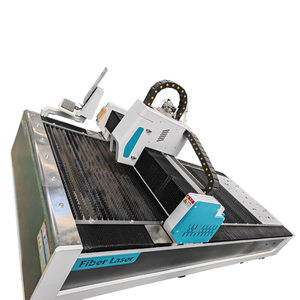
4015 Fiber CNC Laser Cutter 6000W 8000W 12000W

4015 Fiber CNC Lazer Cutter Laser Cutting Machines 6000W 8000W 12000W

  • Laser Source: Fiber CW (6kW - 12kW)
  • Bed Size: 4000mm x 1500mm
  • Positioning Accuracy: ±0.03mm
  • Certification: CE / ISO9001
Send an Inquiry
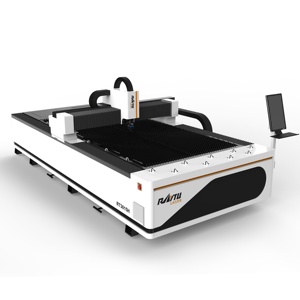
3KW 6KW Carbon Stainless Steel Laser CNC Fiber Laser Cutting Machine

3KW 6KW Carbon Stainless Steel Metal Cutting Laser CNC Fiber Laser Cutting Machine

  • Power Output: 3000W / 6000W
  • Target Metals: Stainless / Carbon Steel
  • Drive System: Yaskawa Servo Motors
  • Warranty: 3 Years Factory Warranty
Send an Inquiry
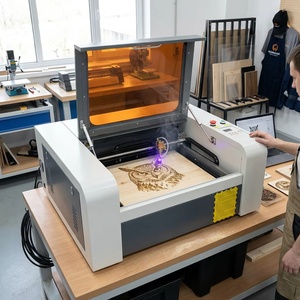
Desktop Water-Cooled CO2 Laser Engraving Machine

VOIERN 4040 5040 Desktop Water-Cooled CO2 Laser Engraving Cutting Machine

  • Laser Power: 40W / 50W CO2 Tube
  • Cooling System: Integrated Water-Cooled
  • Materials: Wood, Acrylic, Leather, MDF
  • Control Interface: Intelligent AI Panel
Send an Inquiry
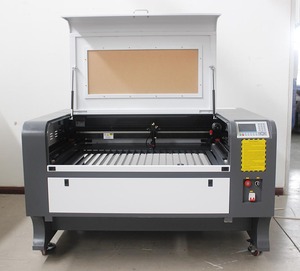
100W Laser Engraver 1080 Laser Engraving Machine

100W Laser Engraver 1080 Laser Engraving Machine For Wood Acrylic Glass

  • Work Area: 1000mm x 800mm
  • Laser Type: Sealed CO2 Glass Tube
  • Resolution: Up to 1000 DPI
  • Safety Standard: CE Enclosed Class 1/4
Send an Inquiry
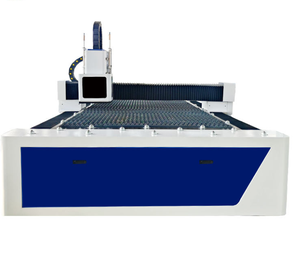
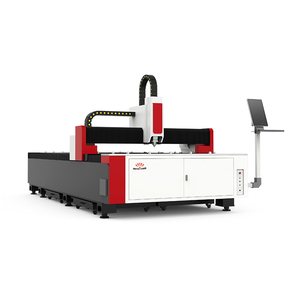
Ultra High Power Fiber Laser Cutter Up to 40000W

1000W to 40000W Ultra High Power Metal Sheet Fiber Laser Cutting Machine

  • Power Range: 1kW up to 40kW CW
  • Cutting Capacity: Up to 100mm Metal
  • Control Software: CypCut / HypCut System
  • Structure: Heavy Gantry Annealed Bed
Send an Inquiry
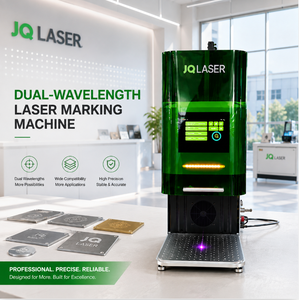
50W Fiber 40W Blue Diode Dual Laser Engraving Machine

50W Fiber 40W Blue Diode Dual Laser Engraving Machine for Metal & Wood

  • Dual Engine: Fiber + Blue Diode Module
  • Metal Marking: High-Speed Galvo Scanner
  • Craft Cutting: Precision Diode Head
  • Application: Identification & Crafts
Send an Inquiry
Yaskawa Drive Cypcut High Accuracy 3-Axis Fiber Laser Machine

Manufacturer Direct Yaskawa Drive Cypcut High Accuracy 3-Axis Fiber Laser Machine

  • Servo Drive: Yaskawa Absolute Encoder
  • CNC Controller: Cypcut Professional
  • Frame: Stress-Relieved Steel Bed
  • Service: 3 Years Global Support
Send an Inquiry
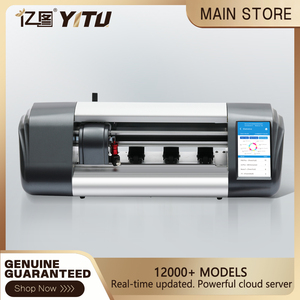
High Precision Smart Screen Protector Cutting Machine

High Precision HY CH390 Smart Screen Protector Desktop Automatic Cutter

  • Display: 7-Inch Touch Monitor
  • Cloud Database: All Mobile Models Updated
  • Operation: Intelligent Automatic Plotter
  • Footprint: Compact Desktop Unit
Send an Inquiry
40+
Years Engineering Heritage
15,000+
Global Installations
100%
CE & ISO Compliant
24/7
Direct Factory Support

CE Certified Laser Welder Exporter & Global Procurement Blueprint

In the rapidly evolving landscape of advanced sheet metal manufacturing, automotive component assembly, and precision structural fabrication, the selection of an international CE certified laser welder exporter represents a pivotal strategic decision. Modern industrial laser processing equipment—spanning handheld fiber laser welders, multi-kilowatt CNC laser cutting beds, and automated robotic joining cells—has fundamentally replaced traditional Tungsten Inert Gas (TIG) and Metal Inert Gas (MIG) welding infrastructure. By delivering energy densities exceeding $10^6 \text{ W/cm}^2$, industrial fiber laser systems yield minimal Heat-Affected Zones (HAZ), virtually eliminate thermal deformation, and achieve linear welding velocities up to 4 to 10 times faster than manual arc processing.

Information Gain Benchmark: A validated CE certification under the Machinery Directive (2006/42/EC) and Laser Safety Standard (EN 60825-1) guarantees that your exported laser welding equipment contains redundant safety interlocks, optical path containment, and electromagnetic compatibility (EMC)—preventing uncertified import delays and mitigating shop-floor liability.

The Engineering Evolution of Fiber Laser Welding Technology

Industrial laser welding operates primarily in two fundamental physical modes: conduction-limited welding and deep-penetration keyhole welding. Conduction mode occurs at lower power densities where energy transfers into the workpiece purely through thermal conduction, producing shallow, aesthetic welds ideal for thin-gauge sheet enclosures. Conversely, keyhole welding leverages focused laser intensities that vaporize metal, forming a narrow vapor cavity (keyhole) surrounded by molten metal. This enables high-aspect-ratio penetration welds up to 10mm depth in a single pass without pre-beveling.

Key Technical Milestones Driving Next-Generation Laser Joining:

  • Continuous Wave (CW) Fiber Lasers with Adjustable Ring Mode (ARM): Modern laser exporters now supply laser heads featuring concentric beam profiles. A central beam core creates the keyhole while a surrounding ring beam preheats and stabilizes the melt pool, virtually eliminating spatter in copper, aluminum, and dissimilar metal joining.
  • Wobble Welding Optical Heads: Integrated high-speed galvanometer mirrors oscillate the focused beam in spiral, zig-zag, or circular patterns. This beam movement bridges wide joint gaps (up to 1.5mm) and accommodates part tolerances that previously rendered automated laser welding unfeasible.
  • Air-Cooled Handheld Laser Welders: Utilizing high-efficiency semiconductor pump diodes, modern 1kW to 2kW handheld systems replace cumbersome liquid chillers with direct forced-air heat exchangers, drastically reducing unit weight and footprint for mobile field operations and agile job shops.

Structural Integrity & Annealed Frame

Machined from heavy-duty welded tubular steel, heat-treated and stress-relieved in high-temperature tempering furnaces to preserve dimensional tolerances over decades of continuous multi-shift operations.

High-Dynamic Servo Drives

Integrated with Japanese Yaskawa or Panasonic absolute AC servo systems and high-precision helical rack-and-pinion or ground ballscrews, delivering acceleration forces up to 1.5G with zero backlash.

Same-Day Parts & Lifetime Support

Supported by a comprehensive central warehouse stocking fiber sources, replacement lenses, ceramic rings, and nozzles—shipped same-day to ensure minimal operational downtime.

Global Procurement Trends: What B2B Buyers Must Demand in 2024–2030

As international supply chains tighten and safety regulators enforce stringent equipment standards, procurement directors must look beyond initial machine cost. When auditing a international CE certified laser welder exporter, evaluate the following long-term structural trends:

1. Automated Seam Tracking & Machine Vision Integration

Manual alignment is rapidly being superseded by inline Optical Coherence Tomography (OCT) and real-time laser seam tracking sensors. These vision modules scan the weld seam milliseconds ahead of the laser focal point, automatically adjusting the CNC motion axis or robotic arm to compensate for thermal warping and joint misalignment.

2. Transition to High-Power Fiber Cutters & Hybrid Welding Cells

The market is witnessing a massive surge in ultra-high-power fiber laser cutting machines (ranging from 12kW to 40kW). Forward-thinking manufacturing facilities pair these high-power cutters with laser welding cells. By laser-cutting clean edge profiles with zero dross, parts bypass edge-cleaning stations and move directly to automated laser welding, establishing a continuous lean manufacturing workflow.

3. Energy Conservation & Total Cost of Ownership (TCO) Reduction

Conventional TIG welders operate at wall-plug electrical efficiencies of roughly 10% to 15%. Fiber lasers deliver wall-plug efficiencies exceeding 35% to 45%. When factored across a fleet of production machines operating on 24/7 schedules, the electrical utility savings—combined with the elimination of post-weld grinding labor—yield full capital equipment paybacks within 6 to 14 months of deployment.

Technical Performance Comparison Matrix

The table below highlights the performance differential between traditional arc processes and modern fiber laser systems exported under strict CE certification guidelines.

Performance Parameter Traditional TIG / MIG Arc Welding CE Certified Fiber Laser Welder Industrial Advantage
Welding Speed (1.5mm SS) 0.2 - 0.5 meters / min 1.8 - 4.5 meters / min 300% to 800% Speed Increase
Heat-Affected Zone (HAZ) Extensive (High thermal warping) Extremely Narrow (Micro-scale) Zero Post-Weld Straightening
Consumable Costs High (Filler wire, heavy gas, tips) Low (Minimal shielding gas & nozzles) Up to 65% Consumable Savings
Operator Skill Dependency Years of certified welder training Operational proficiency in 1-2 days Mitigates Skilled Labor Shortages
Post-Processing Requirements Heavy grinding, polishing, pickling Clean seam; often no grinding needed Saves Hours of Manual Finishing
Safety Compliance Standard Basic ventilation & UV shade CE EN 60825-1 Class 4 / Enclosed Class 1 Maximum Workplace Safety

Enterprise Advantage: Why Our Exported Laser Systems Lead the Industry

Combining over four decades of CNC and precision machinery manufacturing heritage, our export division delivers fully verified, industrial-grade fiber laser welders, laser cutters, and multi-axis CNC routers. Every unit undergoes rigorous stress testing, laser interferometer calibration, and optical safety validation prior to export packing.

Full CE & ISO Certification

Equipped with dual-channel safety circuit relays, emergency stop safety loops, laser protective viewing glass, and fully compliant grounding against electro-magnetic interference.

Direct Factory Engineering Support

No automated call centers. Access live application engineers for remote diagnostics, optic optimization, and parametric cutting/welding feed and speed tables for specialized alloys.

Heavy-Duty Component Sourcing

Utilizing top-tier fiber sources (IPG, Raycus, MAX), CypCut/CypWeld CNC interfaces, and Yaskawa servo drives, ensuring part availability across Europe, North America, and Asia.

Frequently Asked Questions (FAQ) for Global Procurement

Our engineering team answers the most critical technical questions raised by international procurement managers and factory directors prior to specifying laser equipment.

What specific criteria define a valid "CE Certified" Laser Welder?
A genuine CE certified laser welder must comply with three core European Directives: the Machinery Directive (2006/42/EC), the Low Voltage Directive (2014/35/EU), and the EMC Directive (2014/30/EU). Furthermore, laser-specific safety standard EN 60825-1 requires integrated safety interlocks, optical beam enclosures, explicit warning labels, and key-switch operator controls. Always request the official Certificate of Conformity (DoC) and test reports issued by a accredited Notified Body before importing.
How does fiber laser power selection (1kW vs 2kW vs 3kW+) impact metal penetration depth?
As a general rule for stainless steel and carbon steel: a 1kW continuous wave fiber laser achieves single-pass penetration up to 1.5mm - 2.0mm; a 2kW fiber laser welder handles up to 3.5mm - 4.0mm; and a 3kW system reliably keyhole-welds up to 5.5mm to 6.0mm. Highly reflective materials such as copper (C1100) and aluminum (6061) require approximately 30% to 50% more peak laser power due to initial surface back-reflection.
Which shielding gas should be used: Argon, Nitrogen, or Helium?
Argon is the most widely specified shielding gas for general stainless steel and titanium welding due to its high density, excellent atmospheric isolation, and cost-effectiveness. Nitrogen is commonly used for austenitic stainless steels where slight nitriding of the surface is acceptable. Helium offers superior ionization potential and thermal conductivity—yielding the deepest keyhole penetration—but its high commercial cost limits its use to specialized aerospace and medical device applications.
What safety precautions and facility preparations are required for installation?
Handheld and open-bed laser welders operate under Class 4 Laser Classifications. Facilities must establish a dedicated Laser Controlled Area (LCA) equipped with laser-safety interlocked entry doors, specialized laser safety curtains or enclosures certified to optical density OD6+, appropriate particulate extraction units for metal fume control, and mandatory OD6+ protective eyewear matching the laser wavelength (typically 1064nm - 1080nm).
How do exported machines withstand long-distance maritime transport?
All exported machinery undergoes vacuum-sealed anti-rust foil wrapping, desiccant pouch placement, structural axis locking (to protect linear guides and ball screws from vibration damage), and heavy-duty ISPM-15 compliant fumigated wooden crate packaging designed for container loading and forklift transport.

Consult With Our Export Laser Engineers

Need assistance specifying the ideal CE-certified laser welder, fiber cutter, or automated CNC system for your regional market? Receive detailed technical parameter sheets, custom fixture recommendations, and direct factory pricing.

Send an Inquiry